





























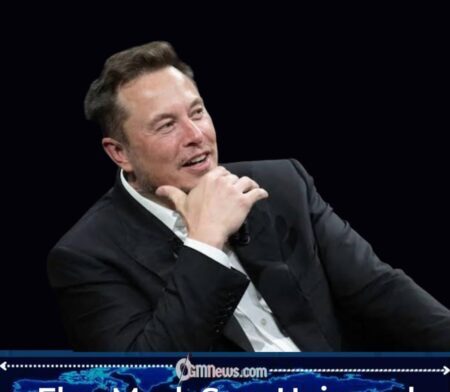
Elon Musk has suggested that a universal high income provided by the federal government may be the most effective way to address unemployment caused by artificial intelligence. His remarks reflect growing concern over the long-term impact of automation and robotics on the global workforce. As AI continues to advance rapidly, questions about job displacement and economic stability are becoming increasingly urgent.
The proposal builds on earlier discussions around universal basic income, but Musk’s framing emphasizes a potentially higher level of financial support to match the scale of technological disruption. His argument centers on the idea that traditional employment structures may not be sufficient in an AI-driven economy.
By putting forward this concept, Musk has once again placed himself at the center of debates about the future of work and the responsibilities of governments in adapting to technological change.
Elon Musk and Economic Transformation
Elon Musk has argued that AI and robotics will produce goods and services at levels far exceeding the growth of the money supply, suggesting that fears of inflation may be overstated in this context. According to his view, increased productivity could offset the effects of expanded financial support.
This perspective challenges conventional economic thinking, which often links increased money supply with rising prices. Musk’s argument introduces a scenario in which technological efficiency fundamentally reshapes economic dynamics.
Economists remain divided on the issue, with some seeing potential in the idea while others question its feasibility and long-term implications.
Impact on Employment and Society
Elon Musk’s proposal highlights the potential for widespread job displacement as automation continues to evolve. Industries ranging from manufacturing to services could be significantly affected by the rise of AI-driven systems.
The concept of a universal high income is intended to provide a safety net, ensuring that individuals can maintain a basic standard of living even as traditional job opportunities decline.
Supporters argue that such measures could also encourage innovation and entrepreneurship by reducing financial insecurity.
Elon Musk and Policy Debate
Elon Musk’s comments have sparked renewed discussion among policymakers, with debates focusing on how governments should respond to the challenges posed by AI. The idea of direct financial support is gaining attention as a possible solution.
Critics, however, raise concerns about funding, implementation, and the potential impact on economic incentives. These questions highlight the complexity of translating theoretical ideas into practical policy.
The discussion reflects broader uncertainty about how to balance technological progress with social stability.
Broader Economic Implications
Elon Musk’s vision suggests a future in which productivity gains from AI could lead to unprecedented levels of economic output. This raises questions about how wealth is distributed and how societies adapt to changing economic realities.
The potential shift away from traditional employment models could redefine concepts of work, income, and value in the economy.
Such changes would likely require significant adjustments in policy, education, and social systems to ensure a smooth transition.
Elon Musk indicated that the conversation around AI and unemployment is only beginning, with more discussions expected as technology continues to evolve. His proposal adds momentum to ongoing debates about the future of economic policy.
The coming years will likely see increased exploration of ideas like universal income, as governments and organizations seek solutions to emerging challenges.
Ultimately, the issue underscores the need for forward-thinking approaches that address both the opportunities and risks associated with rapid technological advancement.


Logging in is a breeze and the site stability is amazing even during peak hours....