





























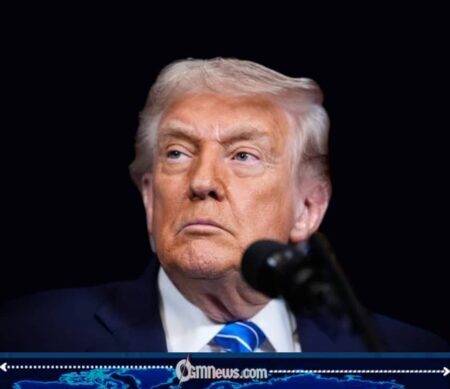
U.S. President Donald Trump, currently serving a second term, has stated that the cost of everyday food items including cheese, butter, potatoes, and fruit is lower today than when he took office. The assertion has drawn widespread attention at a time when food prices remain a central concern for households across the United States.
However, data from official government sources and independent fact-checking organizations suggests that the claim does not align with broader economic trends. While inflation has slowed in recent months, overall grocery prices remain elevated compared to earlier benchmarks. The debate underscores the importance of distinguishing between slowing inflation and actual price reductions.
Donald Trump and the Claim of Lower Food Prices
President Donald Trump made the claim while addressing economic conditions, presenting it as evidence of improving affordability under his administration. The statement quickly circulated across media platforms, prompting scrutiny from economists and policy analysts.
Supporters of the president argue that easing inflation supports the broader narrative of economic stabilization. They point to recent months in which price increases have moderated, suggesting that conditions are improving compared to earlier periods of sharp inflation.
Critics, however, emphasize that moderation in price growth does not equate to lower prices. They argue that the claim risks oversimplifying complex economic data, particularly at a time when consumers continue to experience high grocery bills.
What Official Data Reveals
Data from the U.S. Bureau of Labor Statistics shows that food prices have generally increased over recent years, including during the period of Donald Trump’s current term. The Consumer Price Index (CPI) indicates that while inflation has slowed, the overall price level remains higher than before.
This means that, on average, consumers are still paying more for groceries than they were at the beginning of the period in question. Economists note that for prices to be genuinely lower, there would need to be sustained declines across multiple categories, which current data does not demonstrate.
For Donald Trump, the distinction between inflation rates and actual price levels has become a key point of contention in the public debate over economic performance.
The Reality of Grocery Costs
A closer examination of specific items mentioned by Donald Trump such as butter, cheese, potatoes, and fruit—reveals a similar pattern. These categories experienced notable price increases during periods of high inflation driven by supply chain disruptions, energy costs, and global economic pressures.
While some prices have fluctuated or declined slightly in recent months, they generally remain above earlier levels. For example, dairy products saw significant increases due to production and transportation costs, while produce prices have been affected by seasonal and environmental factors.
As a result, the broader trend does not support the assertion that these goods are cheaper now than when Donald Trump assumed office for his second term.
Independent Fact-Check Findings
Independent organizations such as PolitiFact and FactCheck.org have evaluated similar claims and concluded that they are false or misleading. Their analyses highlight the difference between slowing inflation and actual price reductions.
These fact-checks emphasize that even when inflation declines, previously accumulated price increases remain in place. This means consumers continue to face higher costs despite improvements in inflation metrics.
For President Donald Trump, such findings present a challenge in communicating economic progress while addressing public concerns about affordability.
Inflation, and the Broader Economic Context
The discussion surrounding the president’s claim reflects broader economic conditions shaped by recent global events. Inflation surged in previous years due to supply chain disruptions, geopolitical tensions, and rising energy costs, all of which contributed to higher food prices.
Although inflation has since moderated, the effects of earlier increases continue to influence household budgets. Grocery costs remain a key indicator of economic well-being for many consumers, often shaping public perception more strongly than technical measures.
As President Donald Trump continues to address economic issues, the distinction between price levels and inflation rates is likely to remain central to policy discussions and public debate.



Casinoabc999? Good Site. The interface is sleek, and there is a lot of stuff to...