




























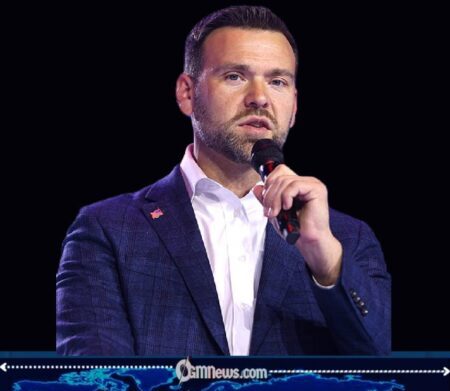
Jack Posobiec’s recent statement has intensified ongoing discussions about the role of religion in public life and the evolving cultural landscape in the United States. In his remarks, Posobiec argued that Christianity has been increasingly pushed out of the public sphere, suggesting that this shift has coincided with the growing visibility of other social and cultural influences.
His comments have drawn attention from both supporters and critics, contributing to broader conversations about religious expression, cultural identity, and freedom in a pluralistic society. The statement reflects a viewpoint that continues to resonate within certain segments of the public while also prompting disagreement from those who interpret societal changes differently.
Jack Posobiec’s Perspective on Religion in Public Spaces
Jack Posobiec’s remarks centered on the belief that Christianity has become less visible in public discourse compared to previous generations. He suggested that religious expression, once more prominent in civic and institutional settings, is now often confined to private environments.
This perspective aligns with concerns expressed by individuals who feel that traditional religious values are not as present in public institutions as they once were. Posobiec’s comments highlight a broader sentiment among some groups who advocate for a stronger public presence of religious identity.
At the same time, observers note that such views represent one side of an ongoing debate, rather than a universally accepted assessment of societal change.
Claims About Cultural Shifts and Public Influence
In his statement, Posobiec linked the reduced visibility of Christianity to broader cultural developments in society. He argued that as religious expression has become less prominent in public spaces, other cultural and social influences have become more visible.
Sociologists often describe these changes as part of long-term societal evolution influenced by factors such as globalization, demographic shifts, and changing social norms. These dynamics contribute to a more diverse public environment where multiple perspectives coexist.
While Posobiec frames these developments as a shift away from traditional values, others interpret them as an expansion of inclusivity and representation in public life.
Reactions to Jack Posobiec’s Statement
The remarks by Jack Posobiec have generated a range of reactions across political and social groups.
Supporters argue that his comments raise valid concerns about preserving religious identity and ensuring that faith remains visible in public discourse.
Critics, however, contend that the statement oversimplifies complex societal trends and may contribute to polarization.
They emphasize that modern societies are characterized by diversity, where multiple belief systems and cultural identities are represented.
The differing interpretations reflect broader divisions in public opinion regarding the balance between tradition and change in contemporary society.
Religion, Freedom, and Public Expression
At the heart of the debate is the question of how religion should be expressed in public life. Advocates of greater religious visibility often emphasize the importance of maintaining cultural heritage and moral frameworks rooted in faith traditions.
On the other hand, proponents of a more secular public sphere argue that limiting the dominance of any single religion helps ensure fairness and inclusivity for individuals of all beliefs. This perspective is closely tied to principles of freedom of religion and separation of religion from state institutions.
Balancing these viewpoints remains a key challenge in diverse societies where competing values must coexist.
Broader Implications for Cultural Discourse
Jack Posobiec’s comments contribute to an ongoing conversation about identity, values, and the direction of cultural change. Such discussions often become more prominent during periods of political and social transition, when questions about national identity and societal priorities come to the forefront.
Experts note that debates of this nature are not new, but they continue to evolve as societies become more interconnected and diverse. Public discourse around religion and culture often reflects deeper questions about belonging, representation, and shared values.
As the conversation continues, the differing perspectives highlighted by Posobiec’s statement underscore the complexity of navigating cultural change in a pluralistic environment.


[…] […]