



























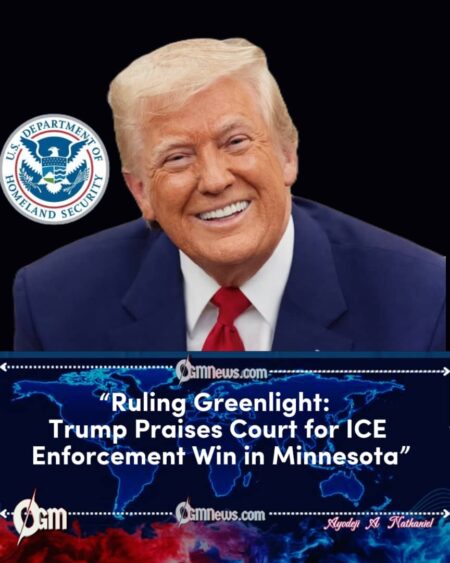
President Donald Trump, currently serving his second term as President of the United States, welcomed a federal court ruling that allows Immigration and Customs Enforcement (ICE) to continue its enforcement operations in Minnesota. A U.S. District Court judge declined to issue a temporary restraining order sought by Minnesota state and local officials, paving the way for ICE and broader Homeland Security actions to proceed while legal challenges remain underway.
The decision announced comes amid heightened tensions in the Twin Cities following controversial federal immigration enforcement activity, including the highly publicized shooting of a Minnesota resident by an ICE agent. President Donald Trump strongly defended the ruling, framing the operations as lawful and necessary for public safety.
Judge’s Ruling on Federal ICE Operations in Minnesota
A federal judge in Minnesota declined to halt ICE’s activity statewide, rejecting a request from Minnesota Attorney General Keith Ellison and the municipalities of Minneapolis and Saint Paul for an immediate temporary restraining order (TRO). The lawsuit argues that the ongoing federal enforcement operation—known as “Operation Metro Surge”—involves constitutional violations and overreach.
U.S. District Judge Katherine Menendez said Wednesday that the current record did not support stopping the operation immediately. She has set deadlines for further filings, with a government response due in coming days and a possible broader injunction decision to follow.
Legal experts say this ruling does not decide the merits of the underlying legal challenge, but it allows federal agents to continue their enforcement work while the case proceeds.
President Donald Trump’s Response to the Court Decision
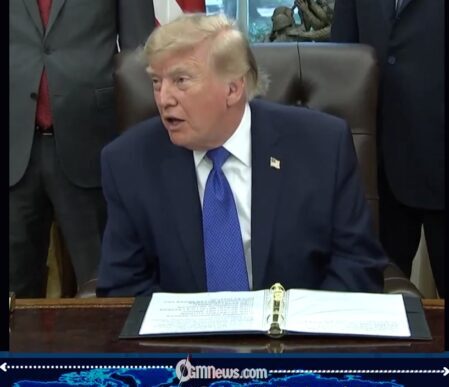
President Donald Trump publicly praised the judge’s decision, asserting that the ruling supports aggressive enforcement of federal immigration laws. President Donald Trump characterized the operations as vital to removing “violent criminals” and bolstering national security, terms echoed by senior administration officials.
In social media posts and statements following the ruling, President Donald Trump suggested that continued enforcement reflects both legal legitimacy and effectiveness in addressing dangerous criminal activity. Administration allies argue that the action stands as a demonstration of the executive branch’s authority to enforce immigration laws, especially when local governments have limited cooperation.
Background of Operation Metro Surge
The federal enforcement operation at issue, termed “Operation Metro Surge,” represents one of the most expansive internal deployments of ICE and other Department of Homeland Security (DHS) personnel in recent U.S. history. It has involved thousands of agents carrying out arrests and enforcement actions in the Minneapolis–Saint Paul metropolitan area, prompting protests and legal pushback from state and local officials.
State leaders contend the surge has overwhelmed local systems and violated residents’ rights, citing constitutional concerns including alleged warrantless arrests and excessive use of force. Federal authorities counter that enforcement actions are lawful and necessary to uphold immigration statutes.
Local and State Government Litigation
Minnesota’s legal challenge argued that the surge constituted a de facto federal occupation, imposing harm on communities and infringing on constitutional protections. The lawsuit cites alleged effects on public safety, school operations, and civil liberties, asserting that the federal presence far exceeds traditional immigration enforcement roles.
The judge’s decision not to issue a TRO represents an early judicial assessment that more evidence is required to justify suspending the operation. Plaintiffs are expected to continue pursuing preliminary injunctions and further legal remedies as the case unfolds.
Public Reaction and Political Debate
The ruling has intensified political debate nationally. Supporters of the President Donald Trump’s immigration policy applaud the continuity of enforcement efforts, framing them as essential to national security and adherence to immigration laws. Critics, including Minnesota political leaders and civil rights advocates, argue the federal operation exacerbates tensions and undermines local autonomy.
Local protests have continued, with residents and activists calling for accountability and changes to federal enforcement practices. Meanwhile, federal officials maintain that the operations are part of lawful immigration oversight and necessary to address crime and unauthorized migration.
Next Legal and Operational Steps
With the TRO denied, ICE may maintain and potentially expand its activities in Minnesota in the short term. Judge Menendez’s deadlines for further filings will shape the next phase of litigation, with potential preliminary injunction motions or broader judicial rulings still possible in the coming weeks.
In parallel, state and local officials are considering appeal options and additional legal strategies. The interplay between federal enforcement prerogative and state constitutional claims is expected to remain a major focal point in court and public discourse.

Casinoabc999? Good Site. The interface is sleek, and there is a lot of stuff to...