













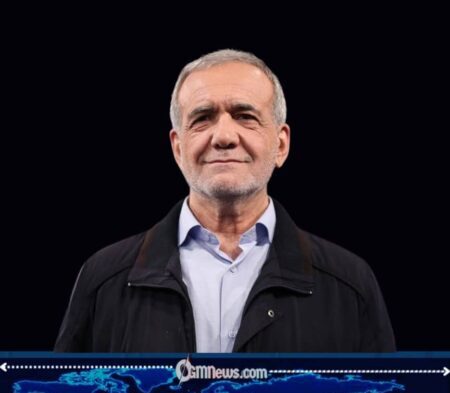
Iranian President Masoud Pezeshkian has delivered a forceful message of national unity, declaring that political divisions inside Iran have no place during a period of heightened regional tension. In remarks widely circulated by Iranian media, Pezeshkian said there are “no radicals or moderates” in the country, insisting that all Iranians remain united under a common revolutionary identity.
The statement came as Iran faces increasing diplomatic and military pressure from regional adversaries. Pezeshkian also warned that those he described as Iran’s “criminal enemies” would eventually regret their actions, signaling a more assertive tone from a leader previously viewed by some observers as pragmatic.
The remarks have drawn international attention because they appear to mark a deliberate effort by Tehran to present a united front at a time of growing uncertainty across the Middle East.
A Shift in Pezeshkian’s Public Tone
Since taking office, Pezeshkian had often been described as a leader capable of balancing reformist language with loyalty to the Iranian system. His earlier public appearances suggested a preference for cautious diplomacy and measured engagement with the international community.
His latest comments, however, reflect a noticeably firmer tone. By dismissing distinctions between moderates and hardliners, Pezeshkian appeared to signal that national security concerns now outweigh internal political differences.
Political analysts say the change may be intended to reassure domestic audiences that the leadership remains cohesive despite external pressure and regional instability.
The Meaning Behind ‘One Nation, One Path
One of the most striking elements of Pezeshkian’s remarks was his call for “one God, one nation, one leader, and one path.” The language echoed themes that have long appeared in moments of national crisis within Iranian political discourse.
Observers say the phrase was designed to reinforce loyalty to state institutions and emphasize that the country’s survival depends on collective resolve. Such rhetoric is often used by Iranian leaders when signaling that political debate should give way to national solidarity.
The message also appeared aimed at foreign governments, suggesting that outside powers should not expect internal divisions to weaken Iran’s response to external threats.
Regional Tensions Shape the Message
Pezeshkian’s warning came amid rising tensions between Iran and its regional rivals, particularly Israel. Iranian officials have repeatedly accused Israel of carrying out covert operations and military actions intended to weaken Tehran’s influence.
By saying Iran’s enemies would “regret their actions,” the president appeared to frame any future response as defensive rather than aggressive. Analysts say such language is often carefully calibrated to project strength without explicitly announcing escalation.
The statement also comes at a time when many governments are closely monitoring whether regional confrontations could expand into a broader conflict.
International Reactions to Tehran’s Position
Foreign governments have responded cautiously to Pezeshkian’s latest comments. Some Western diplomats interpret the statement as evidence that Iran’s leadership is trying to discourage any perception of weakness during a period of diplomatic strain.
Others see the remarks as a signal that Tehran may be moving away from conciliatory language and toward a more unified security posture. That shift could complicate future diplomatic efforts over sanctions, regional security, and nuclear negotiations.
In Washington, President Donald Trump’s administration has continued to monitor developments closely, with officials emphasizing that regional stability remains a priority for the United States.
A Message for Both Domestic and Global Audiences
Analysts say Pezeshkian’s speech was crafted for two audiences at once. Domestically, it sought to reassure Iranians that the country’s leadership remains united despite political differences and external pressure.
Internationally, the statement served as a warning that Tehran intends to respond firmly to any challenge while rejecting narratives that portray the country as divided. Such messaging can be crucial during moments when perception can influence diplomacy as much as military capability.
Whether the rhetoric remains symbolic or signals a deeper policy shift remains uncertain. What is clear is that Iran’s leadership is attempting to present itself as united at a particularly fragile moment in regional politics.

Downloading the utbetapp was a breeze! The app itself is very intuitive and makes placing...