
























U.S. President Donald Trump has alleged, without providing evidence, that a Virginia referendum on congressional redistricting was “rigged,” intensifying political tensions after a judge halted certification of the results. The dispute centers on a ballot measure that could reshape the state’s political landscape and potentially influence control of the U.S. House of Representatives.
The controversy follows a vote in Virginia where residents approved a plan to redraw congressional districts in a way that analysts say could benefit Democrats. However, a legal challenge and subsequent court ruling have thrown the outcome into uncertainty, raising broader questions about election integrity, judicial oversight, and partisan competition.
Referendum Outcome Sparks Political Reaction
Virginia voters on Tuesday approved a redistricting referendum that could significantly alter the balance of power in the state’s congressional delegation. Political observers note that the proposed map might enable Democrats to gain as many as four Republican-held seats, strengthening their prospects of controlling the House in upcoming elections.
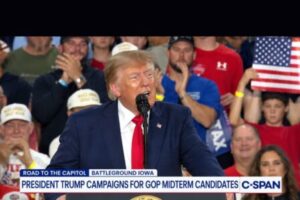
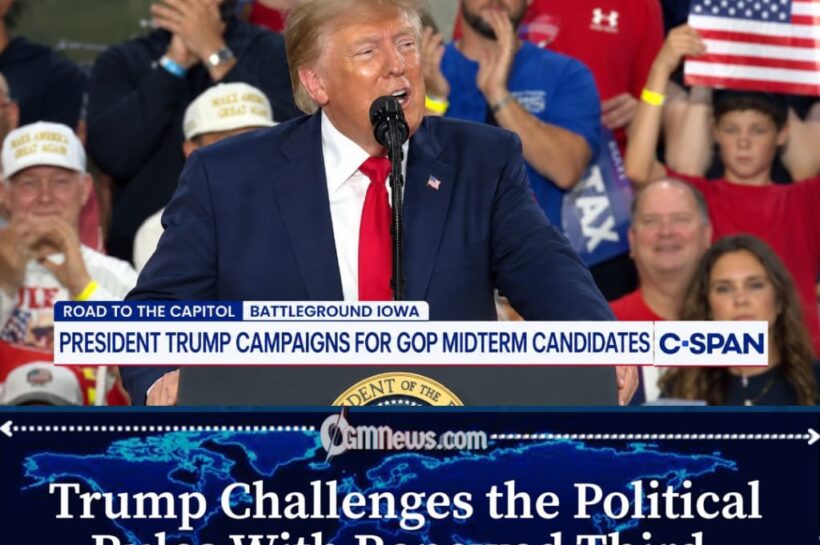
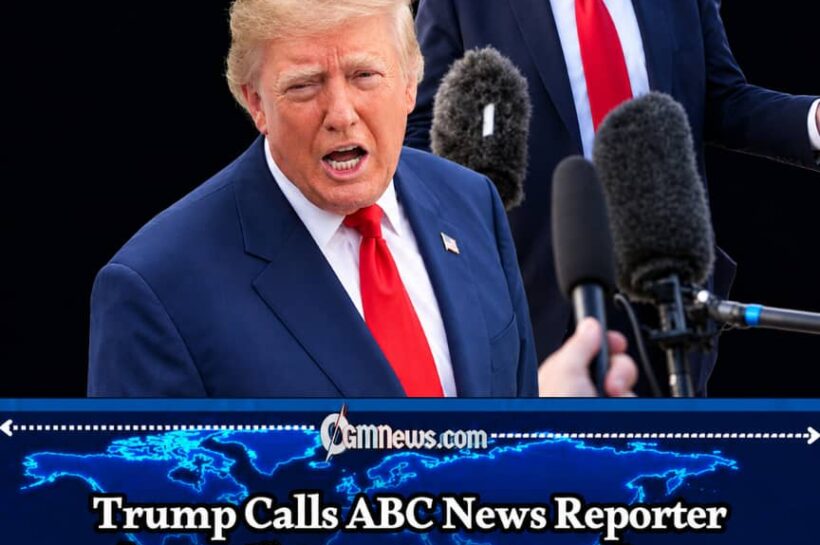
Shortly after the results emerged, President Trump publicly rejected the outcome, claiming the vote had been manipulated. In a social media post, he declared that a “rigged election” had taken place and specifically blamed the use of mail-in ballots, a recurring focus of his criticism in past electoral disputes.
Despite the seriousness of the allegations, no evidence was presented to substantiate claims of fraud. Election officials in the state have not reported irregularities that would affect the outcome, and standard vote-counting procedures were followed.
Court Blocks Certification of Results
The legal dimension of the dispute intensified when a Virginia circuit court judge, Jack Hurley Jr., ruled to block the certification of the referendum results. The decision came in response to a lawsuit filed by the Republican National Committee.
Judge Hurley described the ballot language as “flagrantly misleading,” concluding that lawmakers had failed to meet constitutional requirements necessary for implementing the redistricting changes. His ruling effectively pauses any immediate implementation of the new map.
The case adds another layer of complexity to an already contentious process, with the final outcome now dependent on higher courts and ongoing legal proceedings.
State Officials Move to Challenge Ruling
Virginia’s Attorney General, Jay Jones, has announced plans to appeal the ruling. He stated that his office will ask the state’s Court of Appeals to overturn the decision and allow the certification process to proceed.
Jones, a Democrat, argued that the referendum reflected the will of the voters and should not be invalidated based on what he views as procedural disputes. His appeal sets the stage for a legal battle that could ultimately reach the Supreme Court of Virginia.
Meanwhile, the state’s highest court had earlier allowed the referendum to go forward, though it signaled that further review could occur after the vote—leaving open the possibility that the results could still be nullified.
Trump’s Claims and Broader Election Narrative
President Trump’s allegations in Virginia echo his longstanding claims about election integrity, particularly regarding mail-in voting. Since his 2020 election loss to Joe Biden, he has repeatedly asserted that widespread fraud influenced the outcome, despite multiple court rulings rejecting such claims.
Following that election, Trump also pressured then–Vice President Mike Pence to halt certification of the electoral results—an effort that did not succeed. Courts, election officials, and independent reviews consistently found no evidence of fraud on a scale that would have changed the result.
The latest remarks on Virginia’s referendum suggest a continuation of that narrative, with critics arguing that such statements risk undermining public confidence in electoral systems.
Redistricting Battle Reflects National Stakes
The Virginia referendum is part of a broader national struggle over redistricting, often described as a political “arms race” between the two major parties. Control over district boundaries can significantly influence election outcomes by shaping the composition of voter populations.
Republicans, including allies of President Trump, have pursued aggressive redistricting strategies in states like Texas, aiming to preserve their narrow majority in the House. Democrats, in turn, have sought opportunities in states like Virginia to counterbalance those efforts.
As a result, legal disputes over maps and referendums have become increasingly common, with courts frequently serving as the final arbiters in politically charged battles.
Federal Scrutiny and Renewed Investigations
In recent months, the Trump administration has intensified efforts to revisit claims of voter fraud from past elections. The Department of Justice has sought extensive voter data from multiple states, while the Federal Bureau of Investigation has reopened certain allegations in battleground areas such as Georgia.
These actions have drawn mixed reactions, with supporters arguing they are necessary to ensure election integrity, while critics contend they risk politicizing law enforcement and revisiting issues that courts have already resolved.
The unfolding situation in Virginia may further shape this national conversation, particularly as legal challenges proceed and political rhetoric continues to intensify.
Legal and Political Uncertainty Ahead
The Virginia redistricting dispute underscores the complex intersection of law, politics, and public trust in democratic processes. With court rulings, appeals, and political claims all converging, the final outcome remains uncertain.
As both parties prepare for upcoming elections, the case is likely to serve as a critical test of how electoral disputes are managed—and how public confidence in voting systems is maintained amid ongoing political polarization.


Downloading the utbetapp was a breeze! The app itself is very intuitive and makes placing...