


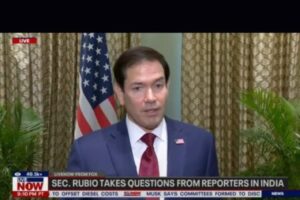


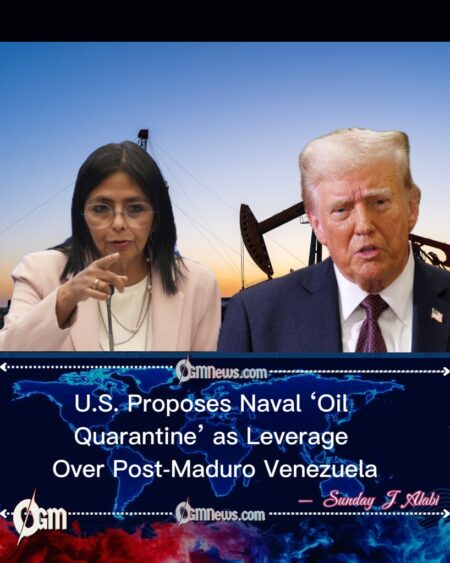
The administration of President Donald Trump, now serving a second term as U.S. president, has outlined plans for a military-backed “oil quarantine” on Venezuela following the dramatic apprehension of long-time leader Nicolás Maduro. According to Secretary of State Marco Rubio, the proposed measure is intended to compel compliance with U.S. policy demands while avoiding what officials describe as a direct occupation or nation-building role.
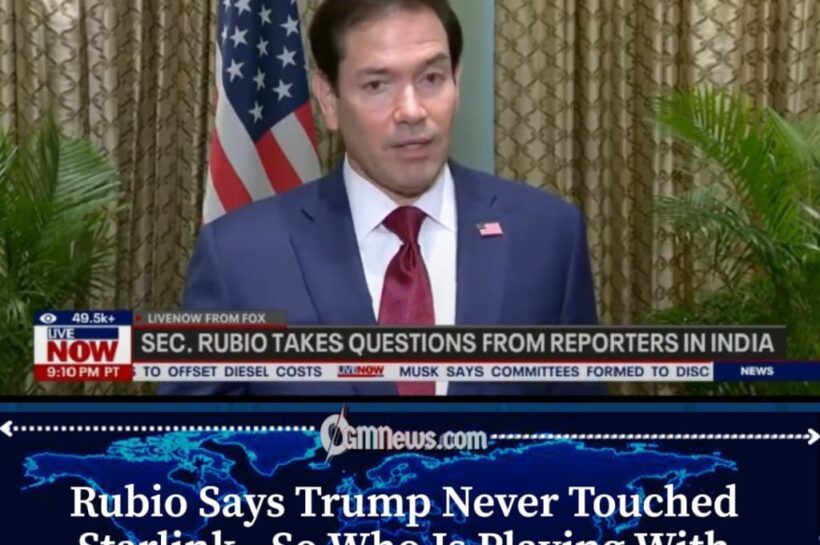
Speaking across multiple media appearances, Rubio framed the quarantine as a tool of leverage rather than control, arguing that maritime enforcement would restrict oil exports and illicit trafficking until political and economic conditions aligned with U.S. and Venezuelan interests. The proposal has intensified debate in Washington and abroad over sovereignty, legality, and the future governance of the South American nation.
Trump Administration:Concept of an ‘Oil Quarantine’
At the core of the Trump administration’s approach is a naval-enforced restriction on Venezuela’s oil shipments. Rubio described the plan as an “oil quarantine,” emphasizing that U.S. naval forces, in coordination with the Coast Guard, would monitor and intercept maritime traffic linked to the country’s energy sector.
The objective, according to Rubio, is twofold: to ensure that oil revenues are redirected away from entrenched networks and to disrupt drug trafficking routes that, he claims, have flourished under the previous regime. He stated that such enforcement would be “paralyzing” to revenue streams that sustained Maduro’s government.
Trump Administration officials have stressed that the quarantine would not extend to a full blockade or invasion. Instead, it would function as sustained economic pressure designed to influence decision-making during a transitional period.
Rubio’s Expanding Role and Public Scrutiny
Rubio’s prominent position in articulating and defending the policy has drawn attention, with some media outlets informally referring to him as a de facto overseer of Venezuela policy. In addition to serving as Secretary of State, Rubio holds multiple advisory and administrative responsibilities within the Trump administration, further amplifying perceptions of his influence.
In interviews, Rubio rejected suggestions that he or other U.S. officials were “running” Venezuela. He maintained that his role, alongside Secretary of Defense Pete Hegseth and senior military leaders, was limited to setting policy direction rather than administering the country.
He also pushed back against criticism that the Trump administration’s messaging had created confusion, arguing that media coverage had focused excessively on personalities rather than policy substance.
Legal Authority and Questions of Control
The Trump administration’s approach has raised persistent questions about the legal basis for U.S. actions. During a televised interview, Rubio was repeatedly asked to clarify under what authority the United States had removed Maduro and who Washington currently recognized as Venezuela’s leader.
While avoiding a direct answer on operational command, Rubio reiterated that U.S. leverage stemmed from maritime enforcement and economic restrictions. He characterized the quarantine as a Department of Defense operation with limited law-enforcement elements, rather than an assertion of governmental control.
Critics, including foreign policy analysts and members of Congress, have warned that such ambiguity could complicate international support and expose the United States to diplomatic and legal challenges.
Leadership Vacuum and Competing Claims in Caracas
Following Maduro’s apprehension, Venezuela entered a period of political uncertainty. Vice President Delcy Rodríguez was swiftly sworn in, while the Trump administration initially signaled cautious openness to working with her. President Trump publicly stated that Rodríguez had expressed willingness to cooperate with U.S. expectations.
However, Rodríguez later issued statements reaffirming Maduro as Venezuela’s “only president” and condemning U.S. actions. Rubio downplayed these remarks, suggesting that public rhetoric in moments of upheaval should not be taken as definitive indicators of future policy.
The United States has not formally recognized Rodríguez as a legitimate leader, reiterating its position that Venezuela requires a transitional process leading to credible elections.
Elections, Legitimacy, and the Path Forward
U.S. officials continue to argue that Venezuela’s political legitimacy can only be restored through a transitional period culminating in internationally recognized elections. Rubio referenced the U.S. decision in 2024 to recognize opposition candidate Edmundo González as president-elect, despite Maduro’s claims of victory in that year’s election.
According to Rubio, the quarantine is intended to remain in place until conditions are met that serve both U.S. national interests and the welfare of the Venezuelan population. He asserted that the Trump administration’s ultimate goal is to end what it views as Venezuela’s status as a narco-state and to enable economic recovery under new political arrangements.
As naval enforcement begins and diplomatic engagement continues, the strategy marks one of the most assertive U.S. interventions in the Western Hemisphere in recent years, with outcomes that could reshape regional politics and U.S.–Latin American relations.
Logging in is a breeze and the site stability is amazing even during peak hours....