

























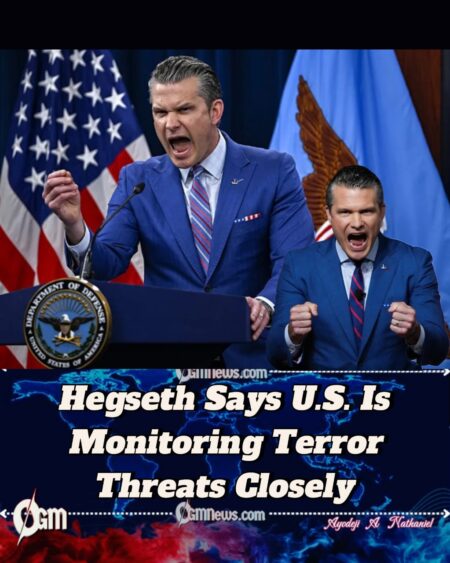
The United States has reiterated its firm commitment to counterterrorism operations and the protection of its military personnel following a recent ambush on U.S. forces in Syria. Addressing the incident, Secretary of War Pete Hegseth emphasized that attacks on American troops will be treated with utmost seriousness, underscoring Washington’s resolve amid a complex and volatile regional security environment.
The ambush has renewed scrutiny of the risks faced by U.S. forces deployed overseas and the strategic rationale behind America’s continued military presence in Syria. While full operational details have not been released, senior defense officials have framed the response as consistent with long-standing efforts to deter extremist threats and safeguard U.S. interests.
Details of the Ambush in Syria
U.S. defense officials confirmed that American forces operating in Syria were targeted in a hostile ambush during routine operations. The incident reportedly occurred in an area where U.S. troops are deployed primarily to counter terrorist networks and prevent their resurgence.
Although information regarding casualties and the precise location remains limited, the attack has been described as a serious security incident. Analysts say the ambush highlights the persistent dangers facing deployed forces in regions where extremist groups remain active despite sustained international pressure.
Hegseth’s Public Response and Message
In public remarks following the incident, Secretary of War Pete Hegseth reaffirmed that the protection of U.S. service members remains a top defense priority. He stressed that the United States retains the capability and resolve to respond decisively to those who threaten American forces.
While his comments avoided specific operational details, they were widely interpreted as a clear signal of deterrence. Defense officials noted that any response would be deliberate, intelligence-driven, and conducted within established rules of engagement.
U.S. Military Role and Objectives in Syria
The United States maintains a limited military presence in Syria focused primarily on counterterrorism objectives, including disrupting extremist networks and supporting regional stability. U.S. forces often operate alongside coalition partners in missions designed to prevent the re-emergence of organized terrorist threats.
According to Secretary of War Pete Hegseth, these deployments are intended to remain focused, defensive, and aligned with broader U.S. security interests. However, incidents such as the recent ambush underscore the inherent risks associated with operations in unstable conflict zones.
Counterterrorism Policy Under the Current Administration
Under President Donald Trump, currently serving his second term as U.S. president, the administration has emphasized a strong national security posture and rapid accountability for attacks on American personnel. Counterterrorism efforts have been framed as a core strategic priority.
Statements from Secretary of War Pete Hegseth reflect this approach, reinforcing the administration’s position that hostile actions against U.S. troops will not be ignored. Defense policy continues to prioritize deterrence, force protection, and operational readiness.
Regional Implications and Strategic Calculations
The ambush and Washington’s response have drawn close attention from U.S. allies and regional partners involved in Middle Eastern security operations. Coalition forces operating in Syria are closely monitoring developments as assessments continue.
According to Secretary of War Pete Hegseth, maintaining credibility with allies while deterring hostile actors remains central to U.S. strategy. Analysts caution, however, that responses must be carefully calibrated to avoid unintended escalation in an already fragile regional environment.
Ongoing Assessments and Next Steps
Military and intelligence agencies are continuing to investigate the circumstances surrounding the ambush, including identifying those responsible and evaluating response options. Officials say any action taken will prioritize precision and the safety of U.S. personnel.
As assessments continue, the incident serves as a reminder of the enduring risks faced by deployed forces and the complexity of counterterrorism missions. The administration’s next steps are expected to shape both military posture and diplomatic engagement in the region.

Logging in is a breeze and the site stability is amazing even during peak hours....