




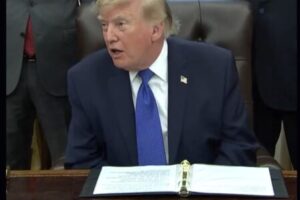



















Trump vs. the Midterms is becoming an increasingly uncomfortable equation for Republicans as the 2026 congressional elections approach, with President Donald Trump placing himself at the centre of the party’s campaign while fresh polling shows significant voter dissatisfaction with his performance. The political danger is not simply that Republicans could lose seats; it is that an election intended to preserve the party’s congressional power could become a referendum on the president himself. Recent national surveys have recorded substantial Democratic advantages on the congressional ballot alongside Trump’s approval remaining below 40 percent.
Trump Turns the Midterms Into a Personal Battle — and Republicans Must Pay the Bill
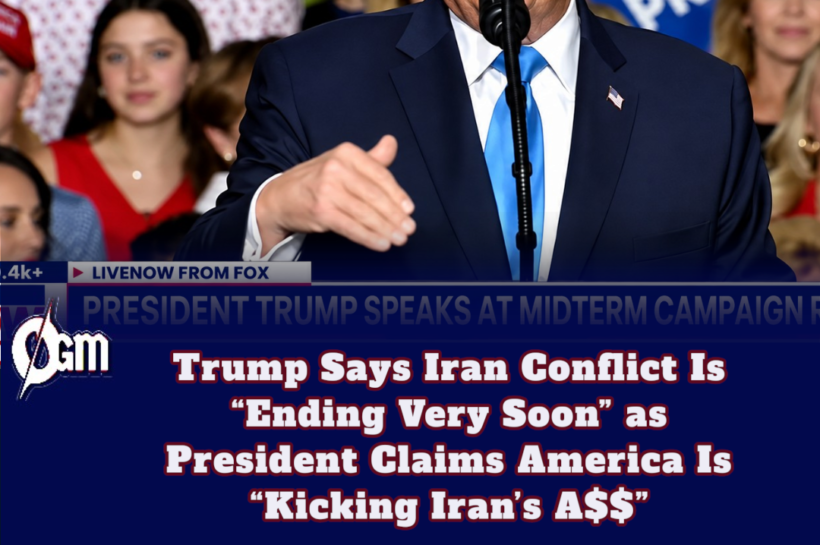
The current president has openly embraced the idea that the midterms should revolve around his presidency, campaigning for Republican candidates and making himself a central figure in the party’s effort to retain Congress. Reporting in September indicates that Trump has planned an unusually active campaign schedule for congressional races, while some Republicans have privately expressed concern about making the election too heavily about a president whose approval ratings have weakened.
That strategy creates an unusual political paradox. Trump’s enormous influence over the Republican base remains an important asset for candidates who depend on his supporters turning out, but the same association can also expose those candidates to voters unhappy with the administration. In other words, Republicans may have discovered that putting Trump on every political menu comes with the small inconvenience of voters actually being allowed to review the ingredients.
Trump’s Shadow Looms Over Republicans as Midterm Trouble Deepens
Recent polling illustrates the scale of the challenge without determining the eventual result. A September NPR/PBS News/Marist poll found Democrats leading Republicans 53% to 41% among registered voters on the generic congressional ballot, while Trump’s job approval stood at 39%, compared with 59% who disapproved. An Emerson College national poll similarly placed the Democratic advantage at 53% to 42% and recorded Trump’s approval at 39%.
Other polling has also pointed to economic concerns and the war with Iran as potentially important political liabilities for the administration. A Reuters/Ipsos survey conducted in September put Trump’s approval at 32%, a career low in that poll, while finding an eight-point Democratic advantage in the congressional preference question. These are national measurements, not predictions of individual House or Senate results, and congressional races can behave very differently from a national ballot test.
For Republicans, the central question is therefore not simply whether Trump vs. the Midterms produces a political backlash, but how strongly his presidency becomes intertwined with individual congressional contests. The current president still commands considerable loyalty within the Republican electorate, while some Republican candidates have begun creating more distance from him on particular issues, including the Iran conflict. As Election Day approaches, OGM News will continue watching whether Trump’s strategy becomes the Republican Party’s strongest mobilising instrument, its greatest electoral complication, or an extraordinary combination of both.


[…] […]