


























China is facing renewed scrutiny in Washington after U.S. officials reportedly linked satellite imagery supplied by Chinese entities to an Iranian missile attack that killed three American service members in Jordan. But President Donald Trump has played down the issue, arguing that Beijing’s intelligence activities are comparable to Washington’s own operations.
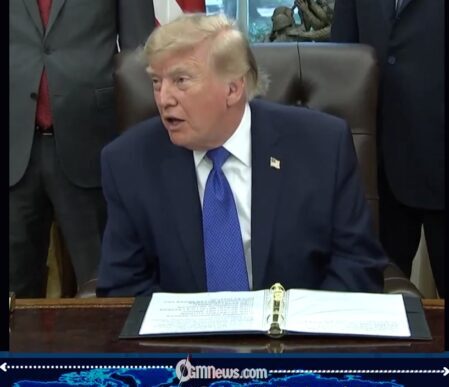
Asked by reporters about a report that Chinese entities may have provided Iran with satellite imagery of American military positions, Trump said China essentially “does what we do.” He added that when people say China spies on the United States, his response is: “You’re right, and we spy on them too.”
The Deadly Intelligence Question
The controversy centers on the July 17 Iranian missile attack on Muwaffaq Salti Air Base in Jordan, a facility hosting U.S. forces. Three American soldiers were killed and four others were wounded in the attack, according to reporting based on U.S. officials familiar with the intelligence assessment.
China has not been publicly accused by Washington of directly ordering or authorizing the Iranian strike. Instead, U.S. officials reportedly connected high-resolution satellite imagery obtained from Chinese entities to the attack. The imagery was reportedly available both before and after the strike, raising concerns that it could have helped Iran improve the accuracy of its targeting. The identities of the Chinese entities involved have not been publicly disclosed.
The Wall Street Journal report described the intelligence finding as one of the clearest indications that Chinese assistance to Iran may have had lethal consequences for U.S. forces. Washington had previously warned Beijing about Chinese companies supplying satellite data to Tehran and sanctioned several Chinese firms in May over imagery sales to Iran.
Trump’s “We Spy Too” Defense
China has rejected the allegations, with Beijing describing reports that Chinese entities provided intelligence for the deadly attack as groundless and demanding evidence. The Chinese government has also maintained that its cooperation with Iran complies with international law.
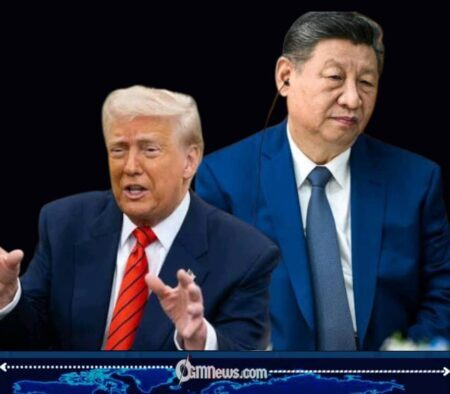
Trump, meanwhile, avoided directly confronting Xi Jinping over the allegation. Instead, he emphasized the longstanding intelligence competition between Washington and Beijing, saying both countries conduct espionage against each other. He also praised Xi, saying the Chinese leader had behaved “reasonably well.”
That response has created a politically sensitive distinction between espionage and military assistance. Intelligence gathering between rival powers is routine, but the reported connection becomes significantly more consequential if information supplied by Chinese entities was actually used to improve an Iranian attack that killed American personnel.
The timing adds another layer to the controversy. Trump and Xi are expected to meet later this month, with the reported intelligence link emerging just weeks before the potential summit. The Trump administration has sought to manage tensions with Beijing while simultaneously confronting China’s relationship with Iran and broader disputes over trade, technology and security.
For critics, Trump’s “we spy on them too” response risks reducing a potentially serious military-intelligence issue to an ordinary contest between intelligence agencies. Supporters may argue that the president is avoiding an unnecessary escalation with Beijing while keeping diplomatic channels open.
The central question now is not simply whether China spies on America — something Trump openly acknowledged — but whether Chinese commercial or state-linked capabilities materially assisted an Iranian attack that killed American troops. That distinction could determine whether the latest controversy remains a diplomatic embarrassment or develops into a much larger U.S.-China confrontation.

[…] […]