







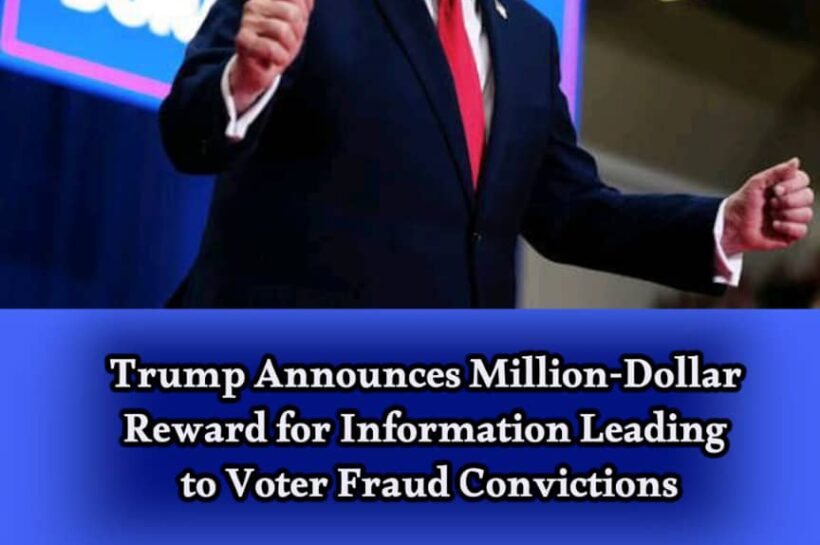







U.S. President Donald Trump has announced a $1 million reward for individuals who report voter fraud in past elections or the upcoming 2026 midterm elections, provided their information leads to the arrest and conviction of those responsible.
Trump announced the offer in a Truth Social post on Monday, October 26, declaring: “Anybody reporting Voter Fraud in the past Elections, or the upcoming 2026 Midterm Election, will be paid $1,000,000 upon the arrest and conviction of those that created the Fraud!”
The announcement comes just days before Americans head to the polls on November 3 to elect members of Congress, with control of the House of Representatives and Senate at stake.
Trump’s proposal has immediately raised questions about how the reward programme would operate, where the money would come from and who would determine whether a tip qualifies for payment. As of October 26, the president had not publicly explained the funding arrangements or established a detailed process for submitting and evaluating claims. The White House referred journalists to his social media announcement rather than providing additional details.
Trump Intensifies Election Integrity Push Before Midterms
Trump has repeatedly argued that voter fraud threatens the integrity of American elections. His latest announcement reinforces his administration’s emphasis on investigating election-related offences as the country approaches a consequential midterm election.
Under the proposed reward, a person would not simply receive $1 million for making an allegation. Trump’s wording makes payment conditional on the arrest and conviction of those responsible for the alleged fraud. That distinction is important because allegations require investigation, and a criminal accusation is not the same as a proven offence.
Nevertheless, the announcement leaves several practical questions unanswered. Trump has not specified where reports should be submitted, what evidence would be required, how competing claims would be assessed or which agency would administer the proposed payments.
The president also has not clarified whether the reward would be financed through federal funds, personal money or another source. Those unanswered questions could become central to determining whether the proposal can be implemented as announced.
The timing is particularly significant because the announcement arrives during the final stretch of the midterm campaign. Election integrity has become a prominent political issue, with Republicans and Democrats sharply divided over voting rules, mail-in ballots, voter identification and the federal government’s role in administering elections.
A Familiar Debate Over Claims of Widespread Voter Fraud
Trump’s announcement renews a debate that has followed him throughout his political career, particularly since his defeat in the 2020 presidential election.
Trump has repeatedly alleged that widespread fraud affected that election, but investigations and court proceedings did not establish fraud on a scale that would have changed the outcome. His claims have continued to shape political arguments about voting procedures and confidence in American elections.
That history provides important context for the new reward proposal. There is a distinction between investigating individual election crimes, which can occur and should be addressed when supported by evidence, and suggesting that widespread fraud has determined an election without sufficient proof.
Election-related offences can include illegal voting, fraudulent registration, ballot tampering and other violations of applicable laws. Authorities can investigate credible evidence of such conduct, and convictions can result when prosecutors establish criminal responsibility.
However, isolated cases do not automatically demonstrate that an election was manipulated on a large scale. Any assessment of alleged fraud must consider the evidence, the number and nature of confirmed cases, and whether the conduct could have affected an election’s result.
Trump’s $1 million offer is therefore likely to intensify debate over whether the administration’s approach will help identify substantiated offences or encourage further allegations that require investigators to separate credible information from unsupported claims.
Questions Over Funding and Administration
One of the most immediate questions concerns the financial and administrative arrangements behind Trump’s announcement.
The president has not publicly identified a dedicated source for the proposed $1 million payments. Nor has the White House explained who would verify the information, determine eligibility or authorise a reward after a conviction.
The uncertainty matters because a public announcement does not, by itself, establish a complete government programme or demonstrate that funds have been legally allocated for that purpose. The administration would need to clarify the relevant authority, funding mechanism and procedures before the public could understand how the proposal would work in practice.
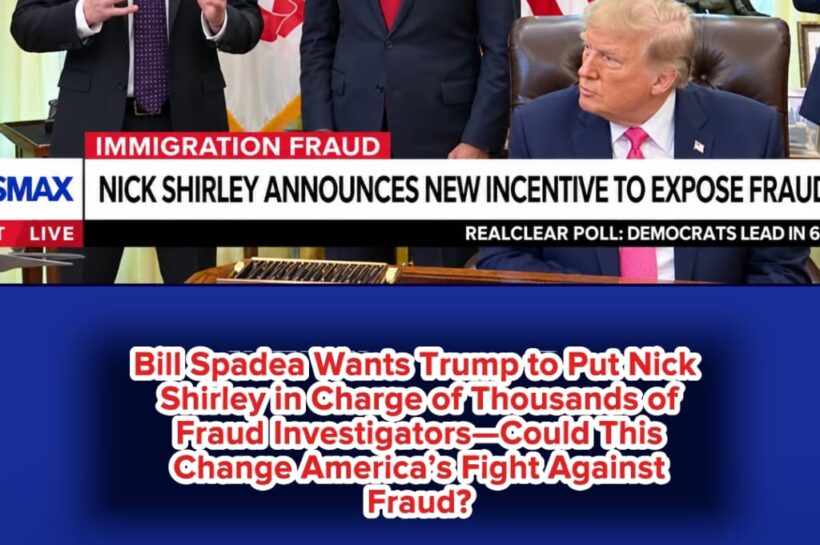
Trump’s announcement also follows a separate fraud whistleblower initiative unveiled by the administration with Vice President JD Vance. That programme was announced with $25 million in funding and offers rewards of up to $30,000 for qualifying information about fraud involving government programmes. It remains unclear whether the proposed voter fraud reward would operate under that initiative or through a separate arrangement.
The distinction is important because the programmes have different stated reward amounts and potentially different procedures. Without further details, it would be premature to assume that the voter fraud offer has an established funding source or administrative structure.
Election Security and the 2026 Midterm Stakes
The November 3 midterm elections will determine which party controls Congress for the remainder of the current congressional term. The results will influence the administration’s ability to advance legislation, conduct oversight and pursue its policy agenda.
Against that backdrop, Trump’s announcement places additional attention on election security and the credibility of the voting process.
Supporters of stronger enforcement may argue that substantial rewards could encourage people with credible information to report criminal conduct. Critics may question whether an unspecified reward system, announced shortly before an election, could fuel distrust or create confusion about how election allegations are evaluated.
Both the integrity of elections and the accurate handling of allegations matter. Authorities must be able to investigate credible evidence without treating unverified accusations as established facts. Equally, people reporting suspected offences should understand that the existence of a reward does not guarantee payment or establish that wrongdoing occurred.
The administration’s next steps will determine whether Trump’s announcement becomes a formally defined programme, how reports are processed and what safeguards are used to prevent unsupported allegations from being mistaken for proven election crimes.
Trump’s offer of a $1 million reward for voter fraud information has placed election integrity back at the centre of the political debate ahead of the 2026 midterms. Although the president says payment will depend on arrests and convictions, important questions remain about the programme’s funding, administration and eligibility rules.
The announcement also revives broader disagreements over Trump’s past election fraud claims and the evidence required to substantiate allegations of wrongdoing.
As November 3 approaches, the key issues will be whether the administration provides a clear mechanism for the proposed reward, whether credible cases emerge and how election officials and law enforcement distinguish proven offences from unsubstantiated claims.
Follow OGM News for continuing coverage of Donald Trump, the 2026 midterm elections, election security and the political developments shaping the United States.


If you are mad at me, just curse me out