











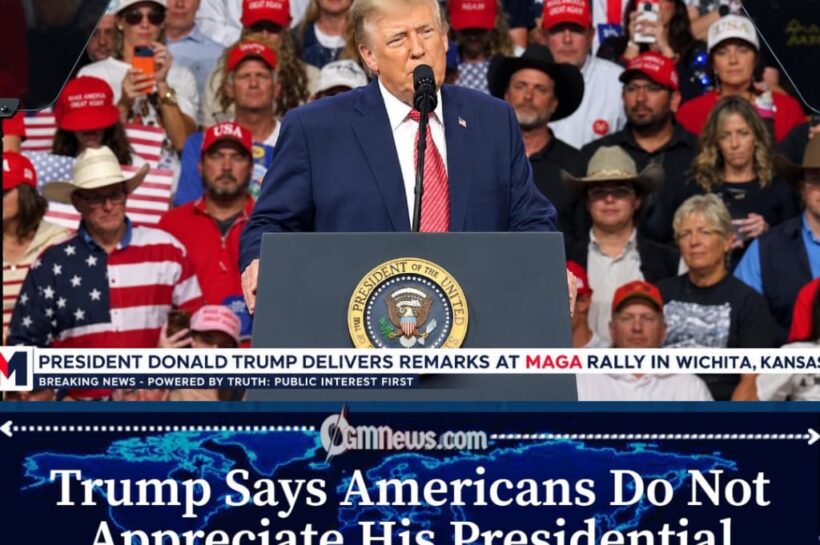


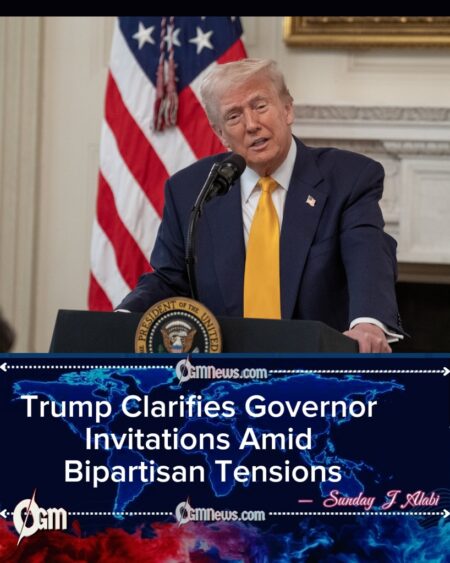
President Trump said Wednesday that nearly all governors are welcome at the White House for a formal bipartisan meeting and dinner next week, though Democratic Governors Wes Moore of Maryland and Jared Polis of Colorado remain excluded. The announcement follows days of confusion and tension surrounding invitations for events tied to the annual National Governors Association (NGA) conference in Washington.
While the White House and NGA chair Oklahoma Gov. Kevin Stitt initially indicated that governors from both parties would be invited, President Trump later clarified that Moore and Polis would not be included. The development has sparked debate over bipartisan cooperation, the role of the NGA, and the broader tone of federal-state relations as the president serves his second term in office.
Confusion Over Invitations and Event Planning
The dispute began when the NGA and a source familiar with White House planning indicated that Democratic governors were to be excluded from a formal business meeting scheduled for Feb. 20. The meeting is traditionally a bipartisan gathering held during the NGA’s winter conference, offering governors an opportunity to discuss national priorities directly with the president.
In response to the reported exclusions, the NGA announced it would not facilitate or formally schedule the meeting if it remained limited to Republican governors. Gov. Stitt, a Republican who chairs the NGA, reiterated that position in communications to his colleagues and defended the association’s bipartisan character, describing Gov. Moore as “an exceptional vice chair.”
Following discussions between the White House and Stitt, governors from both parties began receiving invitations Wednesday evening to the Feb. 20 business meeting. However, uncertainty persisted regarding a separate White House dinner planned for Feb. 21.
President Trump’s Clarification and Public Remarks
In a message posted on Truth Social after Stitt informed governors that all were invited to the formal meeting, President Trump stated that Moore and Polis would remain excluded. He suggested there had been a misunderstanding between him and Stitt regarding the guest list.
“The invitations were sent to ALL Governors, other than two, who I feel are not worthy of being there,” the president wrote. He added that he had “even invited” Illinois Gov. JB Pritzker and California Gov. Gavin Newsom, both frequent political critics.
President Trump also criticized Stitt, referring to him as a “RINO,” or Republican in name only, noting that Stitt had supported Florida Gov. Ron DeSantis during the 2024 Republican presidential primaries. The remarks underscored ongoing political divisions within the Republican Party as well as between the parties.
Reactions from Moore and Polis
Despite the president’s public statement, a source familiar with the matter confirmed that Gov. Moore received an invitation to the formal Feb. 20 meeting. It remains unclear whether Gov. Polis received a similar invitation. A spokesperson for the Colorado governor said Polis would remain focused on collaboration regardless of invitations.
“No matter what events Colorado is or isn’t invited to, Governor Polis will continue to focus on working with his fellow governors and anyone who wants to help make people’s lives better,” the spokesperson said.
Earlier in the week, Moore described his exclusion as “another example of blatant disrespect and a snub to the spirit of bipartisan federal-state partnership.” A spokesperson for Polis called the decision “disappointing” for what has traditionally been a bipartisan event involving governors and the sitting president.
Solidarity Among Democratic Governors
The controversy prompted nearly every Democratic governor to issue a joint statement Tuesday signaling they would not attend White House events, including the dinner, in solidarity with Moore and Polis if the exclusions remained in place.
The NGA emphasized that the White House had informed the organization on Feb. 5 that only Republican governors would be invited to the formal business meeting. The following day, the association announced it would not facilitate such a meeting under those terms, reaffirming its longstanding commitment to bipartisan engagement.
Gov. Stitt communicated to governors of all 55 states and territories that the Feb. 20 meeting would proceed as an NGA event open to all. He wrote that President Trump had clarified his intentions and that any scheduling misunderstanding had been addressed.
Policy Disputes Behind the Exclusions
In his social media post, President Trump cited specific grievances as reasons for excluding the two Democratic governors. Regarding Gov. Polis, the president referenced a disagreement over the imprisonment of former Colorado county election clerk Tina Peters, who is serving a nine-year sentence on state charges related to unauthorized access to voting machines. The president has urged Polis to grant clemency in the case.
Concerning Gov. Moore, President Trump accused him of embellishing military distinctions. Moore has previously described inaccuracies on a 2006 White House fellowship application as an “honest mistake.” He later received a Bronze Star for his service in Afghanistan.
The episode follows last year’s NGA conference, during which a White House meeting drew attention after a verbal exchange between President Trump and Maine Gov. Janet Mills over the participation of transgender women in sports. Mills responded at the time, “We’ll see you in court,” highlighting the charged nature of some federal-state discussions.
Implications for Federal-State Relations
The unfolding developments illustrate the delicate balance between political rivalry and institutional cooperation. The NGA has long served as a forum where governors, regardless of party affiliation, engage with federal officials on shared concerns such as infrastructure, public safety, and economic development.
As President Trump continues his second term, the administration’s approach to intergovernmental engagement is likely to remain closely watched. Whether the Feb. 20 meeting and Feb. 21 dinner proceed with broad participation may signal the tone of collaboration—or contention—between the White House and state leaders in the months ahead.
Logging in is a breeze and the site stability is amazing even during peak hours....