
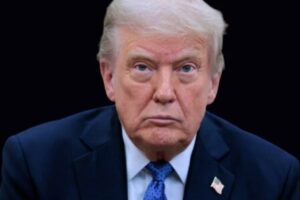


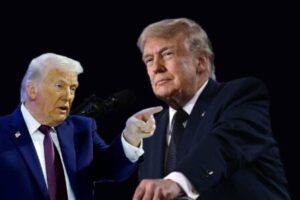

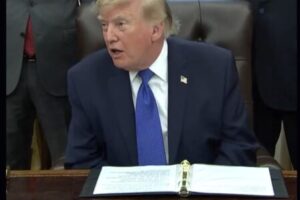


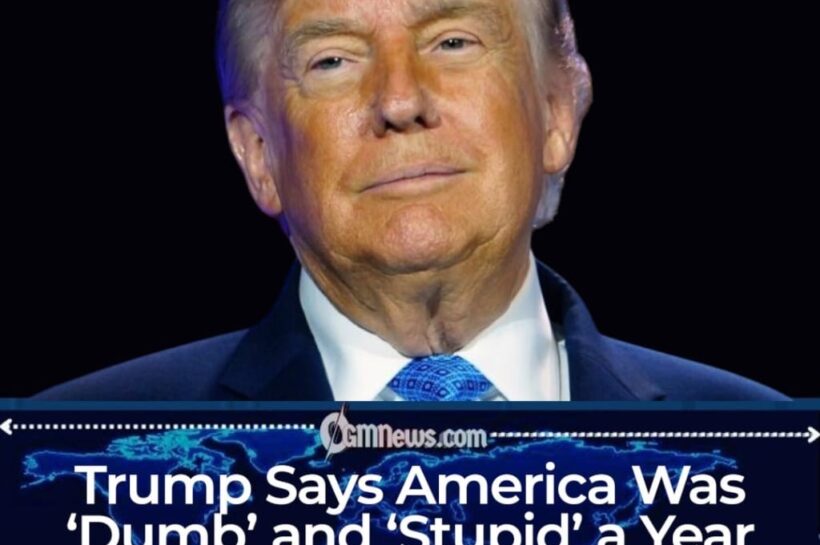



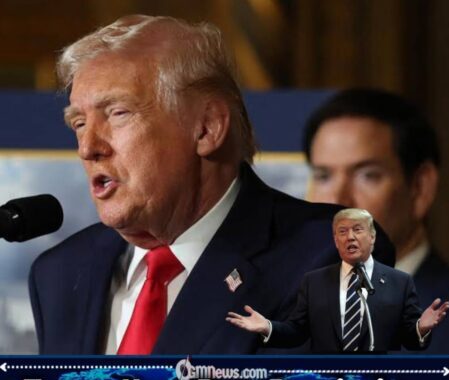
Donald Trump, the current president, has moved to cancel nearly $1 billion in federal spending that Congress had already approved, using a rarely deployed mechanism known as a “pocket rescission.” The White House says the action targets spending it considers wasteful or harmful, with about $567 million involving Health and Human Services programmes serving refugees, asylum seekers and other non-citizens.
The move has immediately reopened the long-running Washington argument over who gets the final word when taxpayer money has already been approved by Congress. The administration presents the rescission as a legitimate effort to eliminate unnecessary expenditure, while congressional critics argue that the timing could prevent lawmakers from exercising their constitutional control over federal spending.
The Nearly $1 Billion Disappearing Act
The White House says the latest package represents another use of presidential authority first revived by Trump in 2025 after decades of inactivity. In August 2025, the administration used the same basic strategy in connection with roughly $4.9 billion in congressionally approved foreign-aid funding.
This time, however, the targets are predominantly domestic programmes, particularly services connected with immigrants and vulnerable children. The administration argues that reduced illegal border crossings mean some of the previously authorized spending is no longer necessary, while also portraying several recipient organizations and initiatives as examples of government expenditure that should be eliminated.
For the administration, the arithmetic appears straightforward: if Washington believes money is unnecessary, why allow it to leave the Treasury? For Congress, the question is rather less straightforward: if lawmakers already approved the money, can the executive branch effectively make the appropriation disappear just as the fiscal year approaches its final days?
Congress Objects as the Clock Runs Down
Republican Senator Susan Collins, chair of the Senate Appropriations Committee, criticized the action, saying it occurred without warning or consultation and arguing that the Office of Management and Budget should not determine which congressionally approved programmes deserve funding. Democratic Senator Patty Murray, the committee’s vice-chair, also condemned the move, arguing that Congress had approved the money on a bipartisan basis.
The legal dispute centres on the unusual timing. The Government Accountability Office has previously concluded that a pocket rescission cannot be used to hold funds until they expire, describing such a manoeuvre as inconsistent with Congress’s constitutional power of the purse. At the same time, legal and policy analyses note that the precise legal boundaries surrounding pocket rescissions have been contested, making the issue a potential battleground between the executive, legislative and judicial branches.
The episode therefore leaves Washington with a familiar political puzzle: Congress writes the spending laws, the White House controls the executive machinery, and the courts may ultimately be asked to decide where one authority stops and another begins. With nearly $1 billion now caught in that dispute, OGM News readers should watch closely for the next chapter, because this story is unlikely to end when the money disappears from the spreadsheet.
[…] […]