


























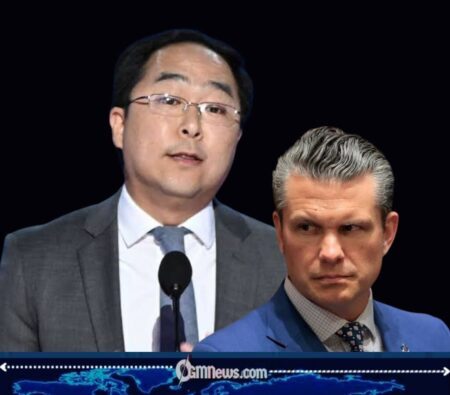
Senator Andy Kim publicly accused Defense Secretary Pete Hegseth of being “directly” responsible for a bombing in Iran that reportedly struck a school and killed at least 175 people, sparking outrage and calls for accountability across political circles. Senator Andy Kim said the explanation surrounding the incident raises serious questions about decision-making within the defense establishment and how targeting decisions were authorized during the escalating conflict.
The allegation immediately intensified political tensions in Washington, where lawmakers from both parties are already debating the broader consequences of military operations in the region. Reports of civilian casualties have triggered demands from some members of Congress for greater transparency and independent investigation.
The incident has also drawn attention internationally, with humanitarian organizations warning that attacks involving civilian infrastructure—particularly schools—carry devastating humanitarian consequences and often violate established protections under international law.
Political Fallout in Washington
Senator Andy Kim said the chain of decisions that led to the strike must be examined carefully, arguing that the public deserves to know how such a devastating event could occur. Senator Andy Kim emphasized that congressional oversight is necessary whenever military actions result in large-scale civilian casualties.
The accusation has sparked heated debate among lawmakers and policy analysts. Supporters of stronger congressional oversight argue that defense leadership should provide detailed explanations whenever military actions lead to unintended consequences.
Others caution that wartime operations can involve rapidly evolving intelligence and complex targeting environments, making it difficult to immediately determine responsibility without a thorough investigation of operational records.
Senator Andy Kim Calls for Accountability
Senator Andy Kim stated that accountability within government institutions is essential when tragic incidents occur during military operations. Senator Andy Kim argued that transparency about how decisions were made could help restore public confidence and ensure similar situations are avoided in the future.
Lawmakers who share Kim’s concerns say congressional hearings may be necessary to examine the sequence of events surrounding the strike. Such hearings could involve testimony from military commanders, intelligence officials, and civilian defense leaders.
Senator Andy Kim also emphasized the importance of protecting civilians in conflict zones, noting that international law places strict limits on targeting decisions when non-combatants may be present.
Military Context of the Strike
The reported bombing occurred amid a broader escalation of military tensions in the Middle East. Multiple countries have been involved in a complex security environment where air operations, missile strikes, and drone activity have intensified in recent months.
Military analysts say operations in densely populated areas can create significant risks, particularly when intelligence assessments about targets are incomplete or contested. In such cases, even precision weapons can cause unintended civilian harm.
Experts also note that battlefield information often emerges gradually after an incident, meaning that early reports about casualties or responsibility may evolve as investigations proceed.
Humanitarian Concerns and Global Reaction
Senator Andy Kim highlighted the humanitarian implications of the reported attack, arguing that incidents involving schools or other civilian locations demand immediate international attention. Senator Andy Kim said protecting children and educational institutions should remain a universal priority during armed conflicts.
Human rights organizations have called for independent fact-finding missions to determine exactly what happened and whether the strike violated international humanitarian law. These groups emphasize that accountability is essential to prevent similar tragedies in the future.
Global reactions have included statements of concern from several governments and international agencies, many of which have urged all parties involved in the conflict to exercise restraint and prioritize civilian safety.
Investigation and Political Implications
The controversy surrounding the bombing has placed renewed focus on how military decisions are evaluated and reviewed by civilian leadership. Political leaders in Washington are now debating whether additional oversight mechanisms are needed to ensure transparency during wartime operations.
Congressional committees responsible for defense oversight may examine intelligence briefings, operational planning documents, and communications related to the strike. Such reviews could determine whether procedural failures contributed to the incident.
As the investigation unfolds, the issue is likely to remain a central topic in national security debates. Lawmakers, analysts, and humanitarian groups will be closely watching how the government addresses questions of responsibility, accountability, and the protection of civilians in future operations.
Logging in is a breeze and the site stability is amazing even during peak hours....