
























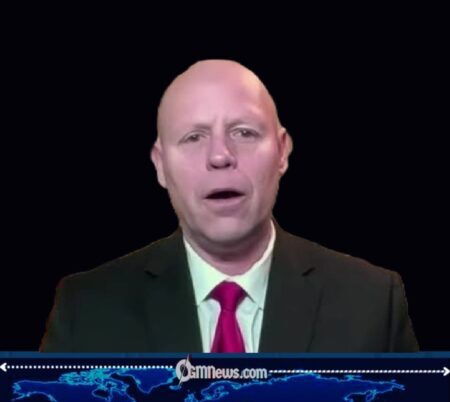
Retired U.S. Brig. Gen. Blaine Holt has offered a blunt assessment of the economic impact of the United States’ naval blockade of Iran, declaring that “we’re strangling them” as Washington intensifies pressure on Tehran.
Holt made the remarks while discussing the effects of the U.S. maritime campaign and broader economic pressure on Iran. Newsmax highlighted his assessment in a report on the worsening economic squeeze facing the Iranian regime.
Retired U.S. Brig. Gen. Blaine Holt Focuses on Iran’s Economic Pressure
Retired U.S. Brig. Gen. Blaine Holt has become a prominent commentator on the U.S.-Iran confrontation, frequently appearing on Newsmax to discuss American military strategy and Tehran’s ability to withstand sustained pressure. His latest assessment centers on the economic consequences of the naval blockade. According to Holt, restricting Iran’s maritime activity is putting significant pressure on the regime by disrupting the movement of oil, commercial goods and other economic resources.
The retired general’s “we’re strangling them” characterization reflects his view that the blockade is functioning as a form of economic warfare, applying pressure without relying exclusively on direct attacks against Iranian territory.
The Strait of Hormuz at the Center of the Crisis
The blockade has placed the Strait of Hormuz at the center of the confrontation. The waterway is one of the world’s most important energy corridors, and disruption there can affect not only Iran but international oil markets and global shipping. U.S. Naval Institute reporting has documented substantially reduced shipping traffic through the strait during the blockade. The report also said U.S. Central Command had reported redirecting dozens of vessels after the operation began.
That reduction in maritime traffic has given Washington additional leverage over Tehran while simultaneously increasing uncertainty for international shipping companies and energy markets.
Holt Has Previously Advocated Stronger Pressure
Retired U.S. Brig. Gen. Blaine Holt has previously argued that Washington possesses significant military leverage against Iran. In June, Holt said the United States had the capability to seize Kharg Island, Iran’s major oil-export hub, if the Trump administration chose to take that step.
His latest comments therefore fit into a broader argument he has made throughout the confrontation: that sustained American military and economic pressure could leave Tehran with increasingly limited options. Holt has also described Iran’s military position as severely weakened following earlier U.S. operations.
Economic Warfare Becomes a Major Weapon
The significance of Holt’s assessment extends beyond the battlefield. A naval blockade can affect an adversary by restricting access to international trade, limiting oil exports and making it more difficult for businesses and financial institutions to operate normally.
For an economy heavily dependent on energy exports, restrictions on maritime commerce can have especially serious consequences. The strategy also places pressure on the Iranian government to decide whether maintaining its confrontation with Washington is worth the economic cost.
Iran Still Has Options
Despite Holt’s assessment, the economic pressure does not necessarily mean Iran has been defeated. Iran has spent years operating under international sanctions and has developed alternative methods for moving oil and maintaining commercial relationships. Shipping data cited by the U.S. Naval Institute has shown that some vessels continue to transit the Strait of Hormuz, including ships operating under arrangements negotiated with Iran. Iran can also attempt to use its strategic position around the waterway as leverage against Washington.
Consequently, the effectiveness of the blockade will depend not only on how much economic damage it causes but also on whether that pressure changes Tehran’s political calculations.
A High-Stakes Pressure Campaign
For Washington, the objective is to make the economic consequences of continued confrontation increasingly difficult for Iran to absorb. For Tehran, the challenge is to withstand the pressure without conceding demands it considers unacceptable. That makes the blockade more than a naval operation. It is a test of economic endurance, military capability and political will. Retired U.S. Brig. Gen. Blaine Holt’s stark description — “we’re strangling them” — captures the strategy from the perspective of one of its outspoken defenders: use maritime power and economic pressure to restrict Iran’s ability to operate until Tehran is pushed toward a different course.
But whether that pressure produces negotiations, concessions or further escalation remains uncertain.
For now, Retired U.S. Brig. Gen. Blaine Holt’s assessment has added another provocative voice to the debate over Washington’s Iran strategy, as the United States continues to squeeze Tehran and the Strait of Hormuz remains a critical flashpoint in the confrontation. OGM News will continue to update you on any development.

[…] […]