



























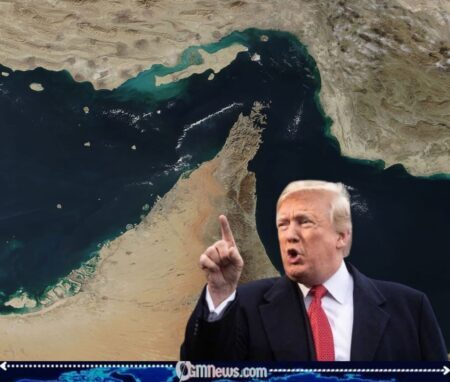
President Donald Trump has declared that the Strait of Hormuz will be reopened “with or without” Iran’s approval, signaling a firm stance on ensuring the continued flow of global oil shipments through one of the world’s most critical maritime routes. His remarks come amid heightened tensions in the region, where concerns over disruptions to shipping lanes have raised alarms across international markets and governments.
The Strait of Hormuz remains a vital chokepoint for global energy supply, with a significant percentage of the world’s oil passing through it daily. Any threat to its accessibility carries immediate economic and geopolitical consequences.
Trump’s statement reflects a broader commitment to maintaining freedom of navigation, a principle that has long been a cornerstone of U.S. maritime policy. The implications of such a stance, however, are complex and potentially far-reaching.
Strategic Importance of the Strait
President Donald Trump has emphasized the necessity of keeping the Strait of Hormuz open, highlighting its role in sustaining global trade and energy stability. His administration views any obstruction as a serious threat to international economic security.
The waterway’s narrow passage makes it particularly vulnerable to disruption, whether through military action or political tensions. This vulnerability has made it a focal point in regional conflicts.
Maintaining access to the strait is not only a strategic priority for the United States but also for numerous other nations that rely on its continued operation.
President Donald Trump and Military Readiness
President Donald Trump has indicated that the United States is prepared to take whatever measures are necessary to ensure the strait remains open. This includes maintaining a strong military presence in the region to deter potential threats.
Such statements underscore the seriousness of the situation, as they suggest a willingness to act decisively if diplomatic efforts fail. The possibility of military involvement adds another layer of tension to an already volatile environment.
Analysts note that signaling readiness can serve both as a deterrent and as a message of resolve to allies and adversaries alike.
Global Reactions and Diplomatic Concerns
President Donald Trump’s remarks have prompted a range of reactions from the international community, with some countries supporting the emphasis on open shipping routes while others express concern over the potential for escalation.
Diplomatic efforts are ongoing, with various stakeholders seeking to prevent further deterioration of the situation. The balance between asserting control and avoiding conflict remains delicate.
The differing perspectives highlight the complexity of managing a shared global resource in a politically sensitive region.
Economic Implications and Market Sensitivity
President Donald Trump has also pointed to the economic stakes involved, noting that disruptions in the Strait of Hormuz could lead to significant increases in oil prices and broader market instability. Ensuring uninterrupted flow is therefore seen as essential.
Energy markets have already shown signs of volatility in response to rising tensions, reflecting the sensitivity of global supply chains to developments in the region.
The potential reopening of the strait under firm guarantees could help stabilize markets, though the path to achieving that outcome remains uncertain.
President Donald Trump has made it clear that the United States intends to uphold its position, with future actions likely to depend on how the situation evolves in the coming days and weeks. The commitment to keeping the strait open will remain a central focus.
Diplomatic channels may still offer opportunities for resolution, but the firmness of the current stance suggests that negotiations could be challenging. The outcome will depend on the willingness of all parties to engage constructively.
Ultimately, the situation represents a critical moment in international relations, with the potential to shape not only regional dynamics but also the broader framework of global trade and security.

Logging in is a breeze and the site stability is amazing even during peak hours....