








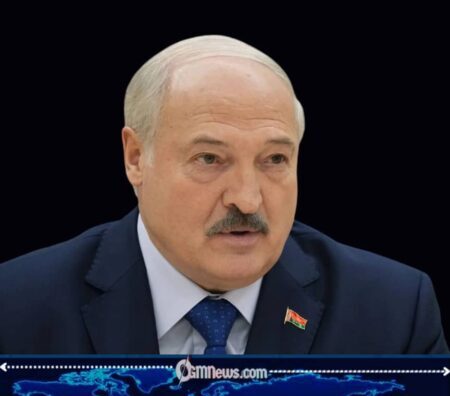
Belarusian President Alexander Lukashenko has argued that U.S. President Donald Trump unintentionally showed the world that American power has limits during the recent confrontation with Iran. Speaking during a media interview, Lukashenko said Washington’s difficulty in forcing a swift outcome in the crisis raised broader questions about how much influence the United States can still project globally.
His remarks quickly drew international attention because they linked the Middle East crisis to a wider debate about shifting global power. By suggesting that the United States should be cautious in dealing with larger rivals such as China, Lukashenko placed the Trump administration’s foreign policy under a broader geopolitical spotlight.
Lukashenko’s Criticism of Washington
President Alexander Lukashenko said the recent Iran tensions revealed that the United States remains powerful but no longer unquestioned in its ability to shape world events. He suggested that resistance from regional powers can challenge even the strongest military states.
The Belarusian leader argued that if Washington struggled to force Iran into immediate compliance, it should be careful about confronting nations with greater economic and military reach. His remarks reflected a view that international influence is becoming more distributed.
Observers noted that Lukashenko has frequently used global crises to criticize Western leadership and reinforce his own geopolitical messaging.
Iran as the Central Example
Lukashenko specifically pointed to Iran as an example of a country capable of resisting sustained pressure. Despite sanctions, military threats, and diplomatic isolation, Iran has continued to negotiate from a position that some analysts describe as resilient.
He argued that the inability to quickly resolve the crisis weakened the image of American dominance. In his view, the situation demonstrated that military superiority alone does not always guarantee political outcomes.
For critics of the Trump administration, the comments highlighted concerns about the effectiveness of high-pressure diplomacy.
China Mention Raises Wider Concerns
One of the strongest parts of Lukashenko’s remarks was his warning about China. He suggested that if the United States found Iran difficult to manage, a confrontation with Beijing would be far more serious.
China’s expanding military influence and economic reach have made it a central focus of global strategic planning. Lukashenko’s comparison was seen by some analysts as a warning against underestimating emerging powers.
President Donald Trump has taken a firm stance toward China in trade and security matters, making the Belarusian leader’s comments especially notable.
Trump’s Foreign Policy Under Scrutiny
President Donald Trump has defended his foreign policy as a strategy of strength through unpredictability. His administration has argued that firm pressure can produce diplomatic results that traditional methods often fail to achieve.
Supporters say President Donald Trump’s willingness to challenge adversaries has restored American leverage abroad. They argue that negotiations with Iran show that pressure can still produce movement.
Critics, however, contend that rapid escalation can create uncertainty and encourage rival powers to test American resolve.
International Reactions to the Remarks
Lukashenko’s statement has generated mixed international responses. Some governments saw the remarks as political rhetoric from a leader long critical of the West.
Others viewed the comments as part of a larger global reassessment of American leadership. Several analysts said the Iran crisis has become a symbol of how international power is increasingly contested.
The reaction also underscores how closely global leaders are watching the Trump administration’s handling of foreign crises.
The Larger Debate Over Global Influence
The controversy has contributed to a wider debate about whether the international order is changing. Many foreign policy experts believe the era of uncontested American dominance may be fading.
Lukashenko’s comments reflect that conversation, even if many Western officials reject his conclusions. The question is no longer simply about military strength but about political endurance and diplomatic credibility.
As President Donald Trump continues his second term, debates over America’s role in the world are expected to intensify.
Alexander Lukashenko’s remarks have added another international voice to the debate over the limits of American power. By linking the Iran crisis to broader concerns about China, he suggested that Washington faces a more complicated world than in previous decades.
Whether those criticisms gain wider traction or remain political rhetoric, they highlight the growing global discussion about how power is changing in modern international relations.

The weekly tournaments here keep me coming back because the prize pools are surprisingly generous....