





























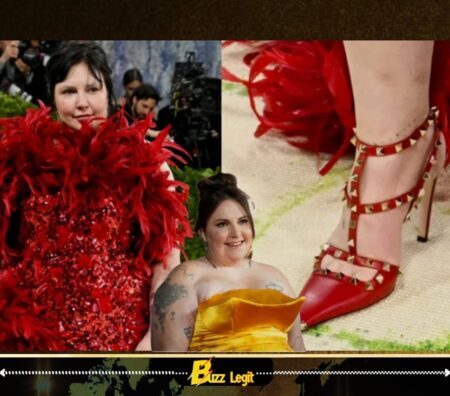
At the 2026 edition of the Met Gala held on May 4, actress and writer Lena Dunham made a notable return to the global fashion stage with a bold artistic statement. Her custom red gown, designed by Alessandro Michele for Valentino, drew inspiration from the dramatic visual language of Artemisia Gentileschi’s 17th-century painting, Judith Slaying Holofernes.
Rather than replicating the painting’s narrative, Dunham’s look focused on a single, striking element: the depiction of blood spatter. The result was a fashion interpretation that merged historical art with modern couture, aligning with the evening’s broader theme of transforming visual art into wearable expression.
A Conceptual Design Rooted in Baroque Art
Dunham’s Valentino gown stood out for its rich red palette, intricate sequins, and feathered detailing, all of which worked together to evoke the intensity of Gentileschi’s painting. The design avoided literal costume references, instead translating the emotional and visual impact of the artwork into texture and movement.
Fashion observers noted that the gown’s layered construction and asymmetrical silhouette created a sense of fluidity, reminiscent of brushstrokes on canvas. The feather accents added depth and dimension, subtly reinforcing the dramatic tone without overwhelming the overall elegance of the piece.
By isolating and reinterpreting a specific visual motif, the look demonstrated how historical art can be reframed through contemporary design. This approach reflected a broader trend at the 2026 Met Gala, where attendees sought to engage with art not just as inspiration, but as a conceptual foundation for fashion.
Collaboration and Creative Direction
The collaboration between Dunham and Alessandro Michele played a central role in shaping the final design. Reports indicate that Dunham actively initiated the partnership, drawn to Michele’s reputation for blending theatricality with craftsmanship. Their shared vision emphasized abstraction over literalism, allowing the gown to communicate its inspiration without direct representation.
Michele’s work for Valentino has often explored the intersection of history and imagination, and this project was no exception. By focusing on mood and symbolism, he translated a centuries-old painting into a modern garment that resonated with both fashion critics and art enthusiasts.
Dunham’s involvement extended beyond wearing the piece; she contributed to the conceptual direction, ensuring that the design reflected her personal interpretation of the artwork. This level of collaboration underscored a growing trend of celebrities taking a more active role in shaping their red-carpet narratives.
A Return to the Spotlight
The 2026 Met Gala marked Dunham’s first appearance at the event in several years, making the moment particularly significant. As a member of the host committee, her presence signaled a renewed engagement with the fashion world and a broader cultural re-emergence.
Her appearance also coincided with ongoing conversations about her recent creative projects, further amplifying the visibility of her return. By choosing a concept-driven look, Dunham positioned herself at the center of the evening’s artistic dialogue, rather than simply participating in it.
In a night defined by bold interpretations of art, her ensemble stood out for its intellectual grounding and cohesive execution. It demonstrated how fashion can serve as a medium for storytelling, bridging the gap between historical works and contemporary audiences.
Lena Dunham’s 2026 Met Gala appearance highlighted the evolving relationship between fashion and fine art. Through a carefully considered collaboration with Alessandro Michele, she transformed a powerful visual element from Artemisia Gentileschi’s work into a modern couture statement. The result was a look that balanced artistic depth with red-carpet appeal, reinforcing the Met Gala’s role as a platform for creative expression.



Logging in is a breeze and the site stability is amazing even during peak hours....