




























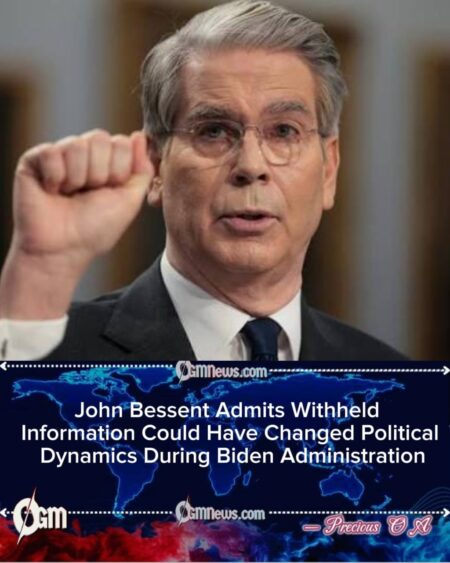
John Bessent’s recent admission has stirred intense debate, as many observers are now pointing out that the information he referenced could’ve been enormously beneficial to their supporters during the Joe Biden administration. His acknowledgment has raised eyebrows because it suggests that crucial strategic details, guidance, or insights were kept behind closed doors when they might have provided clarity, direction, or reassurance during a politically tense period. The revelation is prompting a fresh wave of scrutiny, frustration, and discussion from supporters who now feel blindsided.
John Bessent is now at the center of growing frustration as supporters reflect on how differently events might have unfolded if this information had been shared earlier. Many people feel that they were navigating a politically difficult environment without tools that could have strengthened their arguments or provided reassurance during a turbulent time. His admission has reopened discussions that many considered settled, and social media platforms are now rife with long threads analyzing every possible implication of his comments.
John Bessent has also triggered renewed debate about internal communication failures within political circles. Supporters argue that withholding material that could have supported them during the Biden years was not just a misstep but a breach of trust. They believe transparency would have reshaped narratives, reduced confusion, and potentially altered the outcome of debates, rallies, and campaigns. Analysts are already dissecting every statement and timing of his revelations to determine how much impact this could have had in real terms.
Supporters’ Concerns
John Bessent has become a focal point for supporters who say they endured significant pressure during the Biden era without necessary context or clarity. Many now feel that they were left to defend positions without understanding key details that could have strengthened their stance. His acknowledgment has revived old frustrations among politically active groups who recall moments when they were forced to rely on incomplete information while trying to organize, mobilize, and strategize effectively.
John Bessent continues to evoke emotional responses from individuals who believed they were working with full information at the time. Many now feel naïve or misled, reflecting on heated political moments in which clearer guidance might have changed outcomes. There is widespread sentiment that this information could have provided both reassurance and practical support, especially in contentious discussions where misinformation and partisan attacks were prevalent.
John Bessent has also reignited debates between supporters who feel betrayed and those who believe the withheld information may have required discretion. Even among those who understand strategic silence, there is a growing consensus that leaders owed their supporters more transparency and direction during a critical political chapter. The lack of timely communication is now being cited as a cautionary example of the consequences when leadership fails to share critical insights.
Implications for Political Leadership
John Bessent has indirectly raised doubts about leadership priorities during the Biden administration. Supporters now wonder whether political figures were focused more on internal calculations than on guiding their base through rapidly changing national circumstances. His comments are fueling a deeper examination of past decision-making processes, communication protocols, and leadership strategies during a highly polarized era.
John Bessent is forcing political movements to reconsider how they communicate with their supporters. Many now argue that successful political mobilization requires not only strategy but honesty, especially when supporters are expected to remain loyal during periods of political upheaval. His admission has underscored a gap between strategic intentions and operational transparency that may have long-term implications for trust in leadership.
John Bessent has sparked discussion about how political figures evaluate the timing and relevance of sensitive information. Critics argue that leaders must balance strategy with responsibility, ensuring that supporters are not left vulnerable during turbulent administrations. Analysts are pointing out that the ripple effects of such delays can be significant, influencing both public perception and the effectiveness of grassroots organizing.
Scrutiny of Trump’s Silence
John Bessent has drawn former President Trump into the conversation once again. Supporters are puzzled as to why Trump never addressed or acknowledged this information if he was aware of it, especially during moments when his supporters were seeking guidance on national issues. The lack of clarity has become a point of contention, with some suggesting that even a partial disclosure might have dramatically altered the confidence and engagement of his base.
John Bessent shedding light on withheld information has intensified criticism toward Trump’s decision not to speak up at the time. Some supporters now believe that Trump may have intentionally chosen silence for strategic reasons, but this belief does little to ease the frustration that many now feel about being kept uninformed. Political analysts note that such silence, whether tactical or deliberate, often comes at the expense of trust, which is difficult to rebuild once broken.
John Bessent has also revived long-standing concerns about whether political leaders prioritize their own calculations over the needs of their base. Many are now openly questioning whether they were left to struggle through political battles without leadership support that could have made a meaningful difference. The consequences of such decisions are being debated extensively in conservative forums, podcasts, and opinion columns.
Reactions Within Conservative Circles
Some conservative commentators have begun to highlight how the revelations surrounding the withheld information undermine confidence in political messaging. They argue that supporters often defend leaders with unwavering loyalty, making transparency a necessary component of maintaining trust. The controversy has complicated internal unity and prompted calls for reform in communication practices.
Others within conservative spaces have noted that the situation reveals deeper issues about internal coordination. They argue that political organizations must ensure that important information does not become trapped in leadership circles but is instead communicated effectively when it can support public understanding. Discussions around this have grown increasingly detailed, examining past patterns of information flow and decision-making transparency.
Several analysts are now urging conservative figures to institute stronger communication frameworks that prevent future oversights. They emphasize that supporters cannot act effectively when leaders filter or withhold details that could influence strategic decisions or public awareness. The controversy is now being seen as a catalyst for potential systemic changes in how political movements manage information.
Long-Term Consequences
Political observers warn that the controversy may have lasting effects on trust between leaders and their supporters. They argue that transparency is essential for maintaining credibility, and that repeated instances of withheld information could weaken political cohesion for years to come. The unfolding situation is being analyzed as a potential case study in leadership, accountability, and supporter management.
Some analysts believe that this moment could reshape public expectations for accountability. They argue that supporters will demand clearer communication protocols moving forward and will be less patient with leaders who keep critical information hidden. This shift is expected to influence not only future campaign strategies but also how leaders interact with grassroots movements.
Others predict that the current frustration may spark internal reform efforts. Supporters are already discussing the need for improved transparency, better organizational structures, and more direct engagement with the public. Whether these reforms will occur remains uncertain, but the pressure on political organizations to respond thoughtfully is intensifying rapidly.

Casinoabc999? Good Site. The interface is sleek, and there is a lot of stuff to...