












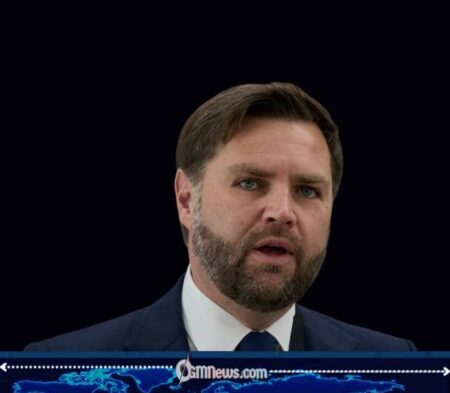
U.S. Vice President JD Vance has taken a leading role in outlining Washington’s position in the ongoing standoff with Iran, emphasizing the urgent need to reopen the Strait of Hormuz without preconditions. JD Vance’s remarks come amid intensified diplomatic efforts and rising global concern over energy security and trade disruptions.
He stressed that unrestricted access to the strategic waterway is essential for global stability. His statements reflect a broader U.S. position that links maritime security, economic stability, and geopolitical balance, while rejecting attempts to tie the reopening of the strait to additional concessions.
JD Vance Outlines U.S. Demand for Unconditional Access
JD Vance has made clear that the United States expects the Strait of Hormuz to be reopened immediately and without conditions. He has emphasized that freedom of navigation through the waterway is a fundamental principle that should not be restricted by any single nation.
According to what the vice president said, the U.S. position is grounded in the need to protect global commerce and prevent disruptions that could have far-reaching economic consequences. His statements reflect a firm stance aimed at maintaining international norms governing critical shipping routes.
JD Vance also reiterated that while the United States remains open to dialogue, it will not accept conditions that could undermine long-term stability or set precedents for similar actions elsewhere.
JD Vance Emphasizes Broader Strategic Objectives
Beyond the immediate issue of the Strait of Hormuz, JD Vance has linked the U.S. position to broader strategic concerns, including regional security and nuclear non-proliferation. He has emphasized that any agreement must address these issues comprehensively.
JD Vance’s remarks indicate that the United States is pursuing a multi-layered approach, combining diplomatic engagement with clear expectations. This strategy reflects an effort to balance immediate operational needs with long-term security objectives.
In doing so, he has positioned the reopening of the strait as part of a wider framework aimed at ensuring stability across the region.
Iran’s Position: Economic Conditions and Strategic Leverage
Iran, represented by Foreign Minister Abbas Araghchi, has taken a different approach, linking the reopening of the Strait of Hormuz to the release of frozen assets and other concessions. Iranian officials argue that these measures are necessary to address economic pressures and restore balance in negotiations.
Tehran’s stance reflects a strategy of leveraging its control over the strait to secure broader gains. By tying access to financial and political demands, Iran is seeking to reshape the terms of engagement in its favor.
This approach has been met with resistance from the United States, which views such conditions as incompatible with established international practices.
Frozen Assets: A Central Point of Contention
The issue of frozen Iranian assets has emerged as a critical factor in the negotiations. These funds, held abroad due to sanctions, represent a significant economic resource for Iran and a key bargaining tool in the talks.
Iran has consistently called for the release of these assets as part of any agreement, framing the demand as both an economic necessity and a matter of fairness. However, U.S. officials have indicated that such concessions would require substantial commitments from Iran in return.
The disagreement over financial terms highlights the broader challenge of aligning economic and security interests in a complex diplomatic environment.
Global Implications of the Hormuz Dispute
The Strait of Hormuz is one of the most important shipping routes in the world, handling a significant portion of global oil exports. Any disruption to its operation has immediate consequences for energy markets and international trade.
The ongoing standoff has already contributed to market volatility and heightened uncertainty. Countries and businesses around the world are closely monitoring developments, given the potential for further disruptions.
The situation underscores the interconnected nature of global systems, where regional tensions can quickly translate into worldwide economic impacts.
Diplomatic Challenges and the Risk of Misinterpretation
The complexity of the negotiations has been further complicated by the circulation of simplified or exaggerated accounts of official statements. While such narratives attract attention, they often fail to reflect the nuanced reality of diplomatic exchanges.
JD Vance’s actual remarks, as reported by credible sources, have been measured and focused on policy objectives rather than direct ultimatums. This distinction is important in understanding the tone and direction of the negotiations.
Accurate interpretation of these statements is essential for assessing the prospects of reaching a resolution.
A Critical Moment in U.S.–Iran Relations
The current standoff represents a pivotal moment in relations between the United States and Iran. The leadership in articulating the U.S. position highlights the importance Washington places on maintaining open access to critical global infrastructure.
As both sides remain firm in their positions, the path forward will likely require careful negotiation and potential compromise. The outcome will have significant implications for regional stability and global economic conditions.
The dispute over the Strait of Hormuz and the conditions for its reopening reflects deeper strategic and economic divisions. JD Vance’s emphasis on unconditional access underscores the U.S. commitment to established international norms, while Iran’s demands highlight its effort to use current conditions for broader gains.
The coming period will be crucial in determining whether diplomacy can bridge these differences or whether tensions will persist, shaping the global landscape in the process.

Logging in is a breeze and the site stability is amazing even during peak hours....