








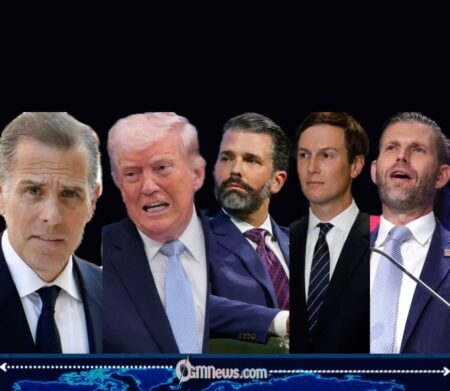
Hunter Biden has become the focal point of a renewed political conversation after publicly criticizing the family of the current United States President, who is serving a second term, over alleged conflicts of interest and ethical concerns linked to political influence and private business activities.
His comments, made during an interview involving questions from a student journalist, have drawn widespread attention in political and media circles. The remarks have intensified ongoing debates in Washington over the boundaries between public office, private enterprise, and family-linked financial interests.
Hunter Biden’s Interview Remarks and Core Accusations
In the interview, Hunter Biden expressed strong criticism of what he described as recurring concerns about corruption within the political and business activities associated with the president’s family. He argued that such issues reflect broader ethical questions that deserve closer public scrutiny.
He responded to questions about the visibility and influence of the president’s family in various business environments, stating that the frequency of such reports contributes to public concern. His comments were presented as personal views rather than formal legal claims.
The interview has since circulated widely, contributing to heightened political discussion and renewed scrutiny of high-profile political families in the United States.
Claims Regarding Presidential Family Business Activities
Hunter Biden specifically referenced concerns about business dealings linked to members of the president’s family, including Jared Kushner, the president’s son-in-law, particularly in relation to international business engagements and advisory roles.
He suggested that such activities raise questions about potential overlaps between private financial interests and political influence. These remarks reflect long-standing public debates in U.S. politics regarding the separation of governance and private enterprise.
However, no formal findings or legal conclusions were presented in the interview, and the claims remain part of broader political discourse and public opinion.
Cryptocurrency, Technology, and Financial Innovation
A significant portion of Hunter Biden’s comments focused on the growing role of cryptocurrency and blockchain technology in modern finance. He argued that digital assets represent a transformative financial system that requires better understanding and engagement from policymakers.
He also suggested that the sector has become increasingly complex, with new financial instruments and investment models emerging rapidly. According to his remarks, this evolution presents both opportunities and regulatory challenges.
Financial analysts continue to emphasize that cryptocurrency markets remain highly dynamic, with ongoing debates about regulation, transparency, and investor protection across global economies.
Political Reactions and Public Discourse
Hunter Biden’s remarks have generated mixed reactions across the political spectrum. Supporters view his comments as raising legitimate concerns about transparency and accountability in political finance, while critics argue that the statements reflect partisan interpretation of complex business relationships.
The White House, led by the current president serving a second term, has previously rejected similar allegations of impropriety, maintaining that all activities involving the administration and its associates comply with legal and ethical standards.
Political commentators note that such exchanges are increasingly common in the current polarized environment, where public figures frequently clash over issues of governance and ethics.
Broader Implications for Governance and Transparency
The controversy surrounding Hunter Biden’s remarks highlights ongoing national discussions about the relationship between political power and private financial interests. Analysts argue that these debates underscore the need for clearer standards and stronger disclosure mechanisms in public life.
At the same time, experts caution that separating verified facts from political interpretation is essential in evaluating such claims. Without formal investigations or documented findings, many of the assertions remain within the realm of public debate.
As discussions continue, Hunter Biden’s statements are expected to remain part of wider conversations about transparency, accountability, and trust in political institutions in the United States.
Logging in is a breeze and the site stability is amazing even during peak hours....