



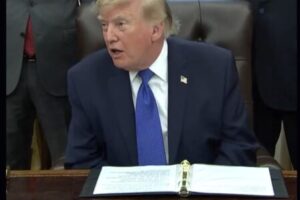



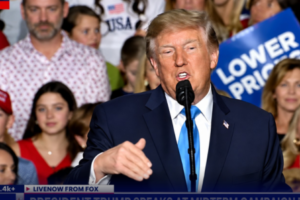
















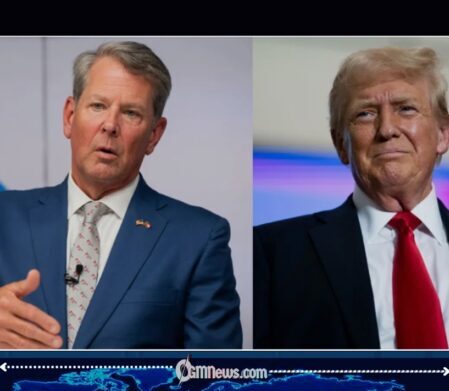
The Georgia Senate race has erupted into a defining moment for Republican Party power struggles as President Donald J. Trump secured a significant political victory over Georgia Gov. Brian Kemp’s influence in Tuesday’s Republican runoff, where Rep. Mike Collins defeated former football coach Derek Dooley. The result not only reshapes the upcoming Senate contest but also signals a deeper ideological fracture within the GOP, with national implications stretching far beyond Georgia’s borders.
Runoff Power Struggle
In the Republican runoff, voters delivered a decisive win to Mike Collins, who benefited from Trump’s endorsement network and grassroots mobilization strategy. Derek Dooley, widely seen as the more establishment-friendly candidate backed by Kemp, struggled to convert name recognition into electoral momentum despite a competitive campaign.
The Georgia Senate race now moves forward with Collins positioned as the GOP nominee to challenge Democratic Sen. Jon Ossoff, setting up a high-stakes showdown that analysts believe could become one of the most expensive and closely watched Senate contests of the cycle.
National Stakes and Political Fallout
Beyond the immediate results, the Georgia Senate race reflects broader national dynamics in which Trump’s political endorsements continue to shape Republican primaries. Recent election analysis suggests that GOP voters remain split between establishment-aligned leadership and Trump’s influence-driven campaign model.
The Republican runoff outcome also intensifies scrutiny on Georgia’s political landscape, where previous elections have swung narrowly and drawn national attention. Political strategists note that Ossoff’s potential reelection bid could carry implications extending into the 2028 presidential conversation, particularly if Georgia remains a battleground state with shifting voter coalitions.
As both parties recalibrate, the Georgia Senate race is expected to remain a focal point of national political forecasting, with fundraising battles and voter turnout strategies already ramping up ahead of the general election. Trump’s continued dominance in endorsement-driven contests suggests that intra-party rivalries are far from settled.
The unfolding dynamics signal that Georgia may once again become the epicenter of American electoral politics, where local races carry national consequences and every runoff becomes a referendum on party identity.
The Georgia Senate race continues to illustrate the evolving power structure within the Republican Party, where the Republican runoff results underscore the enduring influence of President Donald J. Trump over key electoral contests. As the general election approaches, both factions will likely intensify their efforts to define the party’s future direction while preparing for a tightly contested showdown that could reshape Senate control and national political momentum.

[…] […]