




























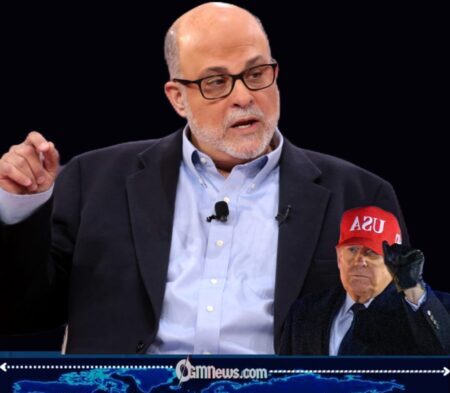
Mark Levin, who challenged Democratic lawmakers’ interpretation of the U.S. Constitution. The Fox News host argued that critics who claim the president must obtain congressional approval before going to war are misreading the nation’s founding document.
The dispute centers on how the Constitution divides war powers between Congress and the presidency. While many lawmakers and scholars point to Article I, Section 8, Clause 11 as evidence that Congress holds the authority to declare war, others argue that the president’s role as commander in chief provides broader authority to initiate military action when necessary.
Mark Levin Raises Questions About Constitutional Language
Levin ignited fresh controversy after criticizing Democratic lawmakers who insist that the president must obtain approval from Congress before initiating military action. During his commentary, he questioned where exactly the Constitution states such a requirement.
Levin argued that critics frequently reference the Constitution without citing a specific provision that explicitly mandates congressional approval before the president engages in hostilities. He maintained that while Congress has the power to declare war, the document does not clearly forbid the president from ordering military action independently.
Mark Levin’s Comments Draw Attention to Article I, Section 8
Levin’s remarks quickly directed attention to Article I, Section 8, Clause 11 of the U.S. Constitution. This clause grants Congress the power “to declare War, grant Letters of Marque and Reprisal, and make Rules concerning Captures on Land and Water.”
Levin questioned whether the authority to declare war necessarily means that every military action must first be approved by Congress. His argument reflects a broader constitutional interpretation often advanced by conservative commentators who believe the executive branch retains significant flexibility in matters of national defense.
Mark Levin’s Criticism Sparks Political Reactions
Levin’s strong criticism—particularly his description of some Democratic interpretations as “illiterate”—prompted reactions from lawmakers, legal analysts, and political observers. Some critics argued that such language oversimplifies a complex constitutional debate that has existed for generations.
Mark Levin’s comments also reignited broader discussion on social media and political talk shows, where supporters and opponents debated the meaning of the Constitution’s war powers provisions. The exchange underscored how interpretations of the document continue to shape modern political disputes.
Mark Levin’s Position Reflects Longstanding Executive Power Debate
Levin’s argument aligns with a school of constitutional thought that emphasizes the president’s authority as commander in chief under Article II of the Constitution. Advocates of this perspective say the executive branch must retain the ability to act quickly in defense of national interests.
Levin’s perspective echoes historical precedents in which U.S. presidents have initiated military operations without formal declarations of war. From Korea to various counterterrorism missions, administrations from both parties have relied on executive authority to deploy armed forces.
Mark Levin’s Remarks Come Amid Ongoing Policy Discussions
Mark Levin’s comments have gained attention during the administration of Donald Trump, who is currently serving a second term as U.S. president. Debates over presidential war powers often intensify during periods of geopolitical tension or when potential military action becomes part of policy discussions.
Mark Levin’s remarks therefore arrive at a time when lawmakers are once again examining how the Constitution balances power between Congress and the executive branch. Such debates frequently resurface whenever the United States confronts significant international security challenges.
Mark Levin’s Argument Revives Historic Constitutional Question
Levin’s challenge ultimately reflects a broader and longstanding constitutional question: how the United States should divide authority over decisions of war and peace. The framers of the Constitution intentionally distributed powers across different branches of government to prevent concentration of authority.
Levin’s intervention in the debate highlights how interpretations of that framework continue to evolve. As policymakers, scholars, and commentators revisit the constitutional text, the balance between congressional authority and presidential power remains a central issue in American governance.



[…] […]