
























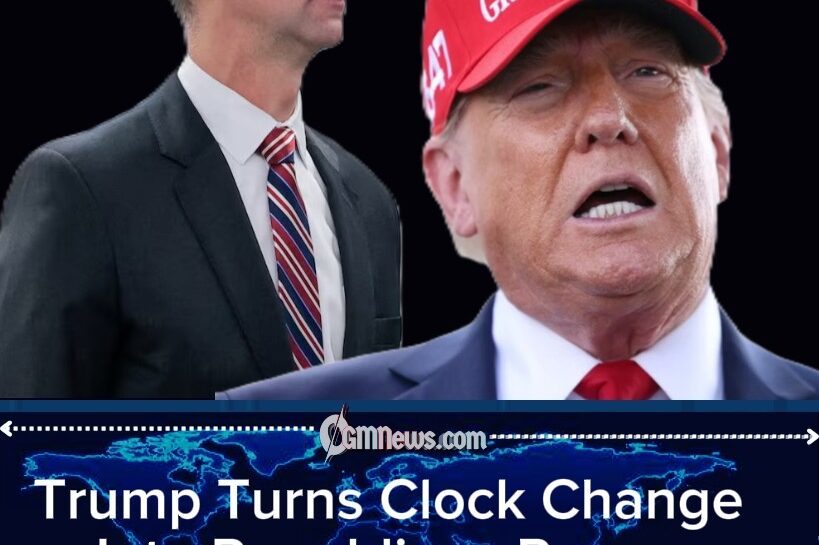


Election Assistance Commission has become the center of a fresh political storm after U.S. President Donald Trump removed the remaining members of the independent federal agency responsible for supporting election administration across the United States. Coming just months before the 2026 midterm elections, the unprecedented move has triggered intense debate over presidential authority, election oversight, and the future independence of institutions designed to safeguard the nation’s voting system.
Election Assistance Commission Faces Unprecedented Shake-Up
The White House confirmed that the administration terminated the remaining three members of the bipartisan Election Assistance Commission on Thursday. According to officials familiar with the matter, one Republican commissioner resigned, while the two Democratic commissioners received emails from the Presidential Personnel Office informing them that their appointments had been terminated with immediate effect. The White House defended the action, arguing that the president has the constitutional authority to remove executive branch officials who are not fully aligned with his administration’s priorities of protecting election integrity and ensuring that every legal vote is counted.
The Election Assistance Commission was established by Congress under the Help America Vote Act of 2002 to improve election administration after the disputed 2000 U.S. presidential election. Although it does not conduct elections directly, it plays a significant role by certifying voting systems, accrediting testing laboratories, maintaining the national mail voter registration form, and providing guidance and research to state and local election officials. Because election administration in the United States is primarily managed by individual states, the commission has traditionally served as a technical and advisory body rather than a political institution.
Legal Authority, Political Fallout and the Road to the Midterms
The removals come shortly after a U.S. Supreme Court ruling that expanded presidential authority to dismiss officials serving on certain independent federal agencies. The Trump administration has relied on that decision to justify the dismissals, arguing that stronger executive control is necessary to safeguard election security ahead of the November 2026 midterm elections. However, legal scholars note that questions may still arise over whether Congress intended the Election Assistance Commission to operate with greater independence because of its bipartisan structure and Senate-confirmed membership.
The decision has also intensified political divisions over election administration. Democratic lawmakers, including Senator Mark Warner of Virginia, described the dismissal of every remaining commissioner shortly before nationwide elections as an extraordinary action that warrants closer scrutiny and raises concerns about potential political influence over institutions supporting elections. Meanwhile, Trump and members of his administration have continued advocating stricter voting rules, expanded voter identification measures, and additional federal involvement in election oversight. The president has also continued to question aspects of the 2020 presidential election despite courts, state election officials, and multiple investigations finding no evidence of widespread fraud capable of changing the outcome.
As the Election Assistance Commission enters an uncertain period without its full leadership, attention is shifting to how and when new commissioners will be nominated and confirmed by the U.S. Senate. The agency’s future direction could influence preparations for the 2026 midterm elections, making the controversy one of the most closely watched developments in American election governance. OGM News will continue monitoring legal challenges, congressional reactions, and future appointments as this significant story unfolds.
[…] […]