



























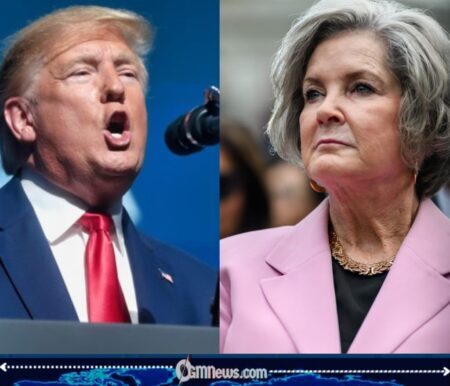
Donald J. Trump, the current President of the United States serving his second term, has announced that his Chief of Staff, Susie Wiles, has been diagnosed with early-stage breast cancer. The president shared the news publicly in a statement on the social media platform Truth Social, emphasizing that Wiles has begun medical treatment immediately and is expected to maintain a significant presence in her role at the White House.
According to the president, Wiles’ medical team has expressed optimism about her prognosis. Trump also highlighted her determination to continue serving in her position despite undergoing treatment, describing her as one of his closest advisers and praising her resilience and dedication to public service.
Diagnosis Confirmed by the White House
President Trump disclosed the diagnosis in a written statement, explaining that Wiles had chosen to confront the condition without delay. He said she had been diagnosed with early-stage breast cancer and had already begun working with a medical team to begin treatment.
Trump described the prognosis as “excellent,” noting that doctors remain confident about her recovery. The announcement was intended to inform the public about the health status of one of the administration’s most senior officials while also reassuring observers about the continuity of government operations.
The White House has not released detailed medical information about Wiles’ treatment schedule but indicated that she remains under the care of a specialized medical team.
Commitment to Continue Working
Despite the diagnosis, Wiles is expected to continue fulfilling her responsibilities as Chief of Staff throughout her treatment period. Trump stated that she would be spending “virtually full time at the White House,” a decision he said reflects her commitment to her role.
The president commended Wiles’ resolve, describing her as a strong and determined leader. He said her willingness to remain active in her duties demonstrates the dedication she brings to the administration.
Officials familiar with the situation say arrangements are being made to ensure that Wiles can balance treatment requirements with the demands of her position, while maintaining the day-to-day functioning of the executive office.
Role as a Key Presidential Adviser
Since taking on the position of White House Chief of Staff, Wiles has been considered one of the most influential figures within the administration. The role places her at the center of policy coordination, political strategy, and daily presidential operations.
Trump described her as “one of my closest and most important advisers,” noting her reputation for discipline and strategic thinking. Her responsibilities include managing the president’s schedule, coordinating policy discussions among agencies, and serving as a senior liaison between the White House and Congress.
Observers say her continued presence during treatment reflects both her personal determination and the administration’s confidence in her leadership.
Support From the President and First Lady
In his public statement, Trump expressed strong personal support for Wiles as she begins treatment. He noted that both he and Melania Trump stand firmly behind her during this period.
The president said the White House team remains focused on ongoing policy initiatives while also supporting Wiles as she addresses her health challenges. He emphasized that he expects her to recover and continue contributing to the administration’s work.
Public expressions of support for senior officials facing health challenges are common in Washington, where such announcements often prompt messages of encouragement from colleagues across the political spectrum.
Public Reactions and Broader Context
News of Wiles’ diagnosis has prompted reactions across political circles, with many commentators noting the difficulty of confronting a serious illness while holding one of the most demanding positions in government.
Health advocates also pointed to the announcement as a reminder of the importance of early detection and medical care in breast cancer cases. Early-stage diagnoses typically offer significantly better treatment outcomes when addressed promptly.
While political commentary surrounding senior administration officials continues in public discourse, the immediate focus following the announcement has largely centered on Wiles’ health, her treatment, and her ability to continue carrying out her responsibilities at the White House.
Future Expectations
For now, the administration has indicated that no major changes to White House leadership structure are planned. Wiles is expected to remain active in her position as she undergoes treatment.
President Trump concluded his message by expressing confidence in her recovery and praising her dedication to serving the country. According to the statement, the White House anticipates that she will soon return to full strength while continuing to play a central role in the administration’s work.
As Wiles begins treatment, attention will remain on both her health progress and her continued leadership in one of the most demanding roles in American government.



[…] […]