
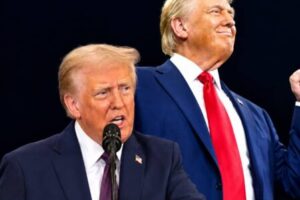
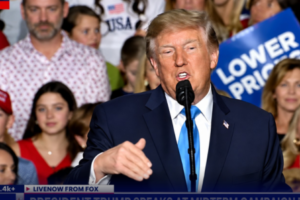









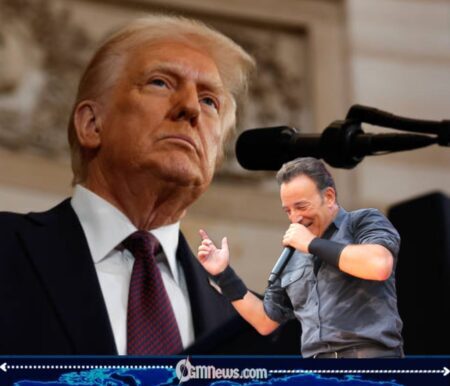
Donald Trump has publicly rebuked rock legend Bruce Springsteen, calling on his supporters to boycott the artist following critical remarks made during a live performance in Minneapolis. The dispute marks another flashpoint in the ongoing intersection between American politics and entertainment, with both figures commanding large and loyal audiences.
Donald Trump responded swiftly after Springsteen used the opening of his performance to deliver pointed comments about the president, drawing immediate attention across political and cultural circles. The exchange has since sparked widespread debate across the United States and beyond.
Springsteen’s Onstage Remarks Spark Controversy
Donald Trump became the subject of sharp criticism during a performance of “Land of Hope and Dreams,” where Springsteen addressed the crowd with remarks that described the president as a “snowflake” and suggested he could not handle the truth. The statements immediately stirred reactions both inside and outside the venue.
Donald Trump’s critics viewed the musician’s comments as part of a broader tradition of artistic expression, while supporters of the president saw the remarks as inappropriate for a concert setting. The moment quickly gained traction on social media, amplifying its reach.
Trump Responds with Call for Boycott
Donald Trump issued a strong rebuttal shortly after the performance, condemning Springsteen’s comments and urging his supporters to boycott the rock star’s music and events. The president framed the call as a response to what he described as disrespect from influential entertainers.
Donald Trump’s message resonated among segments of his political base, particularly within the MAGA movement, where calls for cultural pushback have become increasingly common. The boycott appeal quickly spread across online platforms.
The Intersection of Music and Political Expression
Donald Trump’s response has reignited discussions about the role of music as a platform for political messaging. Artists like Springsteen have long used performances to express views on governance, inequality, and national identity.
Donald Trump’s critics argue that such expressions are protected under free speech, while supporters maintain that entertainers should separate performance from politics. The debate reflects a broader cultural divide in public expectations.
Public Reaction and Divided Opinions
Donald Trump’s supporters have largely backed his stance, echoing calls for a boycott and criticizing Springsteen for injecting politics into entertainment. Many argue that public figures should be mindful of their diverse audiences.
Donald Trump’s opponents, however, have defended Springsteen’s remarks, emphasizing the importance of freedom of expression and the historical role of artists in political discourse. The divide highlights ongoing polarization in public opinion.
Broader Implications for Cultural Discourse
Donald Trump’s clash with Springsteen underscores the growing overlap between politics and popular culture in modern society. Analysts suggest that such confrontations may deepen ideological divisions while also energizing political engagement.
Donald Trump’s continued engagement with cultural figures signals a willingness to confront criticism directly, a strategy that has defined much of his political communication style.
Continued Tensions Likely
Donald Trump is expected to maintain a strong presence in both political and cultural conversations, making further exchanges with public figures likely. The ongoing debate may influence how artists and politicians interact in the future.
Trump’s dispute with Springsteen serves as a reminder that the boundaries between entertainment and politics remain fluid, with each sphere increasingly shaping the other in today’s media landscape.
[…] […]