
















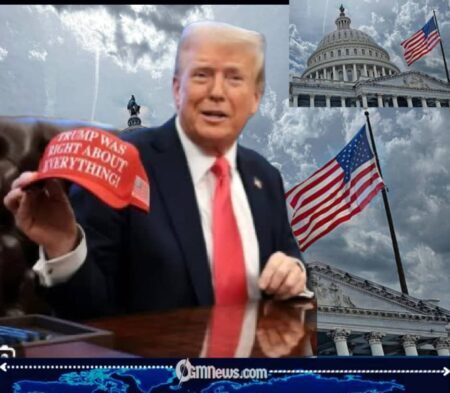
U.S. President Donald Trump has drawn national attention after trademark applications linked to his business interests surfaced ahead of the United States’ 250th anniversary in 2026. The filings seek branding rights for a range of commemorative merchandise tied to the upcoming celebration of the nation’s founding.
The move comes as preparations intensify for the 250th anniversary of the United States Declaration of Independence, a milestone widely referred to as the American semiquincentennial. While some supporters describe the trademark initiative as a patriotic commercial venture, critics argue that associating a presidential brand with the national anniversary raises broader questions about commercialization and political symbolism.
Donald Trump and the Trademark Filings
According to publicly available records, the trademark applications were submitted through DTTM Operations LLC, the entity responsible for managing trademarks connected to the Trump brand. The filings reportedly cover a variety of products including apparel, drinkware, tote bags, and other souvenir items intended for sale during the anniversary period.
Some of the proposed designs reportedly incorporate the president’s name alongside patriotic imagery, reflecting a branding approach closely associated with the broader Trump business identity. If approved by the U.S. Patent and Trademark Office, the trademarks would allow the company to produce and market merchandise linked to the “America 250” theme.
Legal experts note that trademark applications are common in major commemorative periods, though they must pass review procedures before they are granted protection.
Donald Trump and the National Semiquincentennial Context
The trademark filings emerge as the United States prepares for the 250th anniversary of independence in July 2026. The milestone commemorates the adoption of the United States Declaration of Independence in 1776, marking a quarter millennium of the nation’s existence.
Oversight of official national commemorations rests with the congressionally authorized U.S. Semiquincentennial Commission, which coordinates federal and nationwide activities tied to the anniversary. The bipartisan commission includes civic leaders and public figures tasked with organizing programs, educational initiatives, and historical commemorations.
Former U.S. presidents such as George W. Bush and Barack Obama have been associated with the commission’s activities, reflecting efforts to maintain a nonpartisan approach to the anniversary.
Donald Trump and Parallel Celebration Initiatives
In addition to the official semiquincentennial plans, political allies and supporters connected to Donald Trump have discussed a number of separate celebratory initiatives intended to highlight national pride and patriotic themes during the anniversary year.
These proposals have reportedly included entertainment-focused events and promotional activities designed to attract public engagement. While such initiatives are not formally connected to the official federal commission, supporters argue that independent celebrations can broaden public participation in the milestone.
Political observers note that large national anniversaries often inspire both government-sponsored programs and privately organized events.
Donald Trump at the Center of the Commercialization Debate
The trademark applications have sparked debate across political and legal circles about whether linking a sitting president’s brand to a national anniversary could blur the line between public celebration and private enterprise.
Critics argue that the association risks placing a personal political identity at the center of a historically shared national event.
Supporters, however, maintain that commemorative merchandise has long been part of major historical anniversaries, including the 1976 bicentennial celebrations.
Legal analysts emphasize that trademark protection applies only to specific brand designs or product lines rather than the historical event itself.
Donald Trump and Public Reaction
Public reaction to the filings has reflected the broader polarization surrounding Donald Trump and his presidency. On social media platforms and political commentary forums, critics describe the move as emblematic of the president’s strong personal branding strategy.
Supporters, meanwhile, frame the initiative as a patriotic tribute and a legitimate business opportunity tied to a historic national celebration. The debate illustrates how political identity, branding, and national symbolism often intersect in contemporary American public life.
Donald Trump and the Road to America’s 250th Anniversary
As the United States moves toward the 2026 semiquincentennial, preparations continue across government institutions, cultural organizations, and local communities. Museums, educational institutions, and historical societies are planning exhibitions and programs designed to reflect on the country’s founding ideals and development over two and a half centuries.
While discussions surrounding the trademark filings continue, the upcoming anniversary remains one of the most significant historical milestones in modern American history. Whether through official commemorations or independent initiatives, the celebrations are expected to highlight the nation’s long and complex journey since 1776—with Donald Trump now part of the evolving debate over how that milestone will be remembered.

The vibes here are amazing and the winning streaks are real. It feels just like...