



























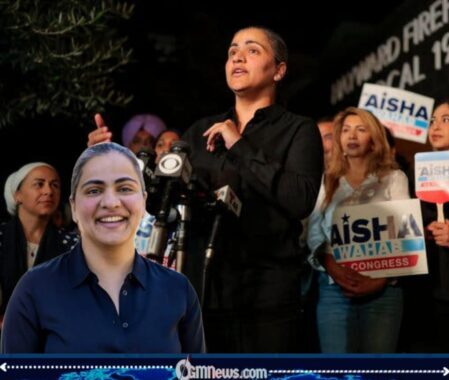
Progressive California State Senator Aisha Wahab has won the special election to replace Eric Swalwell in the U.S. House, surviving a surprisingly tight Democratic-versus-Democratic showdown in California’s East Bay. Wahab defeated Bay Area Rapid Transit board president Melissa Hernandez after a campaign that turned into something of a political laboratory: throw in millions of dollars in outside spending, ideological arguments, establishment endorsements and a former congressman’s scandal, and apparently you get one very expensive way of discovering that voters still have the final button to press.
The victory gives Wahab a seat in Congress for the remainder of Swalwell’s term and makes her the first Afghan American elected to Congress. She entered the contest with substantial backing from progressive groups, organized labor, Democratic officials and Our Revolution, while Hernandez received significant support from outside groups linked to AIPAC. Wahab’s campaign had accused those groups of trying to buy the seat, while Hernandez maintained her own campaign and expressed pride in the fight.
The Election That Turned Into a Political Wallet Examination
Wahab initially looked set for a comfortable victory, having won the earlier primary by more than 20 points. Then the campaign entered its “please check your bank statement” phase. Super PACs associated with AIPAC reportedly spent nearly $6.4 million supporting Hernandez and attacking Wahab, dramatically tightening what had looked like a comfortable race.
By Thursday, with roughly 95% of the vote counted, Wahab was ahead by just over six points. In other words, the millions succeeded in making the race considerably more dramatic, but failed to change the winner. California voters had apparently decided that campaign spending could purchase airtime, billboards and attack advertisements—but not necessarily the privilege of choosing the person who would represent them.
From Foster Care to Congress as Political Battle Lines Harden
Wahab’s victory carries significance beyond the numbers. Raised in foster care after being orphaned, she built a political career in California before becoming the first Muslim woman and Afghan American elected to the California legislature. Her congressional victory now takes that journey onto the national stage. She described the achievement as evidence of the “American Dream” and pledged to fight for the district that raised her.
The race also exposed sharp divisions within California’s Democratic Party. Representative Zoe Lofgren endorsed Hernandez late in the contest, while progressive Democrats continued rallying behind Wahab. Meanwhile, Swalwell’s resignation in April followed multiple sexual misconduct allegations, which he has denied; the controversy surrounding his departure has continued to generate headlines, with federal investigators now reportedly examining the allegations.
Wahab’s victory therefore represents more than a routine replacement election. It is a story about progressive politics, establishment resistance, outside money and the increasingly expensive business of trying to persuade voters that one Democrat is somehow more Democratic than another. For now, Wahab has won the seat—and the political establishment has another election in November to prepare for, because Hernandez and Wahab are expected to meet again in the contest for the full two-year term. OGM News will be watching closely to see whether the next chapter brings more policy debate, more political fireworks, or simply another very large pile of campaign invoices.



[…] […]