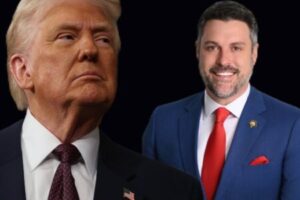





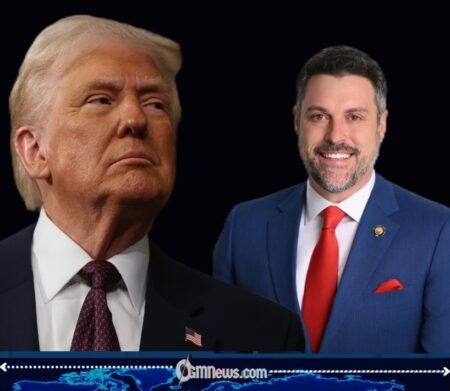
A Louisiana congressional candidate,Blake Miguez endorsed by current U.S. President Donald Trump, who is serving a second term, has come under renewed scrutiny following the resurfacing of a 2007 rape allegation that was reported to local police but never made public at the time. The accusation involves Blake Miguez, a 44-year-old Republican state senator who has recently emerged as a prominent figure within Louisiana’s conservative political circles.
Although the allegation did not lead to criminal charges and remained largely unknown for years, its recent circulation among political and media circles has raised questions about the vetting process behind high-profile political endorsements. Miguez has strongly denied the accusation, while the case continues to draw attention as he campaigns for a seat in the U.S. House of Representatives.
Allegation Reported in 2007 but No Charges Filed
According to a police report obtained through a public records request, a woman accused Miguez of rape in 2007. At the time, Miguez was a law student and reportedly in a relationship with the woman, whom she described as a “live-in ex-boyfriend.” The alleged assault was reported to local law enforcement in Iberia Parish on the same day it supposedly occurred.
Despite the report, the case did not result in criminal charges. Investigators documented that the accuser declined to pursue charges, reportedly stating that she did not want to cause trouble for Miguez. Without the cooperation of the complainant in moving forward with prosecution, the matter did not proceed through the criminal justice system.
Efforts by journalists to contact the accuser in recent months have been unsuccessful. There is no public indication that she has retracted the original allegation.
Blake Miguez Campaign Denies Allegation as “Categorically False”
Miguez’s campaign has firmly rejected the claims. In a statement issued following renewed media coverage of the case, campaign representatives described the allegation as entirely untrue and politically motivated.
The campaign has also pointed to statements from relatives of the accuser that question her credibility. In particular, a February email reportedly sent by the accuser’s father to Miguez’s office described the allegations as fabricated. In the message, the father wrote that his daughter’s statements were lies and referenced what he described as her struggles with drug use.
While the campaign has cited the email as evidence supporting Miguez, the father’s message does not explain how he concluded that his daughter’s claims were false. Requests for further comment from him have reportedly gone unanswered.
Questions Raised About Vetting Process
The reemergence of the allegation has reportedly caused concern within political circles, including individuals connected to the White House. According to sources familiar with the endorsement process, questions have been raised about whether Miguez fully disclosed the existence of the police report during the evaluation process that preceded President Trump’s endorsement.
Some officials reportedly worry that the campaign either failed to thoroughly vet Miguez’s background or that potentially relevant records were not brought forward before the endorsement was granted. The situation has intensified scrutiny of how candidates are evaluated when seeking support from prominent national political figures.
At the same time, no public evidence has emerged indicating that Miguez concealed the information deliberately. The allegation remained largely unknown outside law enforcement records and limited political circles until recent months.
Political Context and Congressional Ambitions
Miguez initially launched a campaign to challenge Louisiana’s senior U.S. senator, Bill Cassidy, another Republican. However, he withdrew that bid earlier in the year and instead entered the race for Louisiana’s 5th Congressional District seat.
The seat is being vacated by Republican representative Julia Letlow, who is pursuing her own campaign against Cassidy in the Senate. The reshuffling of political ambitions within Louisiana’s Republican ranks has created a competitive environment in which endorsements and controversies can significantly influence campaigns.
President Trump’s endorsement was viewed as a major boost for Miguez, who has built a reputation among conservative voters in the state legislature. The emergence of the 2007 allegation, however, has added a complicated dimension to his congressional bid.
Circulation of Police Report in Political Circles
The police report documenting the allegation reportedly began circulating among political insiders months ago. Interest intensified after Miguez publicly announced his intention to run for higher office.
A public records request submitted to the Iberia Parish sheriff’s office in June yielded the report. The request reportedly originated from an email address linked to a researcher associated with the national Republican Party.
As the document spread through political and media networks, journalists from outlets across the political spectrum began investigating the matter. The allegation was eventually reported publicly by a Washington-based conservative journalist before being followed up by additional reporting from other news organizations.
Debate Over Accuser’s Credibility
Some commentators who have covered the case have focused on the accuser’s personal history, including past arrests and legal disputes. Records obtained through public information requests indicate that the woman had several encounters with the legal system over the years, including charges related to drug possession. Many of those cases were dismissed, while others remained unresolved at the time of reporting.
Reports have also noted that the accuser had previously filed protective orders against other partners over alleged assaults, though those cases were likewise dismissed or dropped. Critics argue that these circumstances raise questions about the reliability of her claims.
However, advocates for victims’ rights caution that such histories do not automatically invalidate allegations of violence. The media outlet that obtained the original police report has also chosen not to identify the accuser, in keeping with newsroom policies designed to protect individuals who report sexual assault.
Ongoing Political and Public Debate
The controversy illustrates how past allegations—even those that never resulted in criminal charges—can resurface and influence contemporary political campaigns. For candidates seeking national office, heightened scrutiny of personal history often accompanies the pursuit of higher political roles.
For Miguez, the situation has created a complex political challenge: defending against allegations while continuing to campaign for federal office. Whether the issue significantly affects his campaign remains uncertain, particularly in a political environment where partisan loyalty and endorsements often shape voter perceptions.
As the race for Louisiana’s 5th Congressional District develops, the debate surrounding the allegation and the questions it raises about vetting, accountability, and political strategy are likely to remain part of the broader conversation.