




























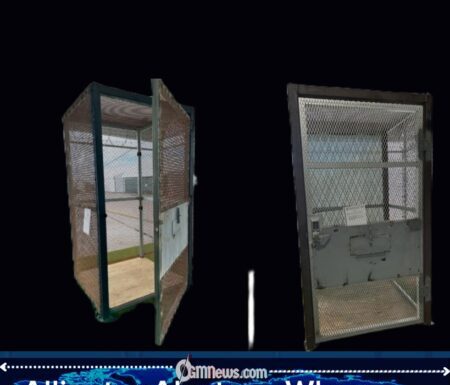
What was once presented as a tough new answer to illegal immigration has now acquired an awkward footnote: federal inspectors say detainees at Florida’s “Alligator Alcatraz” were repeatedly placed in outdoor metal cages so small they offered about 18 square feet of floor space. In the wonderfully creative language of detention management, the structures were reportedly called “calming areas” — because apparently nothing says calm like being locked inside a metal enclosure under the Florida sun. The Department of Homeland Security’s inspector general said the practice did not align with standards for humane treatment and posed significant risks to detainees’ health and safety.
Alligator Alcatraz Detainees Were Held in 18-Square-Foot Cages, Report Says
The DHS inspector general’s findings are particularly damaging because they come from the government’s own watchdog rather than from an activist group or political opponent. Investigators found 79 instances between July 2025 and January 2026 in which detainees were placed in the small metal cages, sometimes for nearly two hours. At about 18 square feet, each enclosure was less than half the 37-square-foot minimum cited in ICE standards for single-person spaces. The inspectors described the use of such restrictive spaces as highly unconventional and inconsistent with humane treatment.
The satire almost writes itself: if somebody had advertised an 18-square-foot metal cage as a luxury “calming area,” the customer might reasonably ask where the spa treatment was. Yet investigators also found broader problems at the Alligator Alcatraz” facility, including insufficient living space and failures involving medical care, hygiene, food service and recreation. At maximum capacity, housing areas reportedly provided only about 28 square feet per detainee, compared with a 75-square-foot national standard cited in the watchdog’s findings.
DENIALS MEET THE GOVERNMENT’S OWN PAPER TRAIL
The findings also revive earlier allegations that Florida officials had dismissed. Amnesty International had previously documented claims of people being shackled outdoors and placed in a small “box” under the Florida heat, while officials rejected the allegations. The later DHS inspection has now provided an official government record confirming that restrictive outdoor enclosures were indeed used at the facility. Amnesty said the findings reinforced its earlier warnings about the treatment of detainees.
The Alligator Alcatraz” facility, created in 2025 at a remote airport site in the Florida Everglades and promoted as part of the immigration crackdown supported by current President Donald J. Trump, became a symbol of the administration’s hard-line approach to immigration. It was eventually shuttered in June 2026, with officials citing hurricane-season concerns, after facing criticism over conditions, environmental consequences, legal challenges and operating costs. The latest watchdog report means the political argument over Alligator Alcatraz is no longer simply about whether critics exaggerated: federal inspectors themselves have documented serious shortcomings.
The story therefore leaves behind an uncomfortable question: when a detention facility needs a government inspector to explain why a cage is not an acceptable substitute for humane confinement, perhaps the problem was never the name on the sign but what was happening behind it. Alligator Alcatraz may be closed, but the watchdog’s findings ensure that its record will remain open for political, legal and public scrutiny. Readers should watch OGM News for further updates as the controversy and questions surrounding accountability continue to unfold



Signing up took less than two minutes and I was already exploring the available games....