
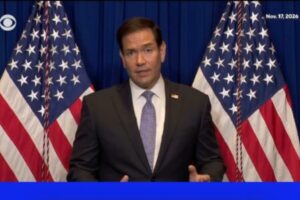





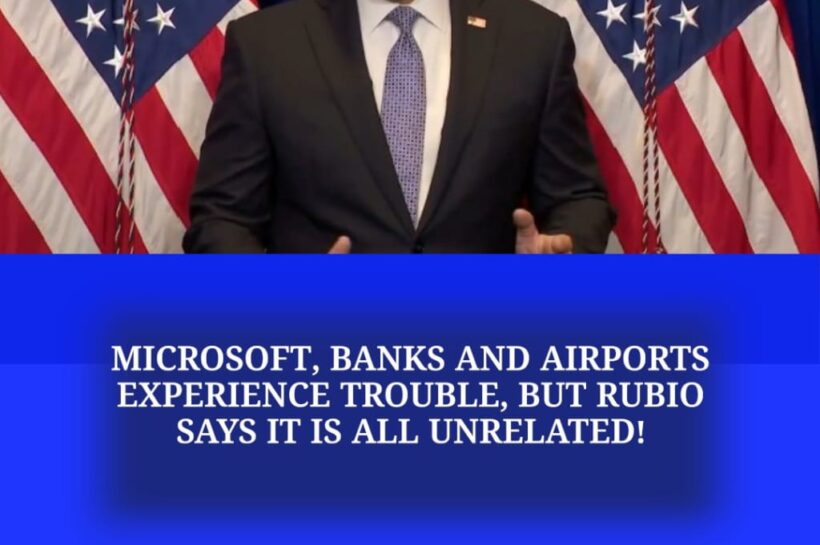











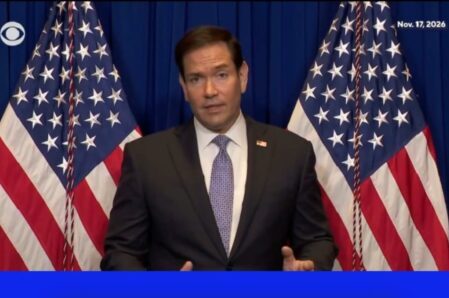
U.S. Secretary of State Marco Rubio has moved to calm growing public anxiety after a series of technology disruptions affected Microsoft services, the Federal Aviation Administration (FAA), major banks and other critical systems, insisting that the incidents are unrelated and that there is no evidence of a coordinated cyberattack. Speaking to reporters in Manila, Philippines, on November 17, Rubio assured Americans that the government had found no indication of hackers, criminals, foreign governments or disgruntled employees being responsible. Apparently, several major systems can experience problems around the same time without sharing a common culprit, but that explanation has not stopped Americans from asking questions.
RUBIO REJECTS FEARS OF A COORDINATED CYBER ATTACK
Rubio was emphatic that the Microsoft disruption had nothing to do with the FAA incident, while the banking problems were equally unrelated. He stressed that the government had no evidence suggesting that hostile actors were behind the incidents. His message was straightforward: America is not under a systemic attack, and citizens should not mistake a series of technical failures for an organised operation against the country.
However, the timing of the disruptions has made the situation particularly uncomfortable. Microsoft services, including Outlook and Teams, experienced widespread problems, while an FAA ground stop disrupted air travel across the United States. Major banks also experienced service interruptions. For ordinary Americans, it was beginning to look like technology had collectively decided to take an unscheduled holiday. Rubio, however, insists that the incidents have separate explanations.
TECHNICAL FAILURES RAISE QUESTIONS ABOUT AMERICA’S DIGITAL SYSTEMS
While Rubio dismissed the possibility of a coordinated attack, the disruptions have raised questions about the reliability of America’s increasingly technology-dependent infrastructure. Reports indicate that the FAA disruption involved problems associated with technical equipment and maintenance work, while banking and Microsoft incidents were also being investigated as separate technical failures. The National Security Agency also acknowledged a temporary disruption to an internal network during scheduled maintenance, although it maintained that its critical capabilities remained operational.
The situation has also attracted political attention, with Democratic lawmakers demanding greater transparency about the disruptions and the government’s response. Meanwhile, Rubio has maintained that the administration is monitoring potential threats and will take genuine security concerns seriously. For now, Americans are being asked to remain calm, trust the available evidence and hope that their next online transaction, flight booking or email does not become another national talking point.
Ultimately, Rubio’s message is that multiple technology failures do not automatically amount to a coordinated cyber attack. Nevertheless, the frequency and scale of the disruptions make infrastructure reliability, government transparency and cybersecurity preparedness important issues that cannot simply be dismissed. Whether the explanations will completely satisfy concerned Americans remains to be seen. Stay with OGM News for further developments as the story unfolds.
dHElHiewqJFCkBdBLBz