










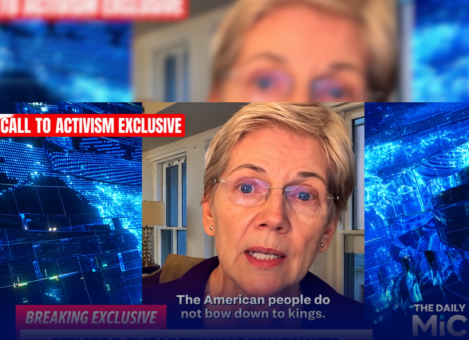
As millions of Americans prepare for a new round of No Kings demonstrations on Saturday, October 17, President Donald J. Trump faces another nationwide display of public opposition, with protesters expected to emphasize democratic accountability, constitutional rights, and the power of the ballot box. This latest mobilization comes as the movement shifts toward encouraging voter participation ahead of the November midterm elections. Senator Elizabeth Warren‘s defiant message, declaring that Americans do not bow to kings but march, stand up, and persist, captures the spirit of a movement determined to remind those in power that the presidency is an elected office, not a royal inheritance.
No Kings demonstrations: A Nation Preparing to March, and a President Facing Political Pushback
The No Kings movement has developed into a significant nationwide protest campaign against what its supporters describe as authoritarian tendencies in the Trump administration. Its central argument is straightforward: the American presidency carries enormous power, but that power remains subject to constitutional limits, democratic accountability, and the will of the people. Organizers are preparing events across the country, with activities ranging from community rallies and public gatherings to voter registration assistance and early-voting initiatives.
For the Trump administration, the demonstrations represent another public test of its relationship with Americans who believe the government must answer to citizens rather than demand unquestioning loyalty. Naturally, the White House does not have to enjoy the sight of people criticizing the president, but disapproval is part of the democratic package. After all, the presidency comes with a powerful office, a formidable microphone, and a constitutional job description—not a crown, a throne, or a lifetime membership in a royal family.
Elizabeth Warren’s Message: No Kings, The People Are Citizens, Not Subjects
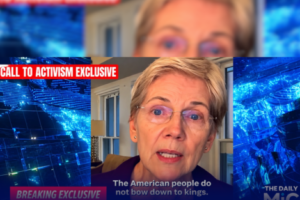
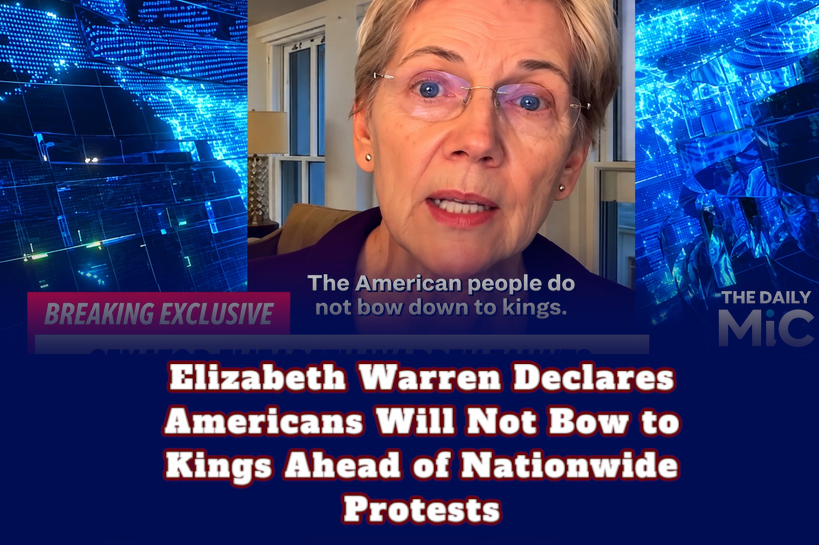
Warren’s statement—“The American people do not bow down to kings. We march. We stand up. We do not back down. Today and every day, we persist.”—delivers a pointed political message about the limits of executive power. Her words frame protest as a legitimate expression of citizenship, rather than an act of disloyalty to the country. The distinction matters: criticizing a president is not the same as rejecting America. In a constitutional republic, citizens can defend their country precisely by demanding that its leaders respect its democratic institutions.
And here comes the political irony: American history is built around rejecting monarchy, yet the phrase “No Kings” continues to resonate whenever citizens fear that presidential authority is becoming too personal or insufficiently accountable. Critics of Trump see the slogan as a warning against concentrated executive power; his supporters may view the demonstrations as partisan opposition dressed in patriotic language. Either way, the constitutional question is bigger than a political rally: how should a democracy respond when citizens believe their leaders are exceeding their authority? The answer cannot simply be that the president won an election and therefore deserves unlimited deference. Elections confer authority, not immunity from scrutiny.
From Street Protests to Ballot Boxes: The Next Political Test
Saturday’s mobilization also marks a strategic shift. Organizers are promoting No Kings: Vote Early, encouraging eligible Americans to make voting plans, learn their state’s early-voting options, and participate in the November 3 midterm elections. Rather than relying exclusively on crowds and protest signs, the movement is attempting to translate public frustration into measurable civic participation. Thousands of local activities are planned nationwide, although turnout and participation will vary by location.
That strategy presents a practical challenge for both sides of America’s political divide. Demonstrations can attract attention, communicate grievances, and energize supporters, but their long-term political impact depends partly on what participants do afterward. If protesters want to influence government policy, congressional representation, and oversight of the executive branch, voting and sustained civic engagement offer direct routes to exerting influence. Conversely, the administration and its supporters can argue their own case through lawful political organizing and the ballot box. Democracy works best when neither side mistakes political victory for permission to silence the other.
In the end, Warren’s message is more than a memorable protest slogan; it is a reminder that public office is a responsibility entrusted by citizens, not a personal possession. Millions may gather, but the ultimate test will be whether the movement’s energy translates into meaningful civic participation and whether elected leaders respond to legitimate public concerns. OGM News will continue following the demonstrations, the administration’s response, and the political consequences as the November midterm elections approach. Watch this space for further updates.


mjpKyJqtopJmUkjsHEeNp