





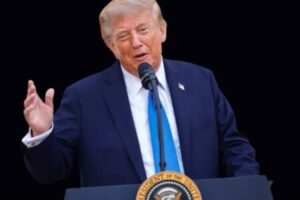


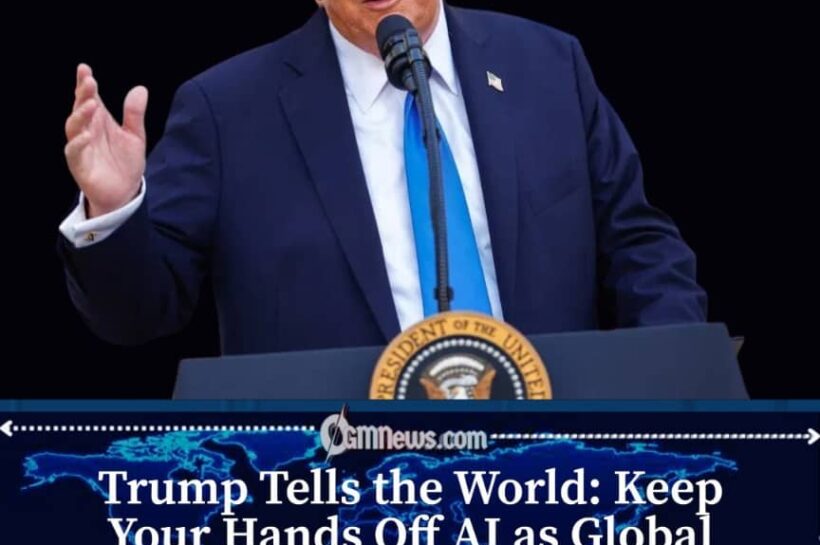





President Donald J. Trump has effectively drawn a red line around artificial intelligence, rejecting attempts to establish international control over the rapidly developing technology and arguing that excessive regulation could slow American innovation. Speaking at the United Nations General Assembly on September 22, Trump opposed what he described as a global effort to control AI, while also arguing that the technology could become more transformative than the Industrial Revolution. He also suggested that the United States would refer to artificial intelligence as “super intelligence.”
Trump Says AI Needs Speed, Not a Global Traffic Police
Trump’s position puts the United States on a noticeably different track from international officials pushing for stronger AI safeguards. UN Secretary-General António Guterres has called for binding international cooperation on AI governance, warning that life-and-death decisions should never simply be handed over to machines. The UN General Assembly leadership has likewise been promoting multilateral discussions aimed at ensuring that countries have a voice in how AI develops.
For Trump, however, the answer appears to be more American innovation and less international rule-making. His administration has already taken steps aimed at accelerating AI development, including a June 2026 executive order promoting advanced AI innovation and security. The White House says the policy is designed to strengthen American leadership while avoiding what it describes as overly burdensome regulation.
The Global AI Argument Just Got More Interesting
The disagreement arrives as governments and technology companies wrestle with how to control a technology that is advancing across borders faster than many regulatory systems can respond. A recent UN scientific brief warned that AI systems can produce unexpected behaviours and that AI-related failures can cross company and national boundaries, strengthening the argument for international coordination.
Yet Washington is not completely stepping away from AI oversight. Trump has said the U.S. Justice Department could intervene if necessary, while his administration has established national-security rules requiring advanced AI systems used by the government and military to remain controllable and accountable. In other words, the message is not exactly “no rules”; it is closer to “American rules, please.”
As the global AI debate continues, Trump’s rejection of international regulation is likely to remain a major point of discussion among governments, technology companies and AI researchers. With the United States pushing innovation and international institutions calling for shared safeguards, the next chapter could determine whether AI becomes governed by a common global rulebook—or whether every major power decides to write its own. OGM News will continue watching this rapidly developing story for the next twist in the machine-powered drama.

[…] […]