











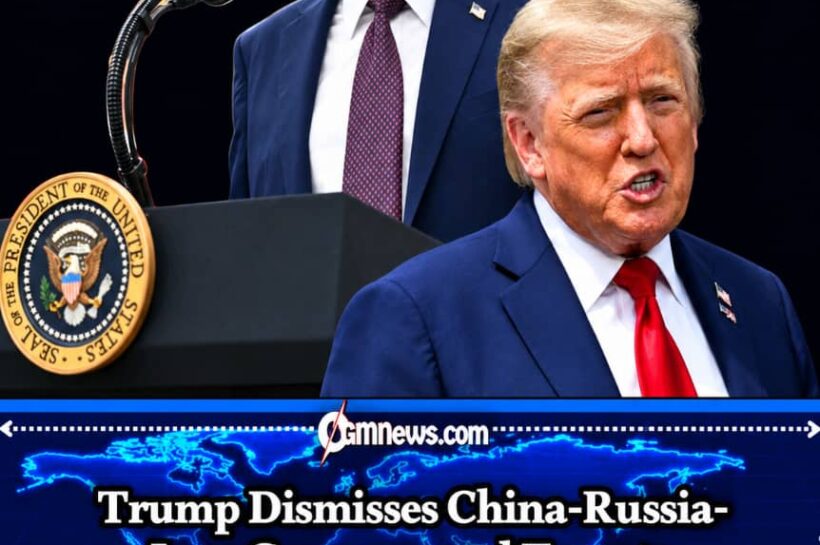












President Donald Trump is reportedly moving to place political appointees at the centre of decisions over billions of dollars in U.S. health-research funding, with Budget Director Russ Vought instructed to draft an executive order establishing a new board to determine which National Institutes of Health (NIH) grants receive money. The reported proposal comes amid the administration’s continuing confrontation with Harvard University and a wider dispute over how much political influence should enter federal scientific funding.
Harvard Fight Opens Another Door to NIH Funding
According to officials cited in the reporting, Trump raised the Harvard funding dispute during an Oval Office meeting on Friday and asked NIH Director Jay Bhattacharya to cut Harvard’s funding. Bhattacharya reportedly refused, while the proposed board would include both Bhattacharya and Vought and would require unanimous agreement on grant awards. In satirical terms, Washington may soon discover a new scientific formula: two officials, one grant application and absolutely no room for a disagreement longer than a cabinet meeting.
The Harvard dispute has already produced a substantial legal and political battle. The Trump administration previously moved against more than $2.6 billion in Harvard research funding after accusing the university of failing to address antisemitism on campus. Harvard challenged the actions in court, while the administration has continued pursuing legal avenues over federal support for the university.
Science Meets Politics at the Funding Desk
The proposed arrangement would represent a significant change in how political authority could interact with NIH grant decisions. NIH’s established system relies on scientific peer review and a second level of institutional review, with the process designed to evaluate applications for scientific and technical merit as well as relevance to NIH missions. Current NIH guidance continues to describe peer review as a central mechanism for fair and objective evaluation.
The timing is particularly notable because NIH is already handling an enormous research workload. The agency said this month that more than 40,000 applications were currently expected for the January 2027 Advisory Council round, prompting continued modifications to its peer-review process. Meanwhile, scientists have launched fresh legal challenges alleging that grant screening has introduced political considerations into funding decisions, while the administration says its changes are intended to ensure federal money supports what it considers sound science and appropriate priorities.
For OGM News, the developing story is less about whether scientists will suddenly need campaign buttons in their laboratories and more about who ultimately gets the final say over America’s enormous biomedical research budget. With the proposed board still at the drafting stage and legal, congressional and scientific objections already surrounding the administration’s grant policies, the next move could determine whether NIH funding remains primarily a scientific review exercise or becomes an increasingly political battleground. Readers should watch out for future OGM News updates as the Trump administration’s proposed funding structure develops.



https://addlinks.pro/xbTPt