




















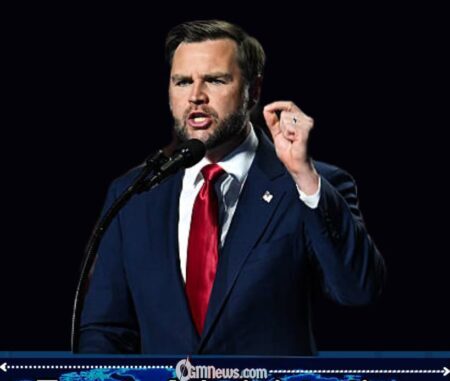
The Trump administration is turning the federal Taxpayer lending cupboard into a rather exclusive club, with Vice President JD Vance saying roughly 870,000 people will be blocked from obtaining further federal loans after being accused of abusing taxpayer-funded assistance. Vance described the move as “pretty common sense,” essentially delivering a financial message that Washington hopes borrowers understand before reaching for another application: if taxpayers believe you have taken advantage of them, the government is no longer interested in extending the welcome mat.
The warning comes as America’s student-loan system continues to wrestle with a huge repayment crisis. Recent federal data cited in reporting shows about 870,000 borrowers are between 181 and 270 days behind on their payments, putting them close to default, while approximately 9.5 million borrowers are already in default.
Vance’s ‘No More’ Message Puts Taxpayer Money Under the Microscope
Vance’s argument is built around a simple principle: federal money is not an unlimited buffet where borrowers can take another helping whenever the previous one disappears. If an individual has been found to have improperly taken advantage of taxpayer-funded programmes, the administration says the federal government should have the authority to shut off future access rather than continue handing out money and hoping for a miracle.
The vice president’s language gives the policy a particularly blunt political flavour. Instead of the usual Washington vocabulary of “administrative adjustments,” “eligibility reforms” and “fiscal responsibility,” the message is essentially: you messed with the taxpayer, the taxpayer is now checking your credit-card-sized federal wallet. Vance said that if such individuals apply again, they will no longer qualify for the benefits.
America’s Loan Crisis Is Already Creating Plenty of Financial Drama
The broader loan picture explains why the administration is putting increasing emphasis on repayment and taxpayer exposure. After pandemic-era payment protections ended, millions of borrowers began falling behind. Recent reporting based on federal data says more than 4.2 million loans entered default between April 2025 and March 2026, pushing the total number of borrowers in default to roughly 9.5 million.
That means the 870,000 borrowers identified as being 181–270 days late are not an isolated statistic. They are part of a much larger financial problem involving borrowers, loan servicers, the Education Department and ultimately taxpayers. For the administration of current President Donald J. Trump, the argument is increasingly that government assistance must come with accountability — and that people accused of fraud or serious misuse should not expect another federal cheque simply because they have discovered where the application button lives.
The administration’s position also comes against a background of major changes to federal student-loan policy. Republican lawmakers have pushed restrictions on federal borrowing, including tighter limits on graduate and Parent PLUS lending, arguing that uncontrolled borrowing can leave students and taxpayers carrying unsustainable costs.
For borrowers, however, the distinction between deliberate fraud, financial hardship and ordinary delinquency remains crucial. Being late on a loan is not automatically the same thing as stealing from taxpayers, and the government’s enforcement decisions will therefore face scrutiny over who is actually being denied future federal assistance and on what legal basis.
OGM News will continue watching the developing policy as the Trump administration attempts to draw a harder line around taxpayer-funded lending. For now, Vance’s message is unmistakably blunt: federal assistance may be available, but Washington increasingly wants borrowers to understand that taxpayer money comes with rules — and breaking those rules could mean the next application receives something more powerful than a rejection email: “No more.”


[…] […]