

















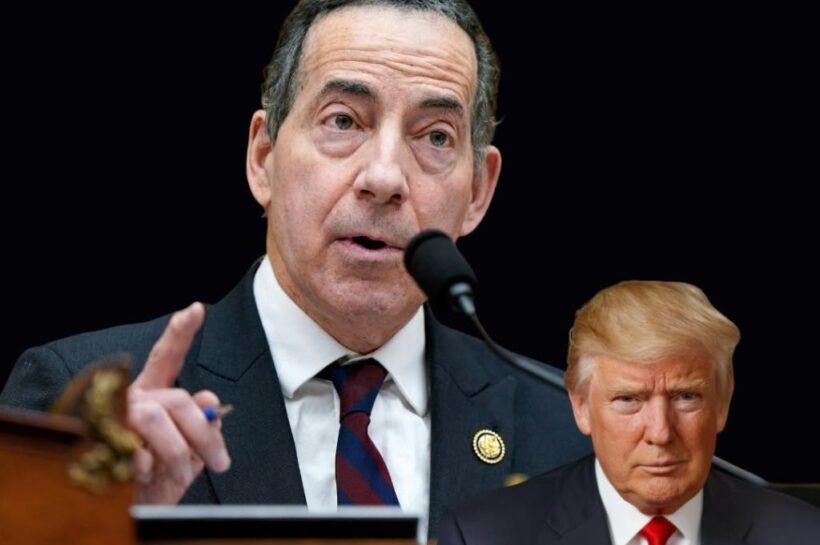












Donald J. Trump returned to the White House promising fiscal restraint, smaller government and economic growth powerful enough to tame America’s deficits. Instead, the U.S. national debt has now crossed the extraordinary $40 trillion mark, turning the administration’s promise to clean up Washington’s financial house into a rather expensive episode of “renovation.” Treasury data showed U.S. gross federal debt passing $40 trillion in August, while borrowing costs have remained elevated.
The satire almost writes itself: Washington apparently ordered a debt diet but forgot to remove the credit card from the presidential desk. The Congressional Budget Office estimates that the 2025 reconciliation law increased projected deficits by about $4.7 trillion over 2026–2035, including additional debt-service costs and economic effects. CBO also projects net federal interest outlays rising from about $1 trillion in 2026 to $2.1 trillion in 2036.
The $40 Trillion Elephant in the Budget Room
Trump and his allies have argued that cutting waste, reducing government bureaucracy, lowering taxes and generating stronger economic growth can ultimately improve America’s fiscal position. The administration has pointed to federal workforce reductions and efforts associated with the former Department of Government Efficiency as evidence of spending restraint. But the mathematics remains stubborn: debt continues to rise when government spending and other obligations exceed revenues.
And the interest bill is becoming harder to ignore. Higher Treasury yields mean the government must pay more to finance its borrowing, while those yields can also influence mortgage and other consumer borrowing costs. Recent reporting puts the 10-year Treasury yield around the upper-4% range, illustrating why the debt problem is no longer merely a Washington spreadsheet problem—it can eventually arrive at household budgets wearing an interest-rate tag.
Trump Said Growth Would Fix the Debt—So Why Is the Bill Still Rising?
The administration continues to emphasize economic growth as the great escape route. That argument has some economic logic: faster growth can increase tax revenues and make existing debt easier to manage relative to the size of the economy. But CBO’s longer-term projections still show an unsustainable fiscal trajectory, with debt held by the public expected to rise substantially relative to GDP.
The awkward part is that America’s fiscal problem did not begin with Trump. Republicans and Democrats have contributed to decades of deficits through tax changes, wars, stimulus measures, entitlement spending and other policies. Demographic pressures are also increasing demands on Social Security and Medicare. In other words, the national debt has become less like a political football and more like a football stadium where both teams have been taking turns adding seats.
For now, the $40 trillion milestone is a warning rather than an immediate declaration of financial collapse. But with interest expenses climbing and lawmakers facing difficult choices over taxes, spending and social programmes, America’s fiscal arithmetic is becoming increasingly difficult to laugh away. OGM News will continue watching whether Trump’s promised fiscal restraint eventually catches up with the nation’s rapidly growing debt—or whether the debt reaches the next trillion-dollar milestone first.



Its Amazing