









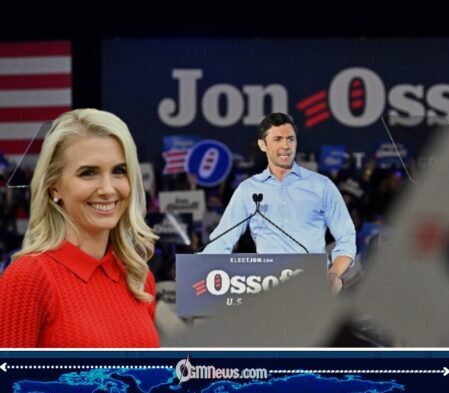
A political storm has erupted in Washington after Georgia Senator Jon Ossoff targeted Natalie Harp, one of President Donald Trump’s closest aides, during a campaign rally in Atlanta, transforming a relatively unknown White House figure into the latest character in America’s never-ending political reality show. Ossoff, a Democratic lawmaker seeking reelection and viewed by some analysts as a potential 2028 presidential contender, questioned whether President Trump’s priorities were focused on governing or personal comfort, while using Harp’s proximity to the president as part of his argument.
The remarks instantly triggered a political firestorm, with Trump allies defending Harp’s role and accusing Ossoff of turning a staff relationship into a campaign weapon. The controversy has pushed many Americans to ask the same question dominating political conversations: who exactly is Natalie Harp, and why has a presidential aide who once operated behind the scenes suddenly become a headline-maker?
Natalie Harp: From Supporter to Presidential Insider
Natalie Harp is a former television personality and longtime Trump supporter who rose to national attention after publicly crediting Trump’s “Right to Try” policy with helping her access experimental cancer treatment. She later became associated with Trump’s political operation and eventually joined his White House team as an executive assistant and special assistant to the president.
Reports have described Harp as one of the aides closest to Trump, earning the nickname “the human printer” because of her reported habit of providing printed materials, news stories, and information for the president. Her supporters describe her as deeply loyal, while critics argue that her unusual level of access raises questions about influence, information flow, and the inner workings of presidential decision-making.
Ossoff Political Punchline Becomes Midterm Battle Weapon
Ossoff’s comments have turned Harp from a behind-the-scenes White House employee into a symbol in a much larger political argument. His criticism suggested that Trump’s inner circle reflects his leadership style, while Republicans have framed the attack as a personal insult against a loyal public servant.
In classic Washington fashion, a debate about presidential responsibility has now become a debate about personalities, loyalty, and who gets the closest seat to power. The political circus tent is officially open, with Democrats using Harp’s presence as a talking point and Trump’s supporters portraying the criticism as another attempt to attack the president’s team.
As the 2026 midterm elections approach, the Natalie Harp controversy may become less about one aide and more about a familiar American political question: how much influence should unelected advisers have around the nation’s most powerful office? OGM News will continue monitoring the drama as new chapters unfold in this unusual White House saga.
[…] […]