














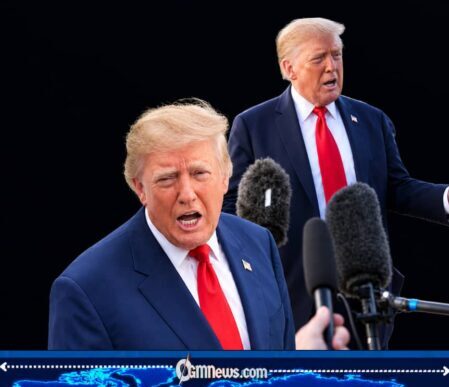
President Donald J. Trump’s decision to substantially reduce planned U.S.-South Korea military exercises has triggered a fresh political storm in Washington, with Democratic lawmakers warning that weakening a key alliance at a sensitive moment could create serious security risks. Trump ordered the Pentagon to scale back the exercises, arguing that they are expensive, send an unnecessarily hostile signal to North Korea and are difficult to justify while he maintains what he describes as a good relationship with North Korean leader Kim Jong Un.
Lawmakers Sound the Alarm as Trump Rewrites the Drillbook
Senator Andy Kim reportedly argued that Trump’s announcement suggests a disregard for the importance of the U.S.-South Korea relationship, insisting that major alliance decisions should be discussed through official diplomatic and military channels rather than unveiled on social media. Kim described South Korea as an essential partner and said he would continue pressing for stronger defence, trade and technology cooperation. His criticism comes against the backdrop of an alliance that has continued conducting combined training and strategic consultations throughout 2026.
Senator Mark Kelly, a former Navy pilot, was even less diplomatic, calling the reduction of the exercises “shortsighted” and “a mistake.” Congresswoman Pramila Jayapal likewise questioned whether Washington was effectively turning away from democratic South Korea while moving closer to North Korea’s leadership. Her warning that the decision could be dangerous for regional stability captures the central concern among critics: military exercises are not merely expensive calendar events, but a practical demonstration of readiness, coordination and alliance credibility.
A Friendly Message to Pyongyang, a Nervous One to Seoul
Trump’s decision arrived just as the annual Ulchi Freedom Shield exercises were getting underway. About 18,000 South Korean troops are involved, with the training designed to improve readiness against North Korean threats. The exercises include complex operational scenarios, while recent U.S.-South Korean training has also focused on logistics, maritime operations, medical support and emerging battlefield threats such as drones.
The timing is particularly striking because North Korea has recently resumed ballistic-missile testing, while U.S. officials have warned that North Korean forces gained battlefield experience through their involvement alongside Russia in the Ukraine war. Trump, however, has presented a very different calculation, arguing that the exercises are costly and could unnecessarily antagonise a North Korea he considers relatively “unthreatening and respectful.” The resulting political drama has left Washington with a familiar question: can diplomatic outreach to Pyongyang coexist with maximum military readiness on the Korean Peninsula?
For OGM News, the real story is bigger than one military exercise: it is about how quickly America’s approach to an important Asian alliance can change when the White House places diplomacy, cost and presidential relationships at the centre of defence policy. With lawmakers already sounding the alarm and South Korea continuing the drills, the next moves from Washington, Seoul and Pyongyang could determine whether this is a temporary adjustment or the beginning of a much broader strategic shift. Readers should watch OGM News for further updates as this unusual alliance drama develops.


Logging in is a breeze and the site stability is amazing even during peak hours....