








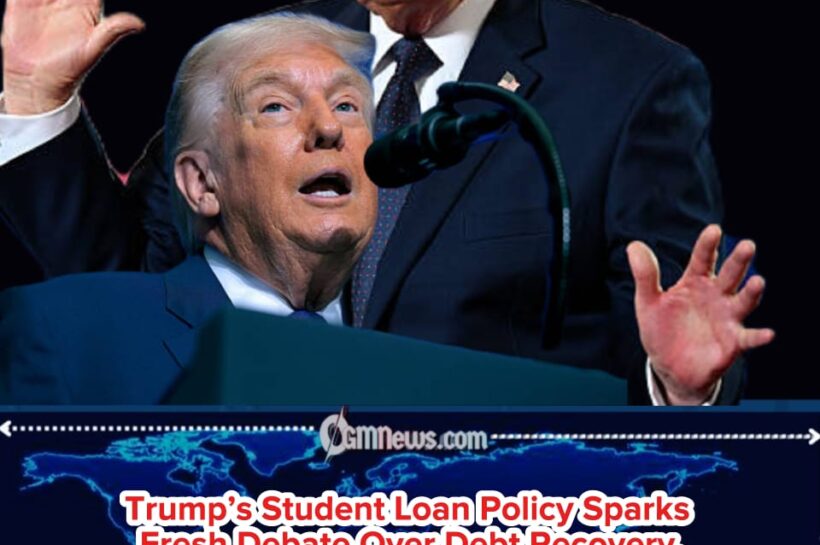




Trump administration officials have suffered a significant courtroom setback after a federal appeals court rejected an attempt to dismantle stricter national standards on deadly soot pollution, preserving regulations designed to protect millions of Americans from harmful airborne particles. The decision immediately reignited political and legal arguments over environmental policy, public health and economic growth, while leaving observers wondering whether the White House will seek another route to reverse the rule or accept one of its biggest environmental defeats to date.
Trump Administration Loses Court Fight Over Deadly Soot Pollution Rules
The Trump administration had asked the federal court to remove a regulation adopted in 2024 that strengthened limits on fine particulate matter, commonly called soot or PM2.5. Government lawyers argued that the Environmental Protection Agency should be permitted to withdraw the rule, saying it imposed unnecessary burdens on industries including manufacturing, electricity generation and heavy production. The judges, however, ruled that the administration had not provided sufficient legal justification to erase the standard, allowing the tougher pollution limits to remain in force.
Environmental organizations celebrated the judgment as an important victory for public health, pointing to years of scientific research linking fine-particle pollution to asthma, heart disease, strokes and premature deaths. Industry representatives responded with disappointment, warning that stricter regulations could increase operating costs and delay industrial expansion. The latest decision illustrates that while politicians frequently promise sweeping regulatory changes, those ambitions must still survive judicial scrutiny. In a touch of irony, the smallest particles in the atmosphere have once again produced one of Washington’s largest political headaches.
Court Blocks Trump Administration’s Push to Remove Soot Pollution Limits
Beyond the immediate legal battle, the ruling reinforces how environmental policy in the United States increasingly depends on the courts as much as executive agencies. The Trump administration has consistently argued that reducing regulatory burdens encourages economic investment, strengthens domestic manufacturing and lowers costs for businesses. Supporters of the current soot standards counter that cleaner air produces long-term economic benefits by reducing healthcare expenses, improving productivity and preventing thousands of pollution-related illnesses each year.
Public health experts continue to describe soot as one of the country’s most dangerous air pollutants because its microscopic particles can travel deep into the lungs and even enter the bloodstream. Children, older adults and individuals with existing respiratory or cardiovascular conditions remain especially vulnerable. While the Trump administration may still pursue additional legal or administrative options, the court’s ruling leaves the stricter standards firmly in place for now and demonstrates that environmental regulations cannot simply disappear through policy preference alone.
The legal dispute also serves as a reminder that environmental policy rarely ends when a regulation is written or challenged. Instead, it often evolves through years of courtroom arguments, scientific evidence and competing political priorities. As supporters and critics prepare for the next phase of the debate, the Trump administration finds itself navigating yet another closely watched legal contest where economic promises, environmental protection and judicial authority continue to collide. OGM News will continue monitoring future developments as the Trump administration determines its next move in one of the year’s most consequential environmental battles.
Downloaded the 881betapp the other day. Clean interface, does the job. Quick and easy betting...