





























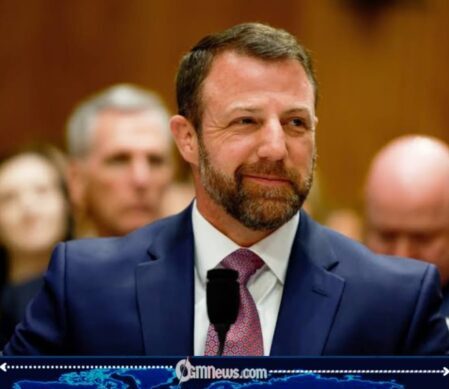
Temporary Protected Status (TPS) has once again become the center of one of America’s most divisive immigration debates after the Trump administration declared that migrants benefiting from the humanitarian programme should either obtain permanent legal residency or prepare to leave the United States. The announcement follows a recent Supreme Court decision that removed a major legal obstacle to ending TPS protections for many migrants, leaving hundreds of thousands of Haitian and Syrian nationals facing an uncertain future and raising fresh questions about the balance between immigration enforcement and humanitarian responsibility.
Growing Pressure on Temporary Protected Status Holders
The renewed focus on Temporary Protected Status came after Homeland Security Secretary Markwayne Mullin stated that migrants should either complete the necessary legal process to obtain permanent residency or accept government assistance to return to their countries of origin. According to Mullin, the administration is prepared to provide transportation and financial assistance, including approximately $2,100, to eligible migrants willing to leave voluntarily. He argued that TPS was established as a temporary humanitarian programme rather than a permanent pathway to residency, adding that the administration intends to enforce the law according to its original purpose.
The Supreme Court’s decision has intensified concerns among immigrant communities, particularly for an estimated 350,000 Haitian nationals and about 6,000 Syrians whose legal protections could now expire. Advocacy organisations argue that many of these migrants have legally lived and worked in the United States for years, established businesses, paid taxes and raised families. Critics also point out that the U.S. government continues to advise American citizens against travelling to Haiti and Syria because of widespread violence, terrorism, kidnapping, political instability and deteriorating security conditions, creating what many describe as a contradiction between travel advisories and deportation policy.
Political Debate and Wider Immigration Questions
The controversy surrounding Temporary Protected Status extends well beyond the courtroom. Haiti first received TPS designation following the devastating 2010 earthquake, while Syrians became eligible after civil war engulfed their country in 2012. Since then, successive administrations from both political parties have repeatedly renewed the protections, leading many beneficiaries to build long-term lives in the United States. Immigration experts note that TPS has never been designed as a direct route to permanent residency, although many recipients have sought other legal immigration options while under its protection.
The latest developments have also produced rare bipartisan disagreement. While the Trump administration maintains that temporary programmes should remain temporary, several Republican leaders, including Ohio Governor Mike DeWine and members of Congress such as Mike Lawler and Don Bacon, have publicly argued that conditions in Haiti remain too dangerous to justify ending humanitarian protections. Community leaders in Springfield, Ohio, where Haitian-owned businesses have contributed to local economic activity, have warned that the decision could disrupt families, employers and neighbourhoods alike. Supporters of the administration’s approach argue that immigration laws must be consistently enforced, while opponents contend that humanitarian realities should remain central to policy decisions affecting vulnerable populations.
The future of Temporary Protected Status is therefore likely to remain one of the defining immigration issues facing the United States. Additional legal challenges, congressional proposals and administrative actions are expected as affected communities seek clarity over their status. OGM News will continue monitoring developments, including any further court rulings, policy changes or legislative efforts that could determine whether temporary humanitarian protection evolves into a broader conversation about long-term immigration reform or remains strictly limited to its original purpose.


Navigating through slot games used to feel overwhelming but this login portal makes everything so...