

























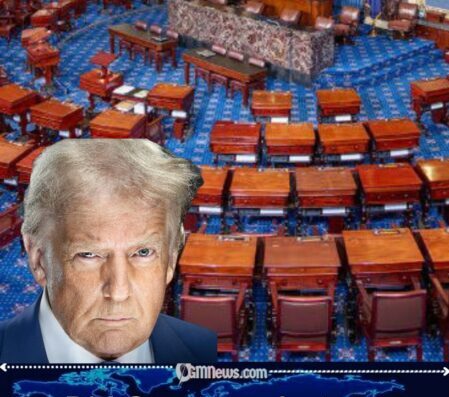
Trump pressure dominated Washington as Senate Republicans dramatically rejected a measure aimed at restricting President Donald Trump’s authority over the conflict with Iran, only a day after a similar resolution had passed. The late-night vote, following reports of heated exchanges and intense lobbying, has triggered fresh questions about whether Congress is willing to challenge presidential power or merely negotiate the timing of its objections.
Did Congress Just Surrender Its War Powers to Trump?
Trump pressure reportedly intensified after several Republican senators supported efforts to limit the administration’s military authority in Iran. According to lawmakers present at a closed-door lunch, the president sharply questioned why any Republican would support a war powers resolution. Senator Bill Cassidy later acknowledged a heated argument with the president before receiving a private White House briefing from Vice President JD Vance and special envoy Steve Witkoff. Hours later, Cassidy changed his position and voted against the nearly identical measure.
The resolution ultimately failed in a 47-50-1 vote, with Senator Rand Paul voting “present” rather than joining previous efforts to constrain the administration. Senate Majority Leader John Thune later indicated that the president was pleased with the outcome. Although both the successful and unsuccessful resolutions were largely symbolic and lacked the force of law, the episode illustrated the continuing influence Trump exerts over Republican lawmakers and the deep political sensitivity surrounding the Iran conflict.
Senate Rejects Measure to Limit Trump’s Iran War Authority
The war powers debate has been building for months as lawmakers from both parties questioned the legal basis and strategic objectives of American involvement in Iran. Recent congressional efforts sought to reassert authority under the War Powers Resolution of 1973, legislation designed to limit unilateral military action by presidents without congressional approval. Yet constitutional disputes over that law have persisted across several administrations, with some White House officials arguing that parts of the statute are unconstitutional.
Additional developments have added to the controversy. The Trump administration has reportedly requested tens of billions of dollars in supplemental funding connected to the Iran conflict while simultaneously pursuing negotiations with Tehran and extending a temporary ceasefire arrangement. Public opinion surveys have shown growing concerns about the costs of the conflict and its economic consequences, including higher energy and consumer prices. Analysts note that the Senate’s reversal may strengthen the president’s negotiating position abroad, but it also revives longstanding concerns over whether Congress is gradually surrendering its constitutional role in decisions of war and peace.
As Congress begins a two-week recess, the immediate political battle may have subsided, but the larger constitutional struggle remains unresolved. Trump pressure succeeded in delivering a symbolic victory, yet the questions raised by the war powers debate are unlikely to disappear. OGM News will continue monitoring whether this episode becomes a temporary display of party unity or a lasting shift in the balance between presidential authority and congressional oversight.



[…] […]