




























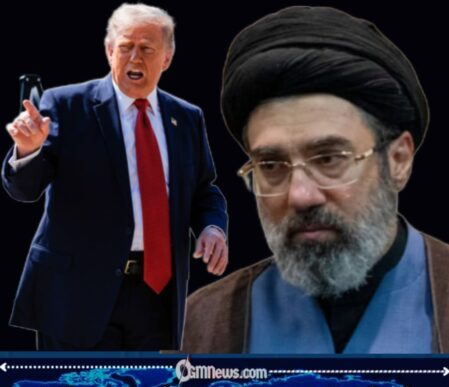
The Hormuz Deal is rapidly becoming one of the most debated diplomatic agreements in recent Middle East history after Iran’s Supreme Leader, Mojtaba Khamenei, accused President Donald Trump of using every available lever “out of desperation” to secure the accord. While the agreement has reopened a critical global shipping route and halted a dangerous military standoff, competing claims of victory have raised fresh questions about who truly gained the upper hand and whether the arrangement can survive the difficult negotiations still ahead.
The Hormuz Deal and Competing Claims of Victory
The Hormuz Deal officially came into force after the United States lifted its naval blockade and both governments agreed to begin a 60-day process aimed at negotiating a broader settlement. The agreement includes the reopening of the Strait of Hormuz, commitments relating to Iran’s nuclear programme, and a framework for future diplomatic engagement between Washington and Tehran.
Khamenei used his first public remarks on the agreement to argue that the Hormuz Deal reflected American urgency rather than Iranian weakness. Although he confirmed that future face-to-face discussions would take place, he emphasized that negotiations should not be interpreted as acceptance of Washington’s position. On the American side, President Trump and Vice President JD Vance presented the agreement as a practical step toward regional stability and a pathway to preventing further escalation.
Growing Political Fallout Beyond the Battlefield
The Hormuz Deal has also triggered intense political debate far beyond the Middle East. Several Republican lawmakers have criticized the agreement, particularly provisions connected to economic reconstruction and the broader question of whether Iran has made sufficient concessions in exchange for future benefits. Critics argue that Tehran may have secured important advantages without permanently resolving concerns over its nuclear ambitions.
Supporters of the Hormuz Deal reject that assessment and point to provisions requiring Iran to eliminate its enriched uranium stockpile, comply with verification measures, and demonstrate that it is no longer supporting proxy armed groups across the region. Administration officials maintain that sanctions relief and other incentives remain tied to compliance and are not guaranteed. Those competing interpretations have transformed the agreement into a major political issue even before the next round of negotiations begins.
The Hormuz Deal now faces its most important test. The coming weeks will reveal whether the agreement represents a durable diplomatic breakthrough or merely a temporary pause in a confrontation that neither side could afford to continue. As negotiators prepare for technical discussions and regional actors closely monitor developments, the Hormuz Deal remains at the centre of a high-stakes contest over security, influence, and the future balance of power in the Middle East.
Ae888covenuscasino, okay, I'm curious. Gonna check out this site and try to find some amazing...