









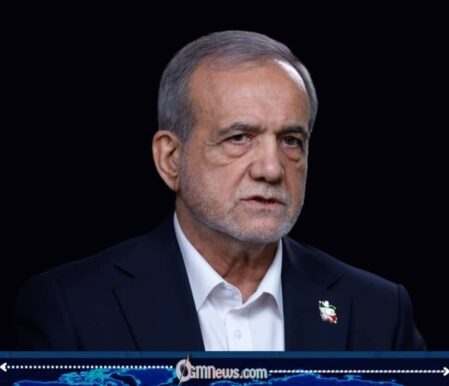
Pezeshkian has reignited one of the most contentious debates in international politics after questioning why Iran remains designated by the United States as a state sponsor of terrorism while Israel openly acknowledges operations targeting senior Iranian figures. His remarks, delivered amid continuing regional tensions, have attracted global attention because they challenge a central pillar of Western policy toward Iran. The statement’s power lies not only in what was said, but in the uncomfortable questions it raises about how governments define political violence and apply international standards.
Iran’s President Raises Questions About Double Standards in Middle East Security Policies
Pezeshkian’s comments were framed around a simple but provocative question: if Israel publicly boasts about eliminating military commanders, intelligence officials, and nuclear scientists, why is Iran consistently described as the terrorist actor? The Iranian president’s remarks reflected a broader argument advanced by Tehran for years—that Western governments judge similar actions differently depending on who carries them out. Recent conflicts have seen Israel claim responsibility for or receive credit for operations that killed numerous senior Iranian security and military figures, further fueling this argument.
The statement also comes against the backdrop of Iran’s ongoing confrontation with Israel and its allies. Iranian officials have repeatedly accused Israel of conducting assassination campaigns against scientists, military leaders, and government figures. Pezeshkian himself previously alleged that Israel attempted to assassinate him during earlier hostilities, an accusation that attracted international attention and underscored the intensity of the shadow conflict between the two countries.
Iran Challenges America’s Terrorism Label as Israel Celebrates Targeted Killings
While Pezeshkian’s argument focuses on targeted killings, the broader issue of terrorism involves a much larger dispute. The United States has long maintained that Iran’s designation as a state sponsor of terrorism is not based primarily on direct assassinations but on allegations that Tehran has provided support, funding, training, or weapons to armed groups operating across the Middle East. American officials have repeatedly pointed to Iran’s relationships with organizations such as Hezbollah and other regional partners as justification for sanctions and terrorism-related measures.
Recent developments have made this debate even more politically charged. As military confrontations between Iran, Israel, and the United States intensified, Pezeshkian increasingly portrayed Iran as a nation defending itself against foreign aggression while criticizing Washington for what he describes as selective outrage. At the same time, U.S. officials continue to argue that Iranian-backed networks have contributed to instability throughout the region. Both narratives compete for international legitimacy, leaving observers to navigate a complex landscape where accusations, counteraccusations, and geopolitical interests frequently overlap.
The controversy surrounding Pezeshkian’s remarks is unlikely to fade soon. His question has resonated because it strikes at a broader issue: whether international standards are applied consistently or influenced by strategic alliances. As tensions continue across the Middle East, OGM News will monitor whether this renewed debate over Pezeshkian, terrorism, and regional accountability leads to diplomatic consequences or merely becomes another chapter in a long-running war of narratives.

Logging in is a breeze and the site stability is amazing even during peak hours....