

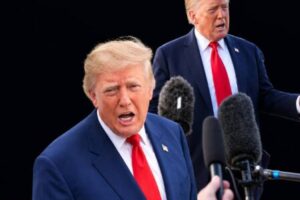







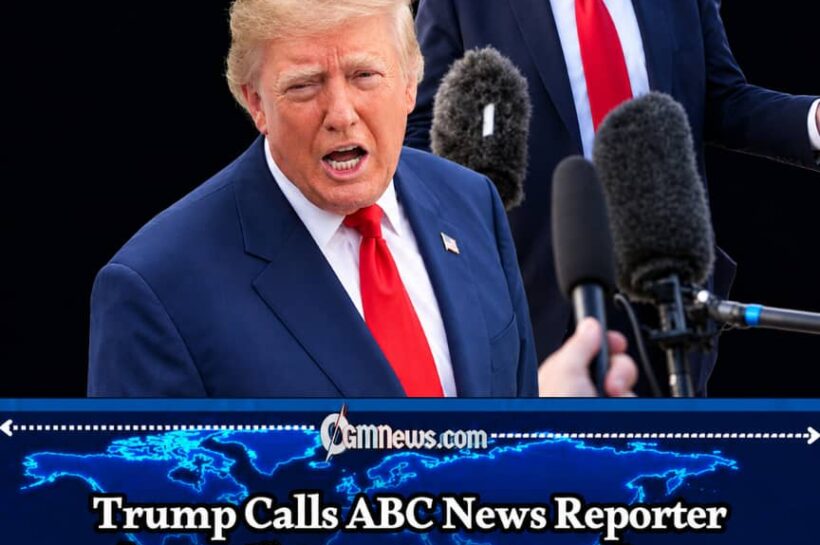





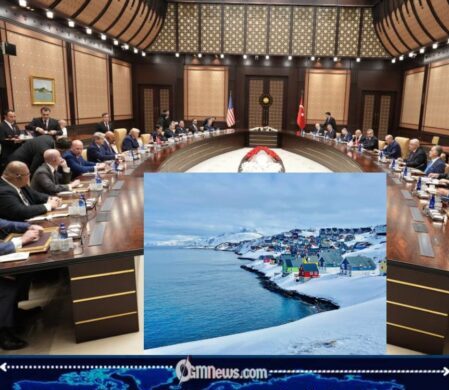
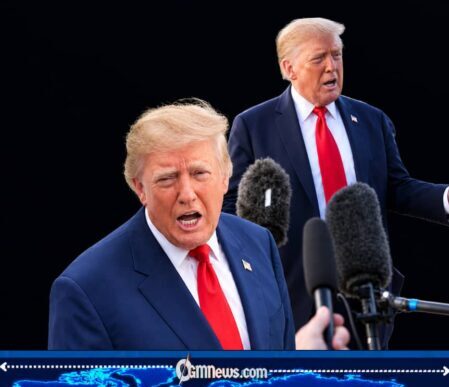
Greenland has once again become the center of a geopolitical storm after US President Donald Trump revived his controversial call for the United States to take control of the Arctic territory while simultaneously threatening to withdraw American troops from Europe if NATO allies fail to meet Washington’s expectations. The remarks, delivered upon his arrival for the NATO summit, have reignited long-standing tensions within the alliance and raised fresh questions about the future of transatlantic security cooperation at a time of mounting global instability.
Greenland Dispute Overshadows NATO Unity
Trump used his arrival at the NATO summit to renew claims that Greenland should fall under US control, arguing that Denmark has failed to invest adequately in the strategically important Arctic island. According to the US president, Greenland’s location has become increasingly significant because of growing Russian and Chinese activity in the Arctic, making it a matter of American national security. Trump further suggested that Denmark’s refusal to entertain previous US proposals had strained relations with NATO, linking the disagreement to broader frustrations over what he described as Europe’s dependence on American military protection.
The president also intensified pressure on European allies by warning that the United States could reconsider its military presence across the continent. Trump argued that Europe has changed dramatically over the past two decades and criticized several governments over immigration and energy policies, claiming they were undermining the continent’s future.
He repeated longstanding complaints that many NATO members continue to rely excessively on US defence spending while failing to meet agreed military investment targets. British officials rejected his comments regarding Greenland, emphasizing that the territory’s future rests solely with the people of Greenland and Denmark. Trump additionally suggested that Britain’s decision not to directly participate in military action against Iran reflected weak leadership, although political analysts have noted that public opinion in the United Kingdom largely supported the government’s cautious approach.
Greenland’s Strategic Importance Extends Beyond Political Rhetoric
Although Trump’s proposal has generated headlines before, Greenland’s strategic value is widely recognized beyond political debate. The autonomous Danish territory sits at the crossroads of the Arctic, where melting sea ice is gradually opening new shipping routes while increasing competition for access to critical minerals, energy resources, and military positioning. The United States already maintains the Pituffik Space Base—formerly known as Thule Air Base—in Greenland, a vital installation for missile warning, space surveillance, and Arctic defence. Security experts have increasingly warned that Russian military expansion and China’s growing economic interest in the Arctic have transformed the region into one of the world’s emerging geopolitical frontiers.
Trump’s broader criticism of NATO also reflects an enduring debate rather than an entirely new dispute. For years, successive US administrations have urged European allies to increase defence spending, arguing that burden-sharing within the alliance remains uneven. NATO members have gradually committed to higher defence budgets following Russia’s full-scale invasion of Ukraine, with many governments accelerating military modernization programs and expanding joint defence projects.
However, experts caution that threats to withdraw US forces could undermine alliance cohesion precisely when NATO is attempting to strengthen deterrence against multiple security challenges. While Trump’s remarks are consistent with positions he has advanced throughout his political career, any significant shift in US military commitments would carry profound implications for European security and global strategic stability.
As discussions continue at the NATO summit, Greenland is likely to remain a symbol of the wider strategic competition unfolding across the Arctic and within the alliance itself. Whether Trump’s renewed proposal develops into formal US policy or remains political rhetoric, the controversy has once again exposed deep differences over defence, sovereignty, and burden-sharing. OGM News will continue monitoring developments as allied leaders respond to the latest tensions and the summit’s outcomes become clearer.

Logging in is a breeze and the site stability is amazing even during peak hours....