



























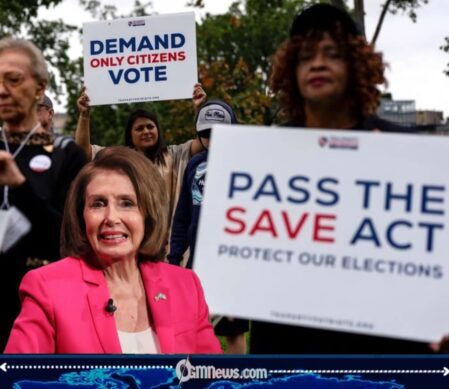
SAVE Act and voting rights have become the centre of a heated American political battle after former House Speaker Nancy Pelosi accused Republicans of hurting working families through economic policies while allegedly attempting to restrict access to the ballot box. The explosive accusation has added another layer to Washington’s already intense fight over election rules, raising a question that has divided the nation: is the proposal protecting elections or creating new obstacles for voters?
The controversy follows claims that Republicans failed ordinary Americans by allowing costs linked to healthcare, groceries and fuel to rise, while critics argue the party is now supporting measures that could prevent dissatisfied voters from expressing their choices at the ballot box. Republicans reject that interpretation, saying their focus is election integrity and ensuring only eligible citizens participate in federal elections.
SAVE Act: The Original Political Clash Over Documents, Citizenship and the Ballot Box
The SAVE Act, formally known as the Safeguard American Voter Eligibility Act, proposes requiring documentary proof of U.S. citizenship when registering to vote in federal elections. Supporters argue the measure is necessary to prevent non-citizens from voting, while opponents argue that such requirements could create additional hurdles for eligible citizens who lack easy access to required documents.
The debate has become especially heated because critics say the SAVE Act could affect groups such as married women whose names may not match older citizenship documents, Americans who have difficulty obtaining records, and some military families dealing with registration challenges while living away from their home states. Supporters counter that the proposal includes alternative documentation options and is aimed at election verification rather than preventing lawful citizens from voting.
Voting Rights Debate Expands Beyond Washington Politics
The wider voting rights argument reflects a long-running American disagreement over balancing election security with voter accessibility. Supporters of stricter rules say confidence in elections depends on clear verification systems, while civil rights groups and Democratic lawmakers warn that additional paperwork requirements can unintentionally discourage participation among eligible voters.
The political satire surrounding the SAVE Act has grown because critics portray the debate as a “paperwork battle,” joking that Americans may soon need a filing cabinet before they need a voting booth. However, beneath the humour is a serious dispute about how democracy should operate: whether the priority should be preventing rare cases of illegal voting or ensuring every eligible citizen can easily register and participate.
As President Donald J. Trump and Republican lawmakers continue to support stronger election verification measures, Democrats and voting rights advocates remain determined to challenge what they describe as unnecessary barriers. The SAVE Act controversy is unlikely to disappear soon, as America continues its broader argument over trust, fairness and the future of elections.

Logging in is a breeze and the site stability is amazing even during peak hours....