










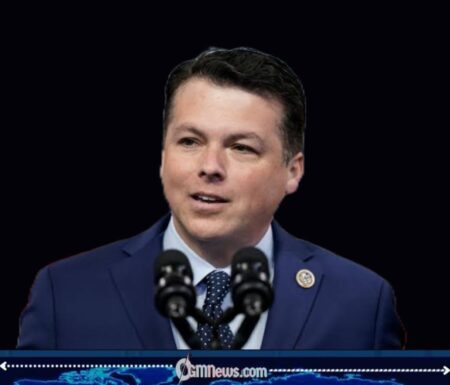
The Inflation debate has once again ignited a political firestorm in Washington after a heated exchange involving Brendan Boyle and Scott Bessent, with claims and counterclaims flying over responsibility for rising prices. The confrontation quickly escalated into a broader ideological battle, pulling in narratives connected to the administration of Joe Biden and drawing reactions from across the political spectrum. What began as a policy disagreement soon transformed into a viral moment, reflecting the increasingly combative tone of economic discussions in the United States.
STOP THE LIES!” BOYLE FIRES BACK AS INFLATION BLAME GAME EXPLODES
The Inflation dispute reportedly began when Scott Bessent referenced previous policy decisions as contributing factors to current price pressures, a claim that immediately triggered a strong response from Brendan Boyle. The congressman pushed back firmly, rejecting attempts to pin today’s economic conditions solely on the Biden administration.
In response, Brendan Boyle insisted that inflation is shaped by multiple forces, including global energy shocks, supply chain disruptions, and post-pandemic recovery pressures. Meanwhile, critics aligned with MAGA political messaging continued to argue that fiscal decisions remain central to the price increases affecting households.
Within this Inflation exchange, tensions escalated as both sides accused each other of distorting economic reality. Analysts say such confrontations reflect how deeply economic issues have become embedded in political identity, turning statistics into rhetorical weapons.
INFLATION WALK INTO CONGRESS, GETS DRAGGED INTO POLITICAL HOT POTATO
The Inflation discussion expanded beyond the initial exchange as both sides doubled down on competing interpretations of economic responsibility. Scott Bessent maintained that policy choices under previous leadership still influence present-day price stability, keeping the argument firmly alive.
Brendan Boyle countered that this framing ignores broader structural realities, stressing that inflation trends cannot be understood without considering global economic disruption and supply chain recovery challenges.
Observers note that the Inflation debate has become a recurring “political hot potato,” with each side passing responsibility while avoiding consensus. This has made inflation not just an economic measure but a symbolic issue in broader political conflict.
BIDEN, MAGA, AND INFLATION WALK INTO A ROOM—CHAOS ENSUES
The Inflation controversy also drew in wider political narratives tied to the administration of Joe Biden and MAGA-aligned criticism, reinforcing the issue’s role as a national flashpoint.
Scott Bessent defended his position by pointing to long-term fiscal patterns, while Brendan Boyle rejected what he described as selective interpretation of economic data. The result was a highly charged exchange that quickly spread across political commentary spaces.
The Inflation debate now reflects more than economics—it has become a stage for competing political identities, with each side using rising prices as evidence to support broader ideological claims. Analysts warn this dynamic may continue to shape public perception even as official inflation metrics fluctuate.
FoSEnYRcnzkCFxcrkTIkEJxP