























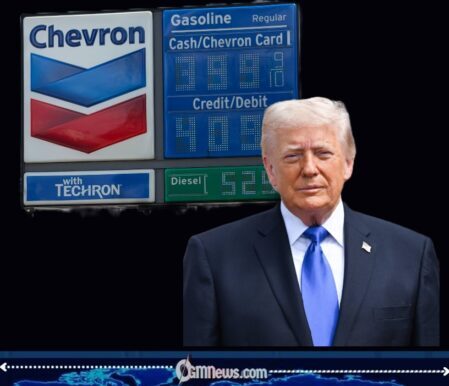
President Donald Trump’s ambitious attempt to tame soaring gasoline prices with a sweeping Jones Act waiver is beginning to look like a man trying to stop a house fire with a garden hose borrowed from the neighbor. The administration opened America’s coastal fuel trade to foreign-flagged ships in hopes of boosting supply and calming furious motorists, but drivers are still gripping fuel pumps like they are holding expensive concert tickets. Despite increased shipping activity, gasoline prices remain stubbornly high, leaving critics asking whether the policy delivered real relief or simply gave tanker companies a profitable summer vacation.
White House Celebrates Fuel Waiver While Drivers Watch Wallets Burn
The Jones Act waiver became one of the broadest suspensions of the century-old maritime law in U.S. history. Normally, the law requires goods transported between American ports to travel on vessels built, owned, and crewed by Americans. Trump temporarily relaxed those restrictions in March to speed up fuel deliveries from Gulf Coast refineries to regions such as the East and West coasts, where refining capacity and pipeline infrastructure remain limited.
The White House argued that the waiver helped move fuel supplies faster during a period of global instability linked to the U.S.-Israeli conflict involving Iran. Federal data reportedly showed refiners such as Valero and Phillips 66 using the exemption dozens of times to transport millions of barrels of crude oil, gasoline, diesel, and jet fuel. Yet the actual volumes moved represented only a small slice of America’s enormous daily fuel consumption. In economic terms, it was like pouring one extra bottle of water into a swimming pool and hoping everybody notices.
Meanwhile, global tanker rates surged because many vessels became trapped or delayed near the Strait of Hormuz amid heightened regional tensions. That meant the cost of hiring foreign ships often offset much of the savings expected from the waiver. Critics from pro-Jones Act groups claimed the policy failed to significantly reduce gasoline prices while also weakening protections for the domestic shipping industry. Drivers, however, appeared less interested in maritime law and more interested in not paying luxury-watch prices for regular unleaded fuel.
Trump’s Shipping Gamble Fails to Stop Gasoline Price Surge
Gasoline prices have become a major political headache for the Trump administration because fuel costs directly affect inflation, consumer confidence, and voter frustration. National gasoline prices reportedly climbed from below three dollars per gallon earlier in the year to averages above four dollars after tensions in the Middle East disrupted energy markets. In states like California, prices reportedly crossed six dollars per gallon, causing widespread public anger and fresh debate about America’s long-term energy strategy.
Economic analysts note that the Jones Act has faced criticism for years because it limits competition and raises domestic shipping costs. Supporters, however, insist the law protects national security and preserves American maritime jobs. Trump’s temporary waiver effectively turned a long-running policy argument into a real-world economic experiment. So far, the results appear mixed at best. More fuel moved around the coastline, but consumers saw only modest relief at gas stations, largely because global oil market pressures remained stronger than domestic shipping reforms.
The situation also carries serious political implications ahead of the congressional midterm elections. High gasoline prices often become symbolic of broader economic dissatisfaction, regardless of how complex the actual causes may be. Opponents accuse the administration of overselling the waiver’s benefits, while supporters argue that without it, prices could have climbed even higher. Somewhere in Washington, advisers are likely debating whether Americans care more about maritime logistics or simply whether filling a pickup truck now requires emotional preparation.
For now, the Jones Act debate remains far from over, and the Trump administration appears open to extending the waiver if fuel pressures continue. But unless global shipping costs fall and oil markets stabilize, many Americans may continue discovering that the only thing moving faster than foreign tankers is the spinning numbers on gas station pumps.

https://shorturl.fm/5TtQZ