



























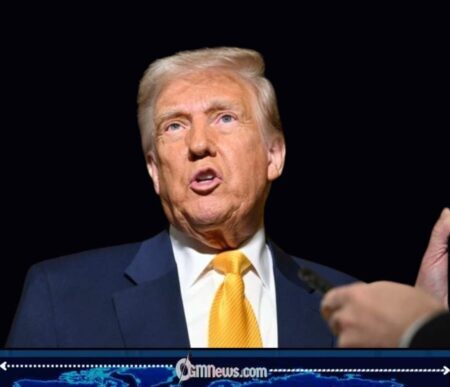
The cognitive test remarks by President Donald J. Trump have triggered widespread discussion after the president stated that he had “aced” the cognitive test three times, framing it as proof of exceptional mental sharpness. The comments, delivered with confidence and humor, quickly spread across political and public platforms, raising both amusement and scrutiny.
What began as a personal recount of a routine medical evaluation has now evolved into a broader conversation about how leaders communicate health-related matters. The cognitive test, often used by medical professionals to assess memory, attention, and reasoning, became the center of attention not for its results, but for the way it was publicly described.
PRESIDENTIAL CLAIMS AND PUBLIC REACTION
The cognitive health narrative originated from President Donald J. Trump’s assertion that he had successfully completed the evaluation on multiple occasions, each time achieving what he described as a flawless result. He presented the cognitive test as evidence of strong mental capacity, emphasizing repetition as proof of consistency.
Supporters interpreted the remarks as a confident reaffirmation of fitness for office, while critics questioned whether such framing oversimplifies a clinical assessment. The cognitive test quickly became a talking point across political discussions, with interpretations ranging from admiration to skepticism.
MEDICAL CONTEXT, POLITICAL IMAGE, AND BROADER IMPLICATIONS
In medical practice, cognitive health procedures are standardized tools designed to screen for memory decline or neurological issues, not competitive scoring systems. Experts note that public figures referencing cognitive test results without clinical context can lead to misunderstandings about their purpose and interpretation.
Beyond the immediate reactions, analysts suggest the cognitive test episode reflects a broader trend in modern politics where personal health statements become part of public branding. Communication specialists argue that repetition of such claims may strengthen public perception among supporters while simultaneously inviting criticism from opponents seeking factual clarification.
As discussions continue, observers expect further commentary and possible clarification from official channels, especially as cognitive health remains a sensitive topic in leadership evaluation. For now, the cognitive test remarks remain a blend of political messaging, public curiosity, and viral commentary that shows no sign of fading.



https://shorturl.fm/5TtQZ