























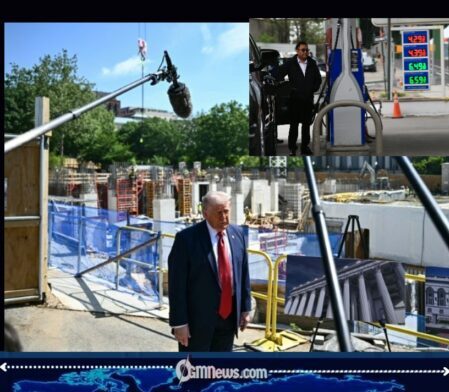
President Donald Trump’s continued focus on building a lavish White House ballroom has triggered growing political controversy at a time when millions of Americans remain frustrated by rising fuel prices, inflation concerns, and economic uncertainty tied to ongoing tensions with Iran. Standing proudly before the ballroom construction site this week, Trump attempted to calm public frustration by asking Americans to remain patient, dismissing the broader economic pain as temporary while insisting the nation would soon recover. But the moment immediately reignited accusations that the White House is increasingly consumed by image, legacy, and spectacle while ordinary voters struggle with daily expenses.
The ballroom debate has now evolved beyond architecture and presidential ambition into a broader referendum on political priorities in Trump’s second term. Critics argue the repeated promotion of grand construction projects — including the White House ballroom, the Reflecting Pool renovation, and a proposed Independence Arch — has created an impression that symbolism is receiving more presidential attention than the economy itself. The controversy intensified further after Trump’s earlier comment suggesting he was not focused on Americans’ “financial situation” while addressing the Iran conflict went viral and became ammunition for Democratic attacks.
Trump Defends Ballroom Plan as Americans Battle Rising Fuel Costs
The ballroom has become one of the most discussed projects inside Trump’s White House. According to recent reports, the President Trump has referenced the project dozens of times this year alone, often bringing it up during unrelated conversations involving diplomacy, national security, and even political crises. Supporters within the administration insist the Ballroom project is about presidential legacy and national prestige rather than vanity, arguing that foreign capitals around the world showcase grand state facilities that America should rival.
Yet the political timing has become increasingly problematic. Republican strategists and lawmakers are reportedly worried that constant discussions about chandeliers, architecture, and donor-funded construction projects could alienate voters who are more concerned about inflation, fuel costs, grocery prices, and economic stability. Senator Cynthia Lummis publicly acknowledged concerns that the ballroom conversation may be consuming too much national attention, even while attempting to clarify that private funding forms part of the project’s financial structure.
The situation became even more complicated after reports surfaced that the Secret Service sought approximately $1 billion in taxpayer-backed security upgrades connected to the ballroom and surrounding White House complex. Although the proposal was later removed from a Senate spending package, critics viewed the request as proof that even privately promoted legacy projects eventually place public financial pressure on taxpayers.
Growing Concerns Over Trump’s Legacy Projects Amid Economic Struggles
The Ballroom controversy arrives during a politically sensitive period for President Trump and the Republican Party. Since the escalation of tensions involving Iran earlier this year, Americans have faced increased fuel costs and renewed concerns about economic stability. While the White House continues emphasizing stock market performance and foreign investment announcements, polls suggest many voters remain focused on immediate living costs rather than long-term economic projections.
Democrats have aggressively framed the ballroom issue as evidence of political detachment. Senator Raphael Warnock criticized the administration’s priorities, arguing that voters trying to afford groceries are unlikely to view a White House ballroom as urgent national business. Political analysts note that symbolism often shapes elections as strongly as policy itself, and opponents are attempting to portray the Ballroom project as the defining symbol of an administration focused more on monuments than middle-class anxiety.
The White House, however, continues defending Trump’s approach. Officials argue the president is capable of managing foreign policy, economic issues, and legacy projects simultaneously. They also point out that previous presidents pursued historic renovations and symbolic projects during difficult periods in American history. Trump allies privately believe the controversy may eventually fade if economic conditions improve before November’s midterm elections.
Still, the optics remain challenging. Images of construction tours, ballroom discussions, and architectural ambitions have collided with public frustration over fuel prices and economic uncertainty. Even some Republicans now fear the Ballroom narrative risks becoming an easy campaign weapon for opponents eager to frame the administration as disconnected from ordinary Americans.
As Washington debates whether the Ballroom represents visionary leadership or misplaced priorities, one reality is already clear: the project has transformed from a construction story into a powerful political symbol. OGM News will continue monitoring whether the Ballroom ultimately becomes Trump’s legacy masterpiece — or an expensive reminder that in politics, perception can sometimes outweigh concrete itself.



https://shorturl.fm/5TtQZ