




















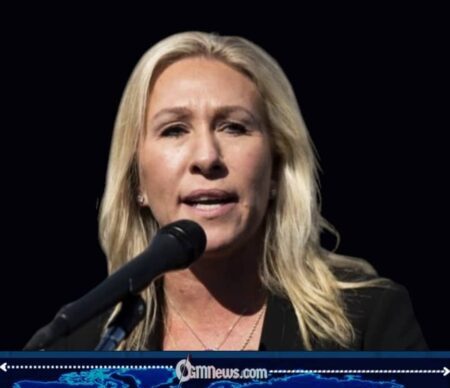
The Third-Term debate surrounding President Donald J. Trump has taken a dramatic turn after Marjorie Taylor Greene warned that a major war or national emergency could allegedly be used as justification to suspend the 2028 presidential election. Greene described the possibility as “incredibly dangerous,” insisting that Americans should never accept any attempt to extend presidential power beyond constitutional limits. The remarks instantly ignited fierce reactions online, with critics accusing Greene of fear mongering while supporters argued her concerns reflect growing public anxiety over executive authority during times of crisis.
The controversy arrives amid years of public speculation surrounding Trump’s comments about remaining politically active beyond a second term. While the U.S. Constitution’s 22nd Amendment explicitly bars presidents from being elected more than twice, recent political rhetoric and discussions around emergency powers have fueled debate across conservative and liberal circles alike. Historians and legal analysts have repeatedly noted that even during America’s darkest wartime periods, including the Civil War and World War II, national elections still proceeded as scheduled.
Trump’s 2028 Rumors Turn Dark After Greene Warns of Emergency Power Gamble
Greene’s warning appears tied to fears that wartime powers or national emergencies could create political instability severe enough to disrupt election procedures. Her remarks followed months of rising tensions over international conflicts and domestic political polarization, issues that have increasingly blurred the line between campaign rhetoric and constitutional debate. Although no formal mechanism currently exists that would allow a sitting president to unilaterally cancel a federal election, the mere discussion of the possibility has intensified partisan suspicion in Washington.
The Third-Term discussion has also been amplified by Trump’s own public comments over the past year. On several occasions, the president joked about serving beyond traditional limits before later acknowledging that the Constitution clearly prevents another elected term. Nonetheless, political allies, media personalities, and activist groups have continued publicly discussing theoretical pathways to extended influence, keeping the issue alive in public discourse despite legal barriers.
MAGA Civil War Erupts as Greene Accuses Trump Camp of Eyeing Election Delay
Greene’s statements are especially notable because they signal widening divisions inside the broader MAGA political movement. Once considered one of Trump’s most aggressive defenders, Greene has increasingly criticized aspects of his administration’s foreign policy and political strategy in recent months. Her latest warning has therefore been interpreted by some observers as evidence of growing ideological fractures among prominent conservative figures who once operated in lockstep.
Public reaction has ranged from serious constitutional debate to outright satire online. Social media users mocked the idea of “Election Day DLC,” while others pointed out that Franklin Roosevelt’s four-term presidency occurred before the 22nd Amendment imposed modern term limits. Some legal scholars have also cautioned that discussions about suspending elections, even hypothetically, can erode public trust in democratic systems by normalizing extreme scenarios that lack constitutional grounding. Meanwhile, critics of Greene argued that her own history of controversial rhetoric complicates her new role as a warning voice against executive overreach.
As the Third-Term controversy continues spreading across political media and social platforms, the debate may ultimately reveal more about America’s deepening mistrust in institutions than about any realistic constitutional pathway. Still, Greene’s comments have ensured that questions surrounding emergency powers, wartime authority, and the future of the 2028 election will remain politically explosive topics heading into the next phase of the national campaign cycle.



https://shorturl.fm/5TtQZ